More Perfect Union delivers a searing indictment of the Medicare Advantage system, framing it not as a beneficiary choice but as a trillion-dollar extraction machine fueled by decades of political maneuvering. The piece distinguishes itself by tracing the program's origins to a 1960s propaganda campaign featuring a vinyl record, connecting historical rhetoric directly to the denial of care experienced by families today. This is not merely an exposé of billing errors; it is an argument that the very architecture of American elder care was designed to prioritize profit over survival.
The Human Cost of Privatization
The narrative anchors itself in a harrowing personal story: a mother denied coverage for a nursing facility stay under her private Medicare Advantage plan, while the traditional government plan would have covered it. More Perfect Union writes, "Medicare Advantage is just one part of our broken system but I want to use it as an example of why things are so broken." This framing is effective because it moves the discussion from abstract policy metrics to immediate, life-or-death consequences. The author illustrates how private insurers, incentivized to minimize payouts, create barriers that the public system does not. The argument gains weight by contrasting the 1.4% administrative cost of traditional Medicare with the bloated overhead of its private counterpart.
"The purpose of private insurers is to profit off of you. That can come at the cost of providing you less care or overcharging you either through premiums or tax dollars."
Critics might note that private plans often offer supplemental benefits like dental or vision that traditional Medicare lacks, a trade-off the article acknowledges but dismisses as insufficient against the backdrop of denied critical care. The author's point remains that the core function of the program—covering essential medical needs—is being systematically undermined by the profit motive.
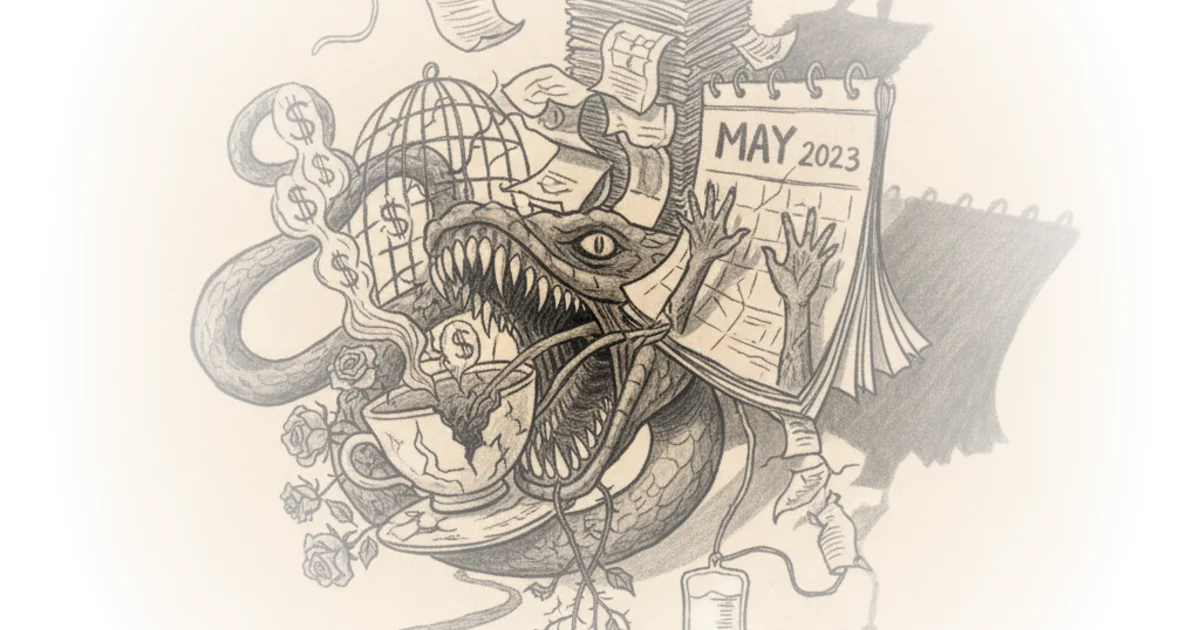
The Historical Blueprint for Extraction
The piece takes a surprising detour into the 1950s and 60s, revealing how the American Medical Association and insurance lobbyists weaponized fear to stall universal healthcare. More Perfect Union details how actor Ronald Reagan recorded a vinyl record for "Operation Coffee Cup," urging doctor's wives to fight against socialized medicine. The author notes, "In the 60s actor Reagan gave the industry the gift of making Medicare optional and then in the 80s President Reagan gave them access to even the folks who were on the government plan." This historical context is crucial; it reframes the current crisis not as an accidental policy drift but as the result of a deliberate, decades-long strategy by private interests to capture the public purse.
The commentary suggests that the arguments used then—fear of government overreach and the specter of communism—are the same ones deployed today to defend a system that costs taxpayers significantly more. More Perfect Union writes, "One study found that just the amount of corrupt overcharges that Medicare Advantage charges the system costs taxpayers more money than all normal Medicare programs combined." This statistic is staggering, yet it is presented as the logical outcome of a system where the goal is shareholder return rather than patient health.
The Future of Care and the Efficiency Myth
As the article looks toward the incoming administration and proposed efficiency cuts, it challenges the notion that reducing government spending is the solution. Instead, it argues that the real waste lies in the corporate middlemen. The author points to the potential appointment of Dr. Mehmet Oz, a known proponent of expanding private plans, as a dangerous signal. More Perfect Union writes, "Replacing Medicare Advantage with a fully nationalized program for everyone not just the elderly who opt in would help with all of this." The argument posits that a single-payer approach would strip insurers of their leverage and end the practice of skimming funds from the sick.
The piece also critiques the Department of Government Efficiency, suggesting that cutting government spending without addressing corporate profiteering is a misdiagnosis. "Contractor profits are the tax that we spend the most on and get the least out of," the author asserts. This reframing forces the reader to reconsider what "efficiency" actually means in a healthcare context. Is it efficient to pay a private company 15% of every dollar for administration when the government does it for 1.4%? The answer, according to the text, is a resounding no.
"Costs aren't rising because of any technological or other miracle advances that are saving lives... For-profit companies have devised ways to skim more and more money off of the ill and the taxpayer."
Bottom Line
More Perfect Union's strongest asset is its ability to weave a personal tragedy into a structural critique, proving that the "scam" is not a glitch but a feature of the system. The piece's greatest vulnerability lies in its political feasibility; it offers a clear diagnosis but relies on a political shift that faces entrenched opposition from the very industry it critiques. However, for a reader seeking to understand where their tax dollars are actually going, this is an essential, if infuriating, read.
"The purpose of private insurers is to profit off of you. That can come at the cost of providing you less care or overcharging you either through premiums or tax dollars."
The argument is clear: until the profit motive is removed from the equation, the system will continue to prioritize balance sheets over human lives. The reader should watch for how the incoming administration handles the tension between its rhetoric of efficiency and the reality of corporate healthcare lobbying.