Ryan Grim and Jeremy Scahill have delivered a harrowing account that strips away the sterile language of "collateral damage" to reveal a specific, preventable tragedy: the drone assassination of a respected Somali clan chief. This piece is notable not just for the visceral details of the strike on Omar Abdullahi, but for its forensic dismantling of the official narrative used to justify it. In an era where remote warfare is often abstracted into statistics, this report forces a confrontation with the human reality of a "shadow war" that has suddenly turned lethal for a community that believed itself safe.
The Human Cost of "Precision"
The authors anchor their investigation in the immediate, devastating aftermath of the September 13 strike in Badhan. Grim and Scahill write, "Only a piece of his stomach remained in the burnt-out wreckage, according to a death certificate seen by Drop Site News." This graphic detail is not gratuitous; it serves to shatter the distance often created by military terminology. The report details how Abdullahi, a mediator traveling to resolve a clan dispute, was incinerated while driving home, leaving his mother to live with the trauma of his death.
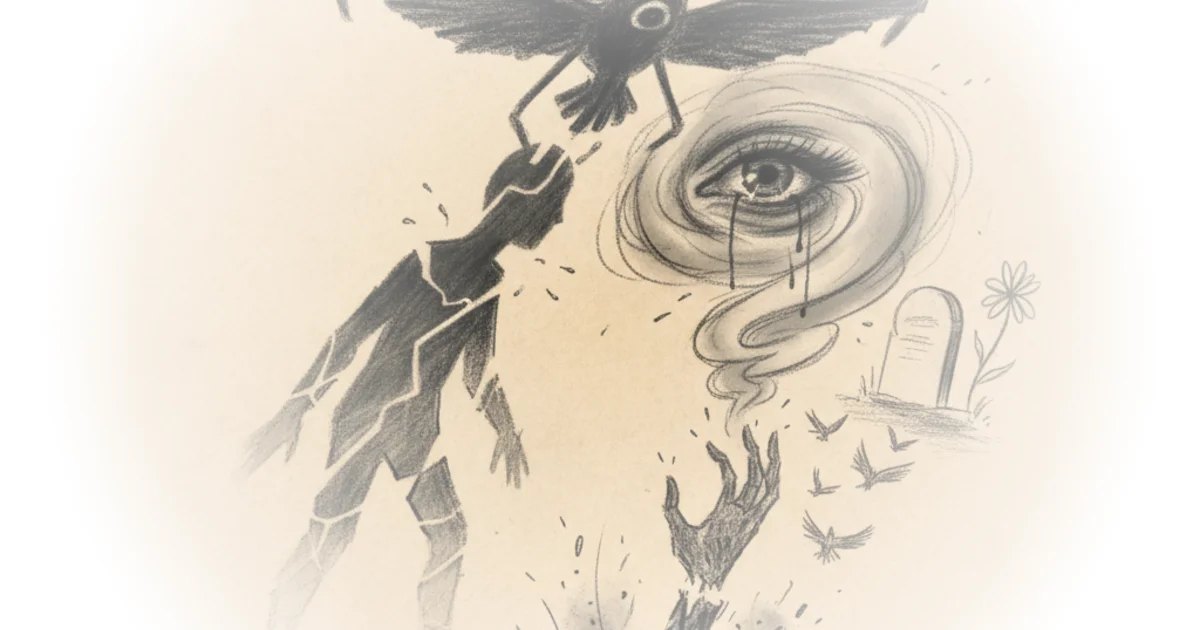
The narrative effectively contrasts the U.S. military's cold justification with the lived experience of the victims. As Ryan Grim and Jeremy Scahill put it, "I always have flashbacks of him being burned in a car. That is why I'm scared to sleep at night," quoting Abdullahi's mother, Asha Abdi Mohamed. This emotional weight is crucial. It highlights a shift in the local psyche, captured in the article's title: "We never feared drones until they killed Omar." The authors argue that the strike has fundamentally altered the security landscape, turning the sky from a neutral space into a source of terror.
"We never feared drones until they killed Omar."
Critics of this framing might argue that the chaos of civil conflict inevitably leads to tragic errors, and that the U.S. cannot be expected to have perfect intelligence in every instance. However, the piece systematically undermines this defense by showing that Abdullahi was not a hidden insurgent, but a public figure known to both local and regional authorities.
The Contradiction of Official Claims
The core of the argument rests on the glaring discrepancy between the U.S. Africa Command's (AFRICOM) claims and the on-the-ground reality. AFRICOM asserted the strike targeted an al-Shabaab arms dealer, yet local officials and even the militant group itself denied any such affiliation. Grim and Scahill highlight that the Puntland regional government, which operates with significant autonomy from Mogadishu, released an official report finding Abdullahi had "no criminal record" and was not under investigation.
The authors emphasize the absurdity of the U.S. targeting a man they could have easily arrested. "The U.S. and their UAE allies all have a presence at Bosaso airport. He met President Deni six times inside the airport. He could have easily been arrested, but instead they [the Americans] decided to kill him," notes Abdullahi's brother, Ali, as cited in the text. This point is devastatingly effective because it exposes the lack of proportionality in the response. If the intelligence was truly so strong, why was a lethal strike the only option for a man who was actively meeting with government leaders just days prior?
Furthermore, the report contextualizes this within the broader, escalating drone campaign in Somalia. Since the return of the executive branch to a more aggressive posture, the pace of strikes has surged. Grim and Scahill note that while the U.S. conducted only one airstrike against ISIS fighters in 2024, more than 100 have been registered in 2025 alone. This escalation coincides with a delegation of authority that has empowered AFRICOM commanders to authorize strikes with less direct oversight than in previous administrations.
A Broken Targeting Process
The commentary delves into the structural flaws of the targeting process, suggesting that the shift toward military-led authorization has removed necessary safeguards. The authors interview Somali security experts who describe a system where local officials are given mere hours, or sometimes minutes, to approve strikes before they occur. "There is just an assumption that the U.S. knows best, that it has strong and accurate intel. But we know that that isn't always the case," says security expert Samira Gaid.
This section is particularly strong in its analysis of institutional dynamics. It suggests that the opacity of the process is not a bug, but a feature that allows for the denial of accountability. The article points out that the U.S. rarely admits to civilian casualties unless forced by public outcry. "The only time we see the U.S. admit to civilian casualties is when local elders make public outcry and when the media, and especially international media, catches on," Gaid adds. This creates a cycle where errors are repeated because the cost of admission is too high for the administration to bear.
The historical context provided is also vital. The authors remind readers that the Warsangeli clan, to which Abdullahi belonged, has a long history of resisting Islamist insurgencies, including al-Shabaab and the 1990s group al-Itihaad al-Islamiya. By killing a man who was a "backbone to resistance against terrorism," as local commander Omar Abdillahi Ashur described him, the strike risks alienating the very populations the U.S. claims to protect. The report notes that even al-Shabaab denied Abdullahi was a member, using the incident to claim the U.S. was covering up civilian casualties.
"Military officials tend to be more gung-ho and mistakes are made."
A counterargument worth considering is the difficulty of operating in a region where the lines between combatant and civilian are often blurred by the nature of asymmetric warfare. However, the sheer volume of evidence presented—from the death certificate to the regional police report—suggests that in this specific case, the error was not a fog-of-war ambiguity, but a failure of verification.
Bottom Line
Ryan Grim and Jeremy Scahill have produced a definitive account of how the escalation of drone warfare in Somalia is eroding trust and causing profound human suffering. The piece's greatest strength lies in its refusal to accept the "fog of war" excuse, instead presenting a clear chain of evidence showing that a known community leader was killed due to flawed intelligence and a lack of accountability. The biggest vulnerability for the administration is the growing realization among Somali officials and the public that the U.S. is no longer a partner in security, but a source of unpredictable violence that operates above the law. Readers should watch for whether the Puntland government will follow through on its demand for reparations, or if the silence of the U.S. will continue to define the relationship.