A Colony by Any Other Name
PolyMatter's examination of Puerto Rico's economic collapse is, at its core, a story about what happens when an economy is built on someone else's terms. The island never controlled the levers that powered its growth — Section 936 of the US tax code, trade protections within the customs area, federal spending priorities — and when those levers were pulled in a different direction, Puerto Rico had no fallback. The piece traces a familiar arc of dependency economics, but the specific mechanics of how Congress dismantled the island's industrial base deserve closer scrutiny than they typically receive.
The Section 936 Trap
The centerpiece of Puerto Rico's mid-century economic strategy was Operation Bootstrap, a Cold War-era industrialization campaign that leaned heavily on tax incentives to lure mainland corporations. Section 936 zeroed out federal income tax on money earned in Puerto Rico, and pharmaceutical companies in particular exploited this aggressively. As PolyMatter notes:
A US parent company like Pfizer could transfer its intellectual property to its Puerto Rican subsidiary. Then when someone in Charlottesville or San Jose bought some Lipitor, it could argue those patents were responsible for say 90% of the sale price.
This arrangement was enormously profitable for drug makers but structurally precarious for Puerto Rico. The island's economy became dependent on a legal fiction — the notion that abstract patent rights were "located" in the Caribbean — rather than on genuine productive capacity. When Congress eventually noticed the absurdity of the math, the reaction was predictable.
For every one employee they hired in Puerto Rico, pharmaceutical companies were saving $70,000 in taxes. In other words, the US government was effectively paying $70,000 to employ a single person in a place where the per capita GDP was about $9,000.
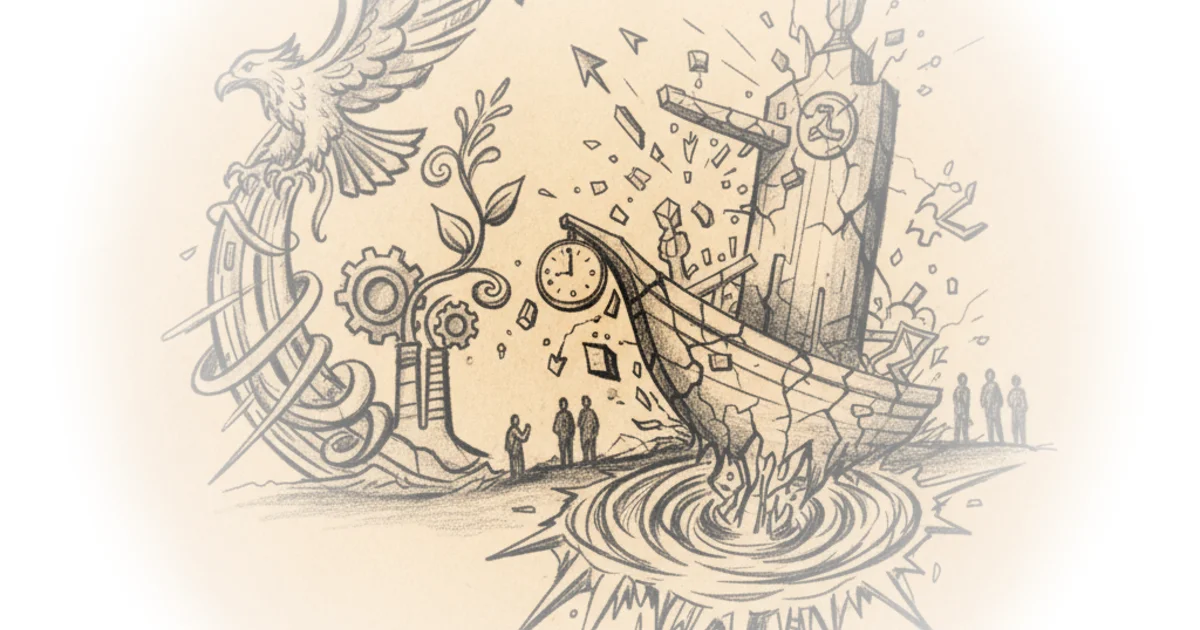
The counterpoint, which PolyMatter largely skips, is that Section 936 did produce real economic development. By 1990, manufacturing accounted for nearly 40 percent of Puerto Rico's GDP, twice the regional average. The island built genuine industrial capacity, trained a skilled workforce, and developed infrastructure. The problem was not that the policy failed — it was that Congress treated a functioning economic engine as a line item to be deleted rather than reformed. As the piece acknowledges, lawmakers "simply deleted Section 936 from the tax code and quickly moved on, leaving Puerto Rico in the dust" rather than crafting replacement incentives.
The Debt Spiral and a Constitutional Mistranslation
One of the more remarkable details in the analysis is the role of a translation error in enabling Puerto Rico's debt crisis. The island's constitution requires that appropriations not exceed total revenues — a standard balanced-budget provision. But in the Spanish-language version, "revenues" was rendered as "resources," and in 1974 the government decided that bonds counted as resources.
The Commonwealth of Puerto Rico can only spend as much as it earns, unless it takes on debt, in which case it can spend as much as it wants with no real plan for repayment.
Whether this was a genuine mistranslation or a convenient reinterpretation is a question worth asking. Constitutional language in bilingual jurisdictions is frequently contested, and the 1974 decision came at a moment when Puerto Rico's political class needed fiscal room to maneuver. Regardless of intent, the consequence was devastating: the island accumulated $73 billion in debt — $120 billion including unfunded pensions — amounting to 15 times the per capita debt of the median US state.
The borrowing was not directed toward investment. A US government report found that 16 out of 20 bonds issued between 2000 and 2017 went exclusively to repaying or refinancing existing loans. Puerto Rico was running a Ponzi scheme with municipal bonds, and Wall Street was happy to play along because the bonds were triple tax-exempt and backed by a constitutional guarantee that bondholders would be paid before public employees.
The Emigration Paradox
The most structurally damaging feature of Puerto Rico's situation, and the one that distinguishes it from sovereign nations facing similar crises, is the ease of exit. When the IMF imposes austerity on a country like Barbados, citizens absorb the pain because they have limited alternatives. Puerto Ricans face no such constraint:
As US citizens, they're free to study, work, and live anywhere in the United States without restrictions. They don't even need a passport, which means anyone can opt out.
This creates what economists call a "doom loop." Austerity drives out the most mobile and productive residents — the young, the educated, the high-earning — which shrinks the tax base, which necessitates further austerity, which drives out more people. The numbers are staggering: nearly twice as many self-identified Puerto Ricans now live on the mainland as on the island. The median age has climbed to 43, older than every state except Maine, and fewer than half of adults participate in the labor force.
PolyMatter draws an apt comparison to West Virginia, another de-industrialized region trapped in a depopulation spiral. But the parallel understates Puerto Rico's disadvantage. West Virginia at least has voting representation in Congress and access to the full suite of federal programs. Puerto Rico has neither. Its residents cannot vote in presidential elections, have no voting representation in the Senate, and receive reduced Medicaid and other federal benefits. The island endures the costs of American citizenship — including the Jones Act, which raises shipping costs by requiring goods to travel on US-flagged vessels — without the full benefits.
What the Analysis Misses
PolyMatter's account is solid on the mechanics of decline but thinner on the question of agency. The framing positions Puerto Rico primarily as a victim of congressional decisions, which is partly true but incomplete. Local governance failures — the bloated public sector, the creative constitutional reinterpretation, the refusal to restructure spending — were choices made by Puerto Rican politicians for Puerto Rican political reasons. The number of public employees tripled between 1960 and 1980 not because Congress mandated it but because patronage networks on the island demanded it.
The analysis also underplays the role of federal transfer payments. Despite its economic struggles, Puerto Rico receives substantial federal funding — roughly $30 billion annually — which creates its own distortions. Some economists argue that the generosity of federal benefits relative to local wages discourages labor force participation, contributing to the island's unusually low employment rate. This is a politically uncomfortable argument, but any honest assessment of Puerto Rico's economy must grapple with the incentive structures created by the welfare state.
Finally, the piece gestures toward the statehood question without engaging it directly. Puerto Rico's ambiguous political status — not a state, not independent, not quite a colony but functionally similar — is not merely a political curiosity. It is the structural foundation of every economic problem discussed. The island cannot set its own trade policy, monetary policy, or immigration policy. It cannot fully access federal programs designed for states. And it cannot attract foreign investment on the same terms as a sovereign nation. Until the status question is resolved, the economic question remains fundamentally unanswerable.
Bottom Line
Puerto Rico's economic collapse is not a story about bad luck or natural disasters, though hurricanes have compounded the damage. It is a case study in what happens when an economy is constructed around external incentives that can be withdrawn at any time. Section 936 built a pharmaceutical paradise; its repeal created a fiscal wasteland. The constitutional debt loophole financed two decades of denial. And the ease of emigration ensures that every attempt at recovery is undermined by the departure of exactly the people needed to make it work. The island is caught in a structural trap that neither statehood nor independence would automatically resolve — but that the current ambiguous status makes nearly impossible to escape.