In a quiet shift that defies the usual narratives of Chinese emigration, a new wave of elites is bypassing the United States and Europe for Tokyo. Jordan Schneider's conversation with author Takehiro Masutomo reveals a surprising truth: the destination of choice for China's dissidents, billionaires, and anxious parents is no longer the West, but a Japan that offers a unique blend of political safety, cultural proximity, and relative calm. This is not merely a story of wealth flight; it is a structural realignment of where Chinese elites believe the future lies.
The Intellectual Refuge
Schneider frames the discussion around a striking historical parallel: the late Qing dynasty, when revolutionaries like Sun Yat-sen found sanctuary in Japan to plot the overthrow of the imperial court. Today, a similar dynamic is unfolding, but the stakes are modern and the methods are subtle. Schneider notes that the phenomenon is visible in the proliferation of Chinese-language bookstores in Tokyo, which have become more than retail spaces; they are "community gathering spots" where liberal intellectuals can congregate.
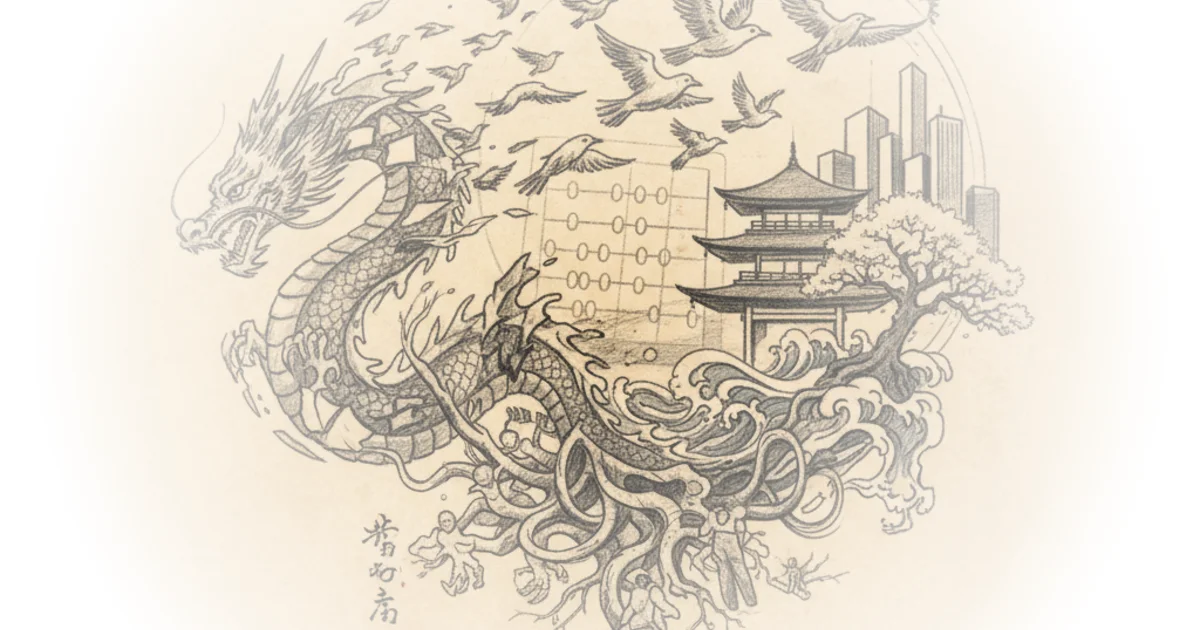
The core of Schneider's argument is that these spaces represent a fundamental shift in the geography of free speech. "There is much more space to discuss anything freely," Masutomo explains, contrasting the current climate in Tokyo with the impossibility of such activities in Beijing or Hong Kong just a decade ago. This observation is powerful because it highlights a vacuum in the Chinese intellectual ecosystem that the administration has created, forcing the diaspora to look eastward rather than westward for a safe harbor.
"Tokyo provides them with this alternative space."
The evidence Schneider presents—specifically the density of five distinct bookstores in Tokyo compared to just one in Washington, D.C.—suggests a vibrant, self-sustaining ecosystem. However, a counterargument worth considering is the scale of this movement. Masutomo admits the number of politically motivated immigrants is likely "somewhere in the hundreds." While culturally significant, this is a small fraction of the total migration, raising the question of whether this is a broad trend or a niche phenomenon for the most vulnerable dissidents.
The Economics of Escape
Moving beyond politics, Schneider pivots to the financial mechanics of this migration, exposing the shadow systems that allow wealth to bypass Beijing's strict capital controls. The administration's $50,000 annual limit on currency conversion has not stopped the flow of capital; it has merely driven it underground. Schneider details how underground banking networks function as a parallel system, balancing accounts through trade discrepancies to move massive sums of RMB into Japanese yen.
"For the case of Jack Ma and other billionaires, maybe the story is a bit different," Schneider acknowledges, noting that some had already diversified assets overseas. But for the majority of the new wealthy arrivals, the mechanism is illicit. They transfer money within China, and in exchange, receive cash in Japan, often used to purchase real estate in cash. This reveals a critical vulnerability in the current regulatory framework: the inability to contain capital flight has created a robust, albeit illegal, infrastructure that facilitates the very exodus the state wishes to prevent.
The motivation for these super-rich immigrants is often a desire for a semi-retired lifestyle, drawn by Japan's superior medical services and the ability to host exclusive parties in private clubs. Schneider observes that even Western-style clubs in Tokyo are increasingly filling with Chinese members. This creates a peculiar social dynamic where the new elite live in parallel to the local population, often without speaking the language, insulated in their own enclaves.
"They need to balance their accounts, and that's how this underground bank operation comes in."
While the financial ingenuity is evident, the social integration remains questionable. Critics might note that this isolation could breed resentment, yet the data suggests these immigrants are more optimistic about Japan's future than the Japanese themselves, perhaps because they are viewing the country through the lens of what it offers them, rather than its domestic struggles.
The Education Exodus
Perhaps the most poignant driver of this migration is the desire to spare the next generation the grueling pressure of the Chinese education system. Schneider highlights the story of families moving to districts like Bunkyo-ku, not because the public schools are objectively better, but because the parents believe they are. "Their kids normally study from early morning to midnight — that's totally normal in China," Masutomo says, describing a level of academic intensity that is "far beyond my wildest imagination."
This section of the coverage is particularly compelling because it touches on the human cost of the Gaokao system. The decision to move is a rejection of a system where competition is so fierce that it consumes childhood. Schneider points out that tuition for international schools in Tokyo is roughly half that of Shanghai or Beijing, making the move economically rational as well as emotionally driven. The weakening yen further enhances the cost-effectiveness of this lifestyle.
"It's totally different from the situation in Japan. Kids here are more relaxed normally."
The irony, as Schneider notes, is that the parents are falling for a real estate marketing myth about school districts in Japan, where the public system is remarkably uniform. Yet, the desire for a "chill" middle school experience is so potent that it overrides factual inaccuracies. This speaks to a deeper exhaustion with the high-stakes environment in mainland China, where even the middle class feels the need to flee to secure a better future for their children.
Bottom Line
Schneider's coverage effectively reframes the narrative of Chinese emigration from a simple flight to the West to a strategic pivot toward Japan, driven by a combination of political repression, financial ingenuity, and educational desperation. The strongest part of the argument is the detailed exposure of how underground banking and community networks are sustaining this new diaspora. Its biggest vulnerability lies in the scale; while the cultural and political implications are profound, the numbers remain relatively small compared to the total population. The reader should watch for how this trend evolves as the administration tightens controls further, potentially turning Tokyo into a more permanent, rather than temporary, sanctuary for China's elite.
"Tokyo provides them with this alternative space."