Fred Mills doesn't just ask if The Line is dead; he forces us to confront the terrifying gap between a trillion-dollar vision and the gritty, unglamorous reality of pouring concrete in a desert. While the world fixates on the futuristic renderings, the B1M commentator zeroes in on a far more dangerous variable: the difference between 'hope' and a viable construction strategy. This isn't a story about architecture; it's a forensic audit of ambition against physics, and the verdict is far from settled.
The Illusion of Scale
Mills begins by dismantling the sheer absurdity of the project's dimensions, noting that the proposed structure is 170 kilometers long, 500 meters tall, and only 200 meters wide. To make this comprehensible, he uses a Lego analogy, revealing that a model built at 0.03% of the actual size would still dwarf the Empire State Building. The visual comparison is stark, but the real insight lies in the engineering hurdles required to make it stand.
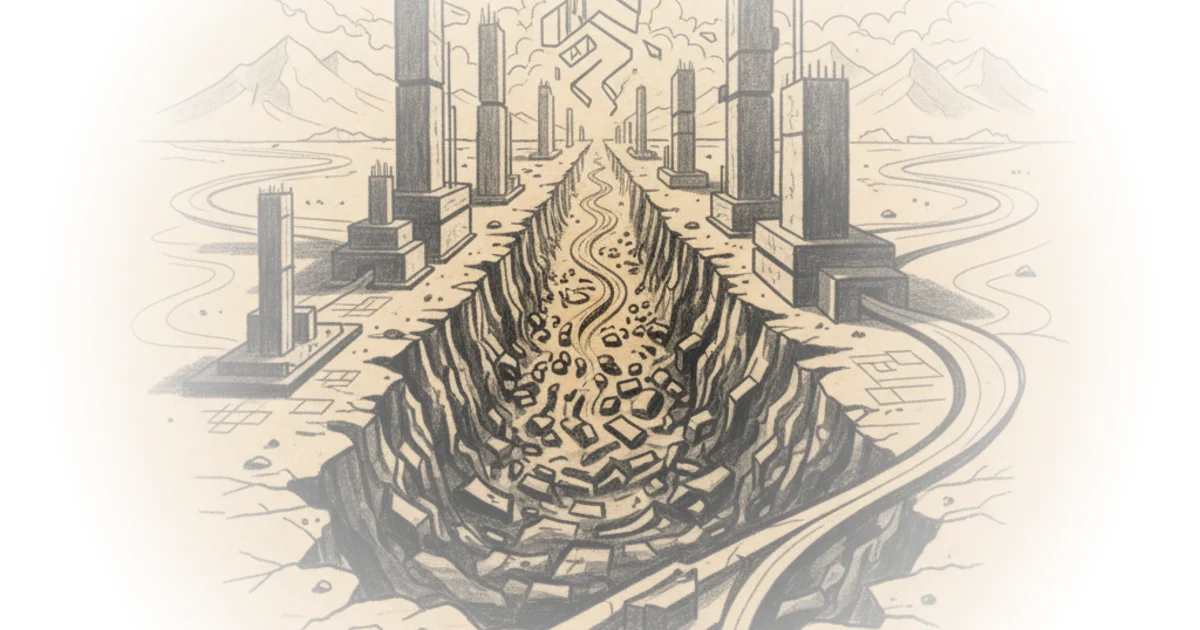
He explains that the foundation work alone is unprecedented, involving over 16,000 piles driven 70 meters deep into unstable desert soil. "The work currently underway on the line dwarfs anything ever seen before," Mills observes, highlighting the massive logistical feat of creating a piled raft foundation to transfer weight to the bedrock. This technical breakdown is crucial because it shifts the conversation from political posturing to physical possibility. The sheer volume of material—3.5 million cubic meters of concrete just for the first phase—suggests a project of industrial magnitude, yet the scale of the ambition often obscures the fragility of the execution.
"Generally, in real estate, hope is not a strategy."
This line cuts through the hype. Mills points out that while the foundations are complete, the transition to vertical construction is where the project faces its first true stress test. The reliance on "hope" to meet the 2026 deadline for the FIFA World Cup stadium is a precarious position for a project of this size. Critics might note that state-backed mega-projects often operate outside traditional market constraints, but even sovereign wealth cannot easily manufacture the supply chains required for such a build.
The Logistics of a Desert City
The commentary then pivots to the most critical vulnerability: water and materials. Mills argues that while millions of tons of concrete have been poured near the coast, extending the city into the hinterland presents a logistical nightmare. The plan relies on the Oxigon desalination plant and a network of concrete factories that, as of late 2025, do not yet exist.
He highlights the disconnect between the timeline and the infrastructure: "Those vast concrete plants are still a very long way off and concrete's currently being produced locally with water shipped in by tankers, which is by no means a scalable solution." This is the piece's most damning evidence. The strategy of using Phase 1 as an "anchor asset" to attract future investment is sound in theory, but it fails to address the immediate bottleneck of resources. The project is effectively trying to build a skyscraper without a steady supply of bricks.
"2026 is going to be make or break for the line. This is the year when deadlines need to be met and when progress is going to be measured in height, not hype."
Mills frames 2026 as the inflection point where the project must transition from digging trenches to rising towers. The risk here is not just financial but reputational. The Crown Prince has staked his legacy on this vision, yet the lack of scalable infrastructure suggests a potential disconnect between the leadership's vision and the on-the-ground reality. A counterargument worth considering is that the Saudi government may be prioritizing speed over perfection, accepting delays in the hinterland to ensure the coastal anchor assets are delivered for the World Cup. However, as Mills notes, the credibility of hosting a global event inside a structure that is barely 2.4 kilometers long—less than 1.5% of the total plan—remains questionable.
The Human and Political Cost
Beyond the engineering, Mills touches on the darker undercurrents of the project. He acknowledges the allegations of human rights abuses, including the forced displacement of tribes and accusations of modern-day slavery, which the government vehemently denies. The lack of press access makes independent verification nearly impossible, creating an information vacuum that allows rumors to fester.
He questions the internal dynamics of the project, asking if the leadership is being told the truth about the costs and challenges. "Is there leadership strong enough on Neom to push back on, let's say, some of the Prince's more fantastical visions?" This is a profound observation about the nature of autocratic development. When a single leader's reputation is tied to a project, the feedback loops that usually prevent catastrophic overreach are severed. The result is a project that risks becoming a monument to a leader's ego rather than a functional city.
"For an ambitious leader with unchecked power, it's exactly the type of project you take on to capture the world's imagination. But for everyone else, it's a huge risk."
This distinction captures the essence of the dilemma. The project is designed to be a symbol, a way to wean Saudi Arabia off oil dependency and rebrand the nation. But symbols do not house families, and they do not generate economic returns on their own. The tension between the project's symbolic value and its economic viability is the central conflict that will define its future.
Bottom Line
Fred Mills delivers a masterclass in separating vision from viability, using hard engineering data to puncture the fog of hype surrounding The Line. His strongest argument is the logistical impossibility of scaling water and concrete production fast enough to meet the 2026 deadline without existing infrastructure. The project's biggest vulnerability remains its reliance on a single leader's will to override the laws of physics and economics. Readers should watch 2026 closely: if the vertical construction stalls or the World Cup stadium remains a concept, the dream of The Line may finally be revealed as just that—a dream.