Cory Doctorow delivers a blistering indictment of the current artificial intelligence boom, arguing that it is not a technological revolution but a dangerous financial swindle designed to enrich monopolists while dismantling the workforce. He posits that the true existential threat isn't a rogue superintelligence, but the inevitable burst of this bubble which will leave society with ruined infrastructure and no human experts to fix it. This is a vital intervention for anyone trying to distinguish between genuine innovation and the "pump-and-dump" schemes currently dominating the tech sector.
The Bubble and the Realpolitik
Doctorow frames the current AI landscape not as a breakthrough, but as a continuation of historical market manipulation. He writes, "The AI bubble is part of a lineage of pump-and-dump swindles created by monopolists who are desperate to convince investors that they can continue to grow even after they've saturated their markets." This comparison to past financial bubbles is effective because it strips away the sci-fi mystique and places the phenomenon squarely in the realm of economics. The argument suggests that the hype is a deliberate distraction from the lack of a viable business model.
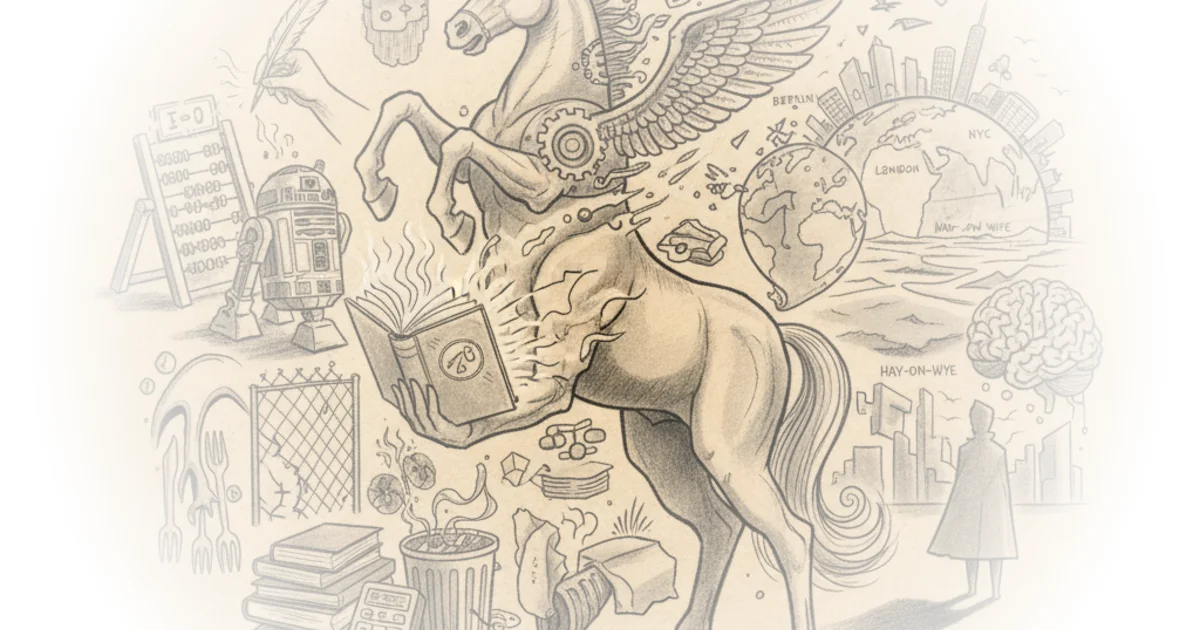
He further argues that the technology itself is being misused to degrade labor conditions rather than enhance productivity. "A chatbot can't do your job, but an AI salesman can absolutely convince your boss to fire you and replace you with a chatbot that can't do your job." This distinction is crucial; it shifts the blame from the tool to the management strategy that weaponizes the tool for cost-cutting at the expense of quality. The core of his thesis is that the most important fact about any technology is "who it does it for and who it does it to," a point that resonates deeply when observing the rapid erosion of customer service and creative roles.
The real risk is that when the bubble bursts we'll indulge the ruling class's reflex to austerity, and that this will continue the decades of mass economic traumatization that makes people into easy marks for fascists.
Critics might argue that Doctorow underestimates the long-term utility of AI in specific, narrow domains, suggesting that his focus on the "bubble" ignores genuine incremental gains in coding or data analysis. However, his counterpoint regarding the "solipsistic fantasy" of bosses who view workers as statistical artifacts holds significant weight. He notes that when bosses fire workers, "it usually means that they don't care if that job is done well," a dynamic that inevitably leads to the degradation of public goods and services.
The Asbestos of Civilization
Doctorow employs a stark metaphor to describe the long-term damage of premature automation. He warns, "AI is the asbestos we are shoveling into the walls of our civilization and our descendants will be digging it out for generations." This imagery is powerful because it reframes AI not as a temporary glitch, but as a structural hazard that will require generations to remediate. The reference to asbestos connects the current tech frenzy to a historical failure of regulation and foresight, suggesting that the cost of this "innovation" will be paid by future taxpayers and workers.
He draws on the concept of "Goodhart's law"—the idea that when a measure becomes a target, it ceases to be a good measure—to explain how companies are "cooking up all kinds of ways to 'juke the stats' to paint a false picture of AI adoption." This historical context, reminiscent of how industrial metrics were manipulated in the past, adds depth to his critique of modern corporate reporting. The argument is that the metrics of success are being gamed to sustain the stock price, not to deliver actual value.
The Platform Monopoly and the Fight for Ownership
Beyond the economic critique of AI, Doctorow turns his fire on the distribution mechanisms that control how we access information. He highlights the monopoly power of Amazon's audiobook platform, Audible, which he claims "controls 90% (!) of the audiobook market" and refuses to carry books that aren't locked with "digital rights management" (DRM). He writes, "Amazon's monopoly audiobook platform refuses to carry it, and so (once again) I'm pre-selling the audio, ebook and print edition in a Kickstarter campaign that proves that DRM-free isn't just the right way to reach an audience, it's also the best way to reach them."
This section of the commentary is particularly compelling because it connects the abstract concept of AI monopolies to the tangible reality of consumer rights. Doctorow explains that DRM creates a "switching cost" that traps users, noting that "every time a writer sells you an audiobook on Audible, they create a 'switching cost' that stops you from leaving Audible for a competitor." This creates a feedback loop where creators are forced to accept restrictive terms to reach an audience, further entrenching the monopoly. He draws a parallel to the "Napier's bones" era of calculation tools, suggesting that just as those tools were meant to be accessible and usable, modern digital tools should not be locked behind legal and technical barriers.
Selling books is how I pay the bills and keep the lights on, and as ever, this is the only way you can get a major publisher's ebooks and audiobooks with no DRM and no 'terms of service.' These are truly ebooks and audiobooks that you own.
A counterargument worth considering is that DRM-free distribution might limit the reach of works to niche audiences, potentially reducing the cultural impact of the author. However, Doctorow's data suggests otherwise, as his Kickstarter campaigns have proven financially viable and successful in reaching a dedicated readership that values ownership. He argues that the legal protections for DRM, which he calls "outrageous," extend globally due to trade agreements, effectively criminalizing the act of fixing or moving purchased content.
Bottom Line
Doctorow's most potent argument is that the AI bubble is a mechanism for transferring wealth from workers and consumers to monopolists, with the eventual collapse posing a greater threat to social stability than any rogue algorithm. His biggest vulnerability lies in the assumption that the bubble will inevitably burst without regulatory intervention, though his evidence of unsustainable spending and lack of profitability supports this view. Readers should watch for the moment the market corrects, as the "asbestos" of poorly implemented AI will then become a visible and costly burden on the economy.