Most political analysis treats artificial intelligence as a culture-war wedge, assuming Democrats fear safety while Republicans fear regulation. Alberto Romero shatters that assumption with a devastating compilation of polling data showing a rare, unified American rejection of the technology's physical footprint and its architects. This isn't just about abstract anxiety; it is a measurable, bipartisan collapse of trust that has already stalled billions in infrastructure. For the busy executive or policymaker, Romero's work is essential because it proves the era of unchecked AI expansion is over, replaced by a grassroots NIMBY movement that transcends party lines.
The Physical Backlash
Romero's most striking finding is that Americans have turned against the very infrastructure required to power AI. He writes, "Americans have gone full NIMBY on datacenters," a phrase that captures the sudden shift from obscure zoning topics to front-page political fights. The data is unforgiving: a May 2026 Gallup poll shows 71% of adults oppose building these facilities in their local area, with 48% strongly opposed. This sentiment has surged so rapidly that datacenters have now surpassed nuclear plants as the most-opposed local infrastructure category, a historic reversal given decades of public fear regarding nuclear energy.
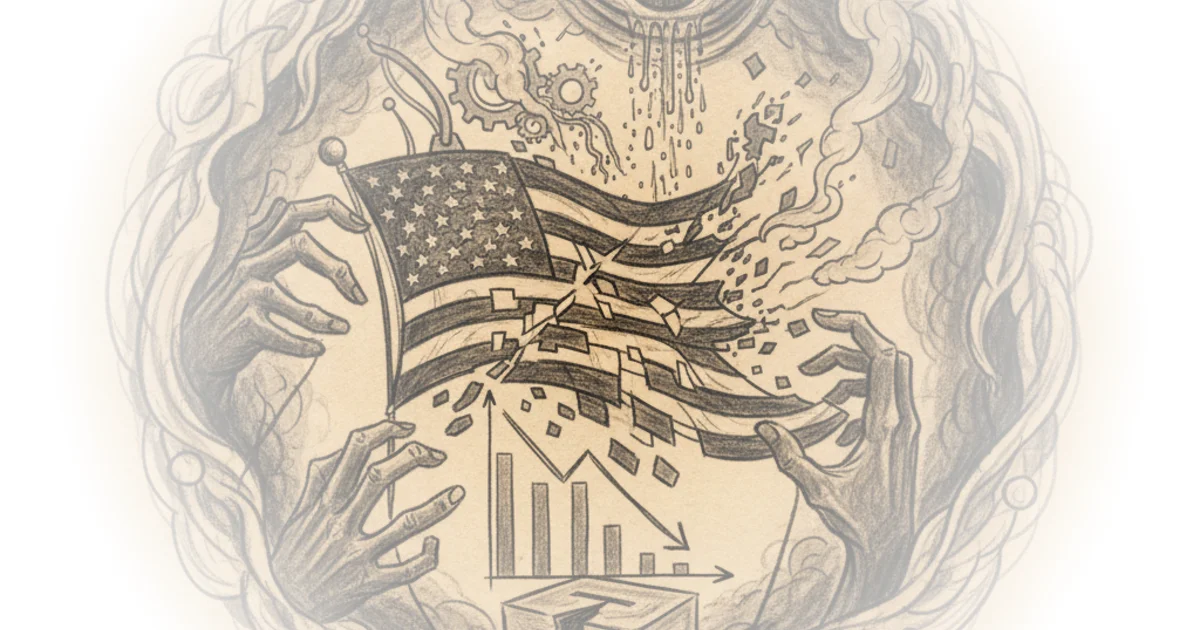
The economic narrative sold by the industry is failing to land. Romero notes that while supporters cite jobs, "datacenters have surpassed nuclear as the most-opposed local infrastructure," and in Virginia, comfort with local datacenters collapsed from 69% in 2023 to just 35% in 2026. The financial reality is hitting voters hard; 59% believe these facilities damage the local environment, and 57% say they negatively affect home energy bills. This aligns with the broader context of the "Water footprint" and "Opposition to AI data centers" deep dives, where the sheer resource intensity of these facilities is becoming a tangible burden on local grids and water tables, not just a theoretical risk.
Datacenters now exceed nuclear plants in local opposition, an infrastructure category with decades of accumulated fear behind it.
Critics might argue that this opposition is temporary, driven by misinformation or short-term rate hikes that will fade as the technology matures. However, Romero's longitudinal data suggests a deeper structural rejection. The opposition isn't just about cost; it's about a fundamental lack of trust in the entity building it.
A Crisis of Trust and Leadership
The rejection of the hardware is inextricably linked to a rejection of the people building it. Romero argues that the "faces of the AI industry are deeply unpopular," creating a category-level credibility catastrophe. He points to polling where every major tech CEO is "underwater on net favorability," with figures like Mark Zuckerberg and Elon Musk facing severe disapproval across the political spectrum. The public perceives a dangerous entanglement between these billionaires and political power, with 70% of voters believing tech CEOs are "simply trying to appeal to [the administration] rather than acting on principle."
This distrust extends to the technology itself. Romero highlights a massive gap between experts and the public: while 56% of AI experts believe the impact over the next 20 years will be positive, only 17% of the general public agrees. He writes, "The gap between how the public and the people building AI see its future is one of the largest expert-public divides Pew has measured on any technology topic." This isn't just skepticism; it's a belief that the technology is developing too quickly, a view shared by nearly equal numbers of voters from both major parties.
The Bipartisan Consensus
Perhaps the most politically significant finding is that AI has become a rare point of unity in a fractured political landscape. The standard analytical frame—Democrats worrying about safety and Republicans about overreach—has completely collapsed. Romero observes that "Republicans and Democrats are now essentially tied on 'more concerned than excited' about AI," with the partisan gap closing entirely since 2021.
This convergence is driving real-world consequences. Romero details how "voter support for banning the construction of AI data centers near where they live" has risen across the board, with Republicans actually showing higher support for bans than Democrats in some recent polls. The result is a legislative and legal gridlock that has already cost the industry dearly. He notes that "$156 billion in U.S. datacenter projects were blocked or delayed in 2025 by local opposition, moratoria, or litigation." The scale of this disruption is illustrated by the case in Prince William County, Virginia, where the Board of Supervisors unanimously withdrew from a legal fight to defend a $24.7 billion datacenter campus, effectively admitting defeat against their own constituents.
AI has achieved something rare in American politics: it has united voters who agree on almost nothing else.
A counterargument worth considering is that this opposition is purely reactive to the speed of deployment rather than the technology itself. If the industry slowed down and addressed the specific concerns about water and energy, would the backlash subside? Romero suggests the skepticism is deeper, rooted in a fundamental distrust of the industry's motives and the concentration of power, making simple technical fixes insufficient.
Bottom Line
Alberto Romero's compilation delivers a stark verdict: the American public has turned against the AI boom, not in theory, but in their backyards and on their utility bills. The strongest part of this argument is the bipartisan nature of the backlash, which renders traditional political maneuvering ineffective against a unified electorate. The biggest vulnerability for the industry is the assumption that economic incentives will override local opposition, a strategy that has already failed in key battleground states. The next phase of the AI story will not be written in Silicon Valley boardrooms, but in local zoning hearings and state legislatures where the public has already made its choice.