Tom van der Linden argues that the most devastating film of the decade is not one that offers catharsis, but one that deliberately denies it, leaving the audience stranded in a state of unresolved tension. By dissecting Brady Corbet's The Brutalist, van der Linden suggests the film's true power lies not in its narrative conclusion, but in its refusal to let the story end, forcing viewers to confront the fundamental impossibility of truly knowing another person. This is a rare piece of criticism that treats a movie not as a product to be consumed, but as a psychological event that disrupts the viewer's own sense of self.
The Architecture of Disruption
Van der Linden opens by highlighting director Brady Corbet's specific intent to subvert the modern expectation of narrative closure. The author notes that Corbet observes, "there are too many films... which sort of arrives at a foregone conclusion... and it doesn't continue to sort of evolve in your mental space." This critique of the "foregone conclusion" is the lens through which the entire review is filtered. The film, a three-and-a-half-hour epic about a Hungarian-Jewish architect rebuilding his life in America, is framed not as a triumph of the American Dream, but as a deliberate dismantling of it.
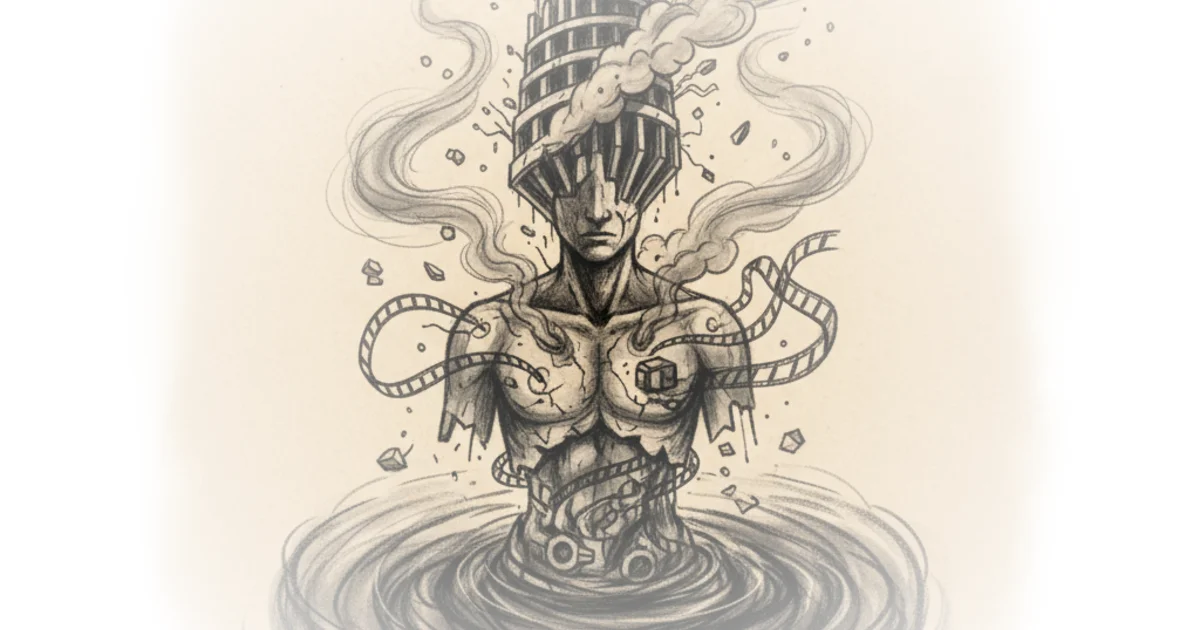
The commentary posits that the film's jarring ending is a feature, not a bug. Van der Linden writes, "to completely disrupt every viewer's comfort is actually an important part of the cinematic experience." This is a bold claim for a piece of criticism, as it validates the frustration many viewers feel when a story refuses to tie up its loose ends. The author argues that this disorientation is necessary to force the audience to "wake up and really engage with the material and then investigate their own feelings about what is good taste and what is bad taste." By refusing to let the viewer settle into a comfortable interpretation, the film exposes the artificiality of standard storytelling.
When you are on a ride where the bus is tipping halfway down the hill and all of a sudden you're in an area where you don't recognize anything, that's what we're after.
Critics might argue that this approach risks alienating the audience entirely, turning a profound story into an exercise in pretension. However, van der Linden suggests that the discomfort is the point, transforming the epilogue into a "puzzle box" that requires the viewer to actively reconstruct the narrative rather than passively receive it.
The Unreliable Narrator and the Fractured Self
The piece shifts to a deeper analysis of the film's final act, where a niece, Sophia, takes over the narration. Van der Linden points out that this shift forces a re-evaluation of everything seen previously. The author writes, "the core question of the movie for me now is how much we are supposed to take her read of his work at face value." This introduces a layer of epistemological uncertainty: are we watching the life of the architect, Laslo, or are we watching Sophia's memory and interpretation of him?
The commentary draws a parallel between the film's narrative structure and the human condition. Van der Linden argues that the film illuminates "the continuous tension between expression and perception," noting that "nothing is of its own explanation." This is where the review transcends film criticism and becomes a meditation on existential isolation. The author suggests that the film reveals a "fundamental rift in our being," where our private interior self is inaccessible to the world, and our public persona is merely a construct subject to interpretation.
We touch people on the outsides of their bodies and they us, but we cannot get at their insights and cannot reveal our insights to them.
Van der Linden leans heavily on Ernest Becker's The Birth and Death of Meaning to anchor this argument, suggesting that the tragedy of the film is not just the protagonist's suffering, but the universal inability to bridge the gap between self and other. The author notes that this "fundamental struggle" is particularly acute for the immigrant experience, where language and culture act as barriers to true connection. While this philosophical framing is compelling, it risks overshadowing the specific historical trauma of the Holocaust that the film depicts, potentially universalizing a specific horror into a general metaphor for human loneliness.
The Cost of Meaning-Making
In the final section, van der Linden explores how the characters attempt to impose meaning on a chaotic world. The author observes that the protagonist, Laslo, describes his designs as "machines with no superfluous parts" that possess an "immovable core." Yet, the film suggests that this rigidity is a defense mechanism against the "rumbling anxieties" of existence. Van der Linden writes, "we are nothing in other words; we stare into the void and the void stares back."
The commentary suggests that the film's true tragedy is the realization that the "destination"—the completed building, the achieved success, the saved family—is an illusion. The author argues that the protagonist is not a man chasing a dream, but a "broken man haunted by unreconcilable pain." The final lines of the film, where Sophia quotes her uncle, are presented not as a resolution, but as a final act of reinterpretation. Van der Linden asks, "to what extent was he doing this to himself?" suggesting that the search for meaning is often a desperate attempt to justify suffering rather than a genuine discovery of truth.
The occasional breakthrough only proves the rule: you reach out with a disclosure, fail, and fall back bitterly into yourself.
This analysis is powerful because it reframes the film's ambiguity not as a lack of direction, but as a precise emotional target. The author effectively argues that the film's refusal to provide a neat ending is the only honest way to portray a life defined by trauma and displacement.
Bottom Line
Tom van der Linden's commentary succeeds by refusing to treat The Brutalist as a traditional narrative, instead positioning it as a philosophical challenge to the viewer's need for closure. The strongest element of the argument is its connection between the film's structural disruptions and the existential inability to truly know another person. However, the piece's heavy reliance on existential philosophy occasionally risks abstracting the specific historical weight of the Holocaust into a general metaphor for human isolation. Readers will find this analysis most valuable for its insistence that the most profound art does not answer questions, but rather complicates the ones we thought we had already solved.