David Perlmutter's "Pay to the piper" does not merely retell a familiar fable; it violently inverts the power dynamic between the human creator and the animated creation, forcing a confrontation with the ethics of exploitation. The piece's most jarring claim is that the world of "cartoon characters" is not a whimsical refuge, but a sovereign nation with its own brutal legal code, where the casual cruelty of the human world is met with disproportionate, literal retribution. This is not a story about a man who lost his way; it is a story about a man who finally met the bill for centuries of unpaid labor and dehumanization.
The Inversion of Power
Perlmutter constructs a narrative where the protagonist, a Los Angeles entertainment lawyer named Ravenscroft, believes his legal expertise grants him immunity. He runs over a creature that turns out to be a deer-man wearing a tailored suit, bleeding black ink and smelling of "freshly opened cans of paint, along with the equally pungent smell of burning celluloid." Perlmutter uses these sensory details to ground the absurdity in a tangible, industrial reality. The lawyer assumes he can negotiate, just as he does with the "toons" he represents in his real-world job. "Off-screen, where their manners and behaviour were far different than on-, he'd witnessed his fair share of toxic negotiations with them," Perlmutter writes, establishing Ravenscroft's cynicism as the catalyst for his downfall.
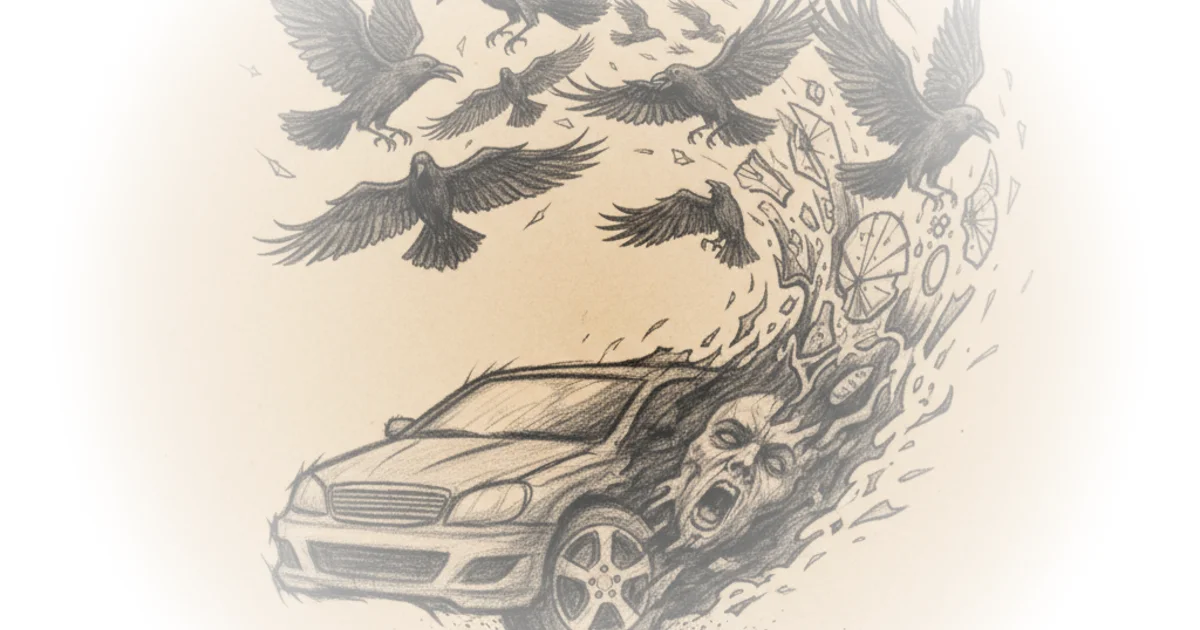
The moment Ravenscroft attempts to apply human logic to this new reality, the system collapses around him. When he argues that the death was an accident, the pig-cop officer retorts, "Stuff like this happens all the time here, and nobody says anything. You just get used to it." Perlmutter's choice to have the police force operate on cartoon logic—where a single gunshot causes a car to explode into flames—serves as a metaphor for the unpredictable, often destructive power dynamics in the entertainment industry. The lawyer's attempt to bribe the officer, a standard move in his world, is met with a grotesque transformation: "His eyes got big as saucers with fried eggs cooking in them, while uttering an unexpected schoolgirl-style giggle." This surreal imagery underscores the futility of applying human transactional norms to a realm built on different physics and morals.
Critics might argue that the violence inflicted upon Ravenscroft is excessive and undermines the moral high ground of the "toons," turning them into the very monsters he feared. However, Perlmutter seems to be making a point about the accumulation of harm. The violence is not random; it is the direct result of Ravenscroft's inability to see the beings he works with as anything other than commodities.
"Because that label was forced upon us. At least where you come from. There, we have to grin and bear it to earn a living, because you do not consider it offensive. Here, however, we are the ones who decide what kind of language is fair and just."
The Sovereignty of the Created
The core of Perlmutter's argument crystallizes in the confrontation with Chief Toad. She rejects the term "Toontown," a name that has persisted since the mid-1910s, and redefines the geography as the "Commonwealth of Anthropomorph." This is a deliberate historical nod to the era of early animation, where the line between reality and fiction was first blurred, much like the rotoscoping techniques that would later allow animators to trace over live-action film to achieve realistic movement. Perlmutter suggests that the "Toontown" label is a colonial imposition, a way for humans to dismiss a complex society as a mere district of Hollywood.
Chief Toad explains that the stars the humans revere are actually "wastrels and tax exiles" who have done nothing but stereotype their people. "That crowd of wastrels and tax exiles has done nothing to help the people of Anthropomorph, save to stereotype us in the minds of the likes of you!" she declares. Perlmutter is effectively arguing that the fame of these characters has come at the cost of their dignity, reducing complex beings to "clowns, meant to prance and caper and bow and scrape at your beck and call." This reframing challenges the reader to consider the human cost of the entertainment we consume, drawing a parallel to the way historical figures in animation have often been stripped of their agency to serve a narrative.
The Chief's refusal to accept Ravenscroft's legal defense is absolute. "This is NOT AMERICA!" she shouts, "Your concepts of law, science, government and gentility mean nothing to us." Perlmutter uses this rejection to highlight the failure of human institutions to understand or respect the autonomy of the created. The lawyer's attempt to cite the jurisdiction of Los Angeles is met with a physical blow, a "large, pinkish lump" that grows with "inexplicably quick speed," illustrating the absurdity of trying to impose human order on a world that operates on its own rules.
The Cost of Exploitation
The story's climax is not a courtroom victory, but a summary execution. Chief Toad orders Ravenscroft to be blown up with TNT, a punishment that mirrors the explosive nature of the cartoon world itself. Yet, in a twist that adds a layer of tragic complexity, the Chief breaks down immediately after. "Why do they always have to kill us when they blunder their way in here?" she asks herself, before weeping, "And why can't any of them ever tell me I'm beautiful?" This moment reveals the deep insecurity and pain beneath the authoritarian exterior. Perlmutter suggests that the violence is a defense mechanism, a way for a marginalized group to assert control in a world that has consistently denied them humanity.
The narrative draws a subtle connection to the history of anthropomorphism, where animals and objects are given human traits to serve human stories. Here, Perlmutter flips the script: the "toons" are the ones with the real feelings, the real jobs, and the real right to self-determination. Ravenscroft's death is the price of his refusal to acknowledge this reality. As Perlmutter puts it, "And he was about to discover exactly how much his 'kind' were truly 'liked' there."
"As you danced to our music, so to speak, you now have to pay to the piper."
Bottom Line
Perlmutter's piece is a searing critique of the entertainment industry's treatment of its most iconic assets, using the lens of a dark fantasy to expose the dehumanization inherent in treating living beings as disposable props. The argument's strength lies in its refusal to offer a happy ending or a moral compromise; the lawyer dies because he never truly saw the people he exploited. The story's vulnerability is its reliance on extreme violence to make its point, which risks alienating readers who might see the punishment as disproportionate. However, the emotional core—the Chief's tearful question about beauty—grounds the surreal horror in a very human longing for recognition, making the final verdict inescapable: when you treat people like cartoons, you must be prepared to face a world where the rules of reality no longer apply.