Matt Yglesias delivers a provocative challenge to the dominant environmental narrative: the path to a clean future isn't shrinking our energy use, but aggressively expanding it. While much of the climate movement fixates on conservation and rationing, Yglesias argues that true decarbonization requires a massive, almost utopian build-out of electricity infrastructure to power everything from electric vehicles to vertical farms. For busy listeners navigating the noise of energy policy, this piece cuts through the confusion by exposing a fundamental ideological rift that could derail the transition before it truly begins.
The Conservation Trap
The piece opens by dissecting a common misunderstanding about electricity costs, using the contrast between California and Alabama to illustrate a deeper philosophical divide. Yglesias notes that while electricity is cheaper per kilowatt-hour in Alabama, the average bill is higher due to inefficient heating and cooling. He uses this to pivot to a critique of the environmental movement's roots. "Influential elements of the environmental movement are driven by their roots as a conservation movement," he writes, suggesting their core desire is to "shrink the human footprint: to use less energy, build less stuff, and live more humbly."
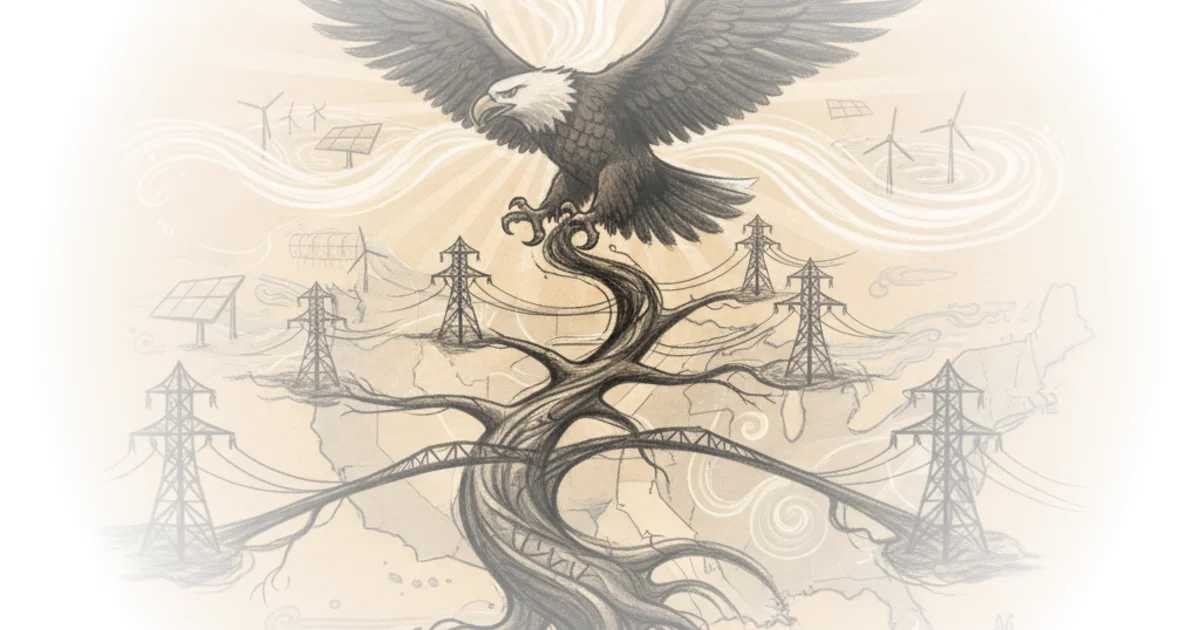
This framing is sharp because it identifies a contradiction that often goes unspoken in progressive circles. The argument suggests that groups like the Sierra Club, despite their rhetorical shifts on other issues, remain tethered to a "degrowth ideology" that prioritizes living with less over building abundance. Yglesias contends that when these groups face the reality of electrifying the economy, they default to "rationing" rather than supply expansion. "The greens want to impose tighter price controls on utilities, minimize infrastructure investment, and meet household energy needs with rationing," he asserts. This is a bold claim, and it forces the reader to question whether the current environmental strategy is actually compatible with the scale of electrification required to replace fossil fuels.
Critics might argue that Yglesias oversimplifies the environmental stance by painting all conservation efforts as anti-growth, ignoring that efficiency is a necessary first step before scaling up. However, his point about the end goal remains potent: if the ultimate aim is to limit consumption rather than enable new uses, the transition stalls.
The Utility Model and the War on Supply
Yglesias then dives into the mechanics of how we generate and distribute power, arguing that the current regulatory model is being weaponized against expansion. He explains that utilities traditionally operate as regulated monopolies where profits are capped, but the incentive is to build more infrastructure to sell more electricity. Environmentalists, he argues, have turned this on its head. "Environmentalists have always hated this model, because they don't think we should sell people more electricity," he writes.
He points to the influence of Amory Lovins and the Rocky Mountain Institute, whose "soft energy path" envisions a future where we reduce per capita energy consumption. Yglesias quotes Lovins's vision directly: "The cheapest and greenest kilowatt-hour is the one you never use." While this sounds appealing on the surface, Yglesias warns that applying this logic to a modern, electrified economy is a recipe for failure. He highlights recent proposals by Leah Stokes, a prominent academic and advisor to green groups, which suggest cutting utility rates of return specifically to "limit utilities' endless quest for more infrastructure." Yglesias is blunt in his assessment: "Stokes doesn't see the anti-supply impact of price controls as a undesirable downside — she sees it as a benefit."
The green wing of the energy wonk community is suddenly buzzing in a frenzied way about responsive demand, as if this is some kind of magic alternative to major new capital investment, in a way that doesn't make any sense to me.
This section is the article's analytical core. By linking high-level policy proposals to the underlying ideology of "degrowth," Yglesias exposes a potential trap: policies designed to lower bills in the short term could strangle the grid's ability to expand in the long term. He draws a parallel to the Tennessee Valley Authority, noting that while some environmentalists dislike the TVA's centralized structure, a public power model could be reimagined to pursue abundance rather than scarcity. The historical context of the TVA, established in the 1930s to bring cheap, abundant power to a struggling region, serves as a counter-narrative to the modern "soft path" that seeks to limit energy access.
The Case for Ambition
The final act of the piece shifts from critique to vision. Yglesias asks readers to imagine a world where the goal is not just to stop burning carbon, but to unlock new possibilities that require vast amounts of power. He argues that "electrifying everything" means we need a "lot more electricity," not just better demand management. "A small price nudge to encourage people to charge their electric vehicles at midday rather than in the evening is not going to replace the need for new infrastructure," he writes, dismantling the idea that behavioral tweaks can solve structural deficits.
He paints a picture of a "dynamic, cleaner, high-energy future" where abundant electricity enables technologies like vertical farming and carbon removal. "One of the really big ones is the ability to do vertical farming," he notes, explaining that while these farms are resource-efficient, they are currently too energy-intensive to be viable. "Powering such a factory with electricity is also in some sense more energy-efficient than growing crops to manufacture animal feed," he adds, pointing to the potential for lab-grown protein. These are not just policy tweaks; they are visions of a transformed society that require a grid capable of handling a massive surge in demand.
Yglesias concludes by challenging the reader to choose between two paths: one that accepts a "soft path to rationing" and another that embraces "ambition." He warns that "people aren't going to switch to electric cars and electric home heating if doing so raises their fuel costs," and that without a massive build-out, prices will inevitably rise, killing the political will for the transition. "A vision for utilities that doesn't support that isn't going to work," he declares, leaving no room for ambiguity about the stakes.
We can debate the best policy mix to promote that goal, but we also need to debate the goal, and it's one the green groups fundamentally reject.
Critics might note that Yglesias's vision of abundance relies heavily on technological breakthroughs that are not yet cost-effective, such as carbon removal and vertical farming. There is a risk that betting the entire transition on future innovations could lead to delays. However, his argument is that the alternative—accepting rationing as a permanent feature of the energy system—is a guaranteed failure in the face of population growth and economic development.
Bottom Line
Yglesias's strongest contribution is his unflinching exposure of the ideological conflict between conservation and abundance within the climate movement, forcing a necessary debate on whether we are building a grid for the future or shrinking it to fit the past. The piece's greatest vulnerability is its reliance on the assumption that political will can be marshaled for massive infrastructure projects in an era of NIMBYism and regulatory gridlock. Readers should watch closely as the administration and state legislatures grapple with utility rate cases, as the outcome will determine whether the U.S. pursues a path of rationing or the ambitious expansion Yglesias champions.