Asianometry cuts through the noise of "semiconductor vs. agriculture" panic with a stark reality check: the water crisis in Arizona isn't a binary choice between chips and crops, but a complex management puzzle where the semiconductor industry is actually the smaller player. The author's most distinctive move is dismantling the emotional narrative that TSMC is stealing water from farmers, replacing it with hard data showing that agriculture consumes nearly three-quarters of the state's supply while the fab uses a fraction of a percent. This matters now because the narrative is shifting from "can we build it?" to "how do we build it sustainably," and the answer lies in aggressive recycling, not stopping construction.
The Desert Myth and the Real Math
The piece opens by addressing the elephant in the room: building a water-intensive industry in a desert seems counterintuitive. Asianometry writes, "Phoenix is a monument to man's arrogance." Yet, the author quickly pivots from this dramatic opening to the mechanics of survival. The region relies on a mix of mountain snowmelt, ancient fossil groundwater, and a massive federal diversion project from the Colorado River. The author notes that while the Colorado River is "mighty," it has "embarrassing moments" imposing cuts, forcing the state to juggle allocations.
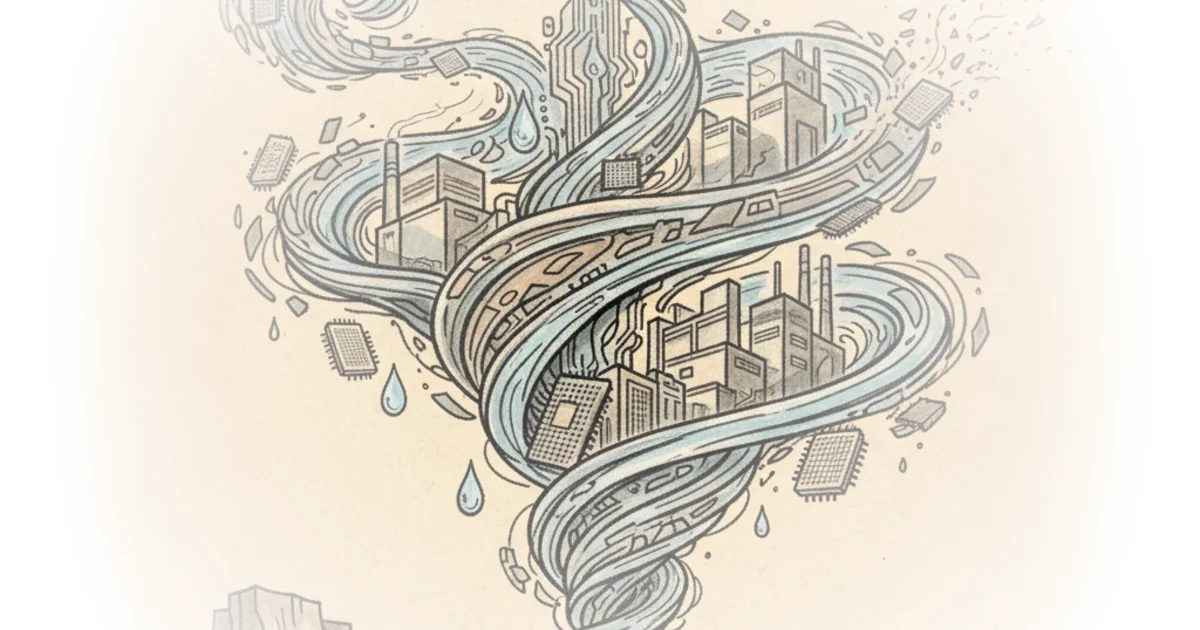
The core of the argument rests on scale. Asianometry points out that "farms use way more water than TSMC," a fact often lost in the heat of local debate. By breaking down the numbers, the author reveals that agriculture accounts for 72% of Arizona's water demand, whereas TSMC's entire operation in Taiwan—across all its massive facilities—consumes only about 1% of Arizona's total statewide usage. This comparison is powerful because it contextualizes the fear. The author writes, "Some claim the facility is stealing water from farmers, saying you can't eat chips. Well, technically you can." This quip underscores the absurdity of the zero-sum game narrative.
Critics might argue that even a small percentage of water usage in a drought-stricken region is significant if the local aquifer is already overdrawn. However, the author counters this by highlighting that the city of Phoenix has been certified to have a "100-year supply of water," largely due to surface sources and reclamation, not just depleting the underground reserves.
Farms use way more water than TSMC. In today's video, I want to revisit the fab in the desert and take a dip into the water situation.
The Water War in the Fab
Moving from the macro to the micro, the commentary dives into the actual manufacturing process. Asianometry explains that over 75% of a fab's water is used for "wet cleans" and "chemical mechanical polishing," processes that require ultra-pure water to remove microscopic contaminants. The author describes the polishing process vividly: "Voila, smoother than a baby's bottom." This accessible language demystifies why the water usage is so high—it's not for drinking or cooling towers primarily, but for the physics of making silicon perfect.
The author then pivots to the solution: recycling. The piece details how TSMC already "use[s] each drop water 3.5 times," treating wastewater for less critical uses before it evaporates. The author writes, "The company has pledged that by 2030 over 60% of the total water consumed by its fabs will be reclaimed water." This is a crucial distinction. The industry isn't just taking water; it's investing in the infrastructure to return it. Asianometry highlights Intel's pioneering work in Phoenix, noting that they "returned 95% of the water they take out from the tap" in 2020. This sets a high bar, suggesting that TSMC is following a proven path rather than experimenting in the dark.
However, the path isn't without friction. The author notes that TSMC faced a "critical roadblock" in filtering out urea from reclaimed water, a problem they only recently solved after years of work. This admission adds credibility to the piece; it acknowledges that the technology is hard-won, not magic.
The Agricultural Elephant
The most nuanced part of the coverage addresses the future of farming. Asianometry writes, "The burdens of the state's changing water conditions will ultimately fall hardest on such farmers." The author identifies that the state's thirstiest crops, alfalfa and cotton, are largely exported or used for animal feed, not human consumption. This is a provocative point. The author notes, "I hear a portion of the hay is exported to Saudi Arabia." This detail forces the reader to reconsider the moral weight of the "chips vs. food" argument. If the water is growing crops for export in a water-scarce region, is the trade-off really as clear-cut as the public perceives?
The author suggests that the solution isn't to shut down the fabs, but to modernize agriculture. "They will either have to change what or how much they plant, plus move away from wasteful flood irrigation," Asianometry argues. This framing shifts the blame from the new industrial entrant to the legacy system that has been inefficient for decades. A counterargument worth considering is that forcing farmers to switch crops could devastate rural economies and Native American communities, who make up 56% of the state's farmers and view farming as a cultural imperative. The author acknowledges this entanglement but maintains that the math of water scarcity demands a shift regardless of the political pain.
The burdens of the state's changing water conditions will ultimately fall hardest on such farmers. They will either have to change what or how much they plant, plus move away from wasteful flood irrigation.
Bottom Line
Asianometry delivers a masterclass in data-driven de-escalation, proving that the TSMC water crisis is a myth born of poor context rather than actual resource depletion. The argument's greatest strength is its relentless comparison of agricultural vs. industrial usage, which effectively dismantles the emotional panic. Its only vulnerability is the assumption that the political will exists to force the agricultural sector to modernize, a hurdle that may prove far higher than any technical challenge the fabs face.