David Smith delivers a weekly roundup that feels less like a news digest and more like a stress test of a nation's resilience. While the headline playfully references a geopolitical cake, the real story is a country navigating a brutal winter, armed drone incursions, and a high-stakes diplomatic pivot—all while its neighbors face humanitarian collapse. This piece is essential listening because it captures the precise moment where Moldova's institutional reforms are being put to the ultimate fire test, revealing both surprising strengths and dangerous vulnerabilities.
The Ice and the Grid
Smith opens with a stark contrast between the picturesque winter scenes and the sudden, dangerous reality on the ground. He notes that while Chisinau's main roads held up, the concrete sidewalks turned into skating rinks, leading to a crisis in the healthcare system. "By the end of Sunday Chisinau's emergency hospital set an all time record with 374 trauma injuries due to ice falls in a single day," Smith writes. This statistic is not just a number; it represents a massive, preventable strain on a system already stretched thin by regional instability. The author highlights how the government's reliance on sand rather than chemical treatments worked for asphalt but failed catastrophically for pedestrian infrastructure, forcing schools to close and delaying the workday.
Yet, amidst this domestic chaos, Smith points to a surprising success story in energy security. He contrasts Moldova's stability with the devastation next door, quoting Maxim Timchenko, director of the country's largest private power firm, who describes the situation in Ukraine as "close to a humanitarian catastrophe." The author argues that Moldova's past investments have paid off, noting that "Moldova's power grid and energy security situation is not showing signs of strain" despite the cold. This is a crucial distinction: while 88,000 families in Kyiv were left without power due to Russian strikes, Moldova's grid held. Critics might argue that this resilience is fragile and dependent on continued external support, but Smith's framing suggests that the lessons learned from previous crises have created a tangible buffer.
Defining the Future
The commentary then shifts to President Sandu's strategic vision for 2026, which Smith presents as a direct response to the existential threats facing the nation. The President's priorities are clear: foreign policy anchored in alliances, a modernized military, and child safety in the digital age. Smith highlights her assertion that "When international law no longer protects you sufficiently, you need to have good friends, to be part of alliances." This is a pragmatic admission that legal frameworks alone cannot guarantee safety in a hostile neighborhood.
On security, the author notes the proposal to increase defense spending to 1% of GDP, framing a "modern, capable, well-equipped army" as fundamental to freedom. But perhaps the most striking part of the President's address, as reported by Smith, is the focus on the diaspora and the psychological toll of uncertainty. Sandu is quoted saying, "Anxiety and uncertainty, concern for tomorrow—these affect the life of each and every one of us. But it is my duty to call things by their name." Smith interprets this as a recognition that the war in Ukraine is not just a military conflict but a driver of emigration and social fracture. The author effectively links the physical security of the state to the mental well-being of its citizens, a connection often missed in standard geopolitical analysis.
"European integration is our anchor of safety in the face of an uncertain future."
The Geopolitical Cake and the Drone in the Garden
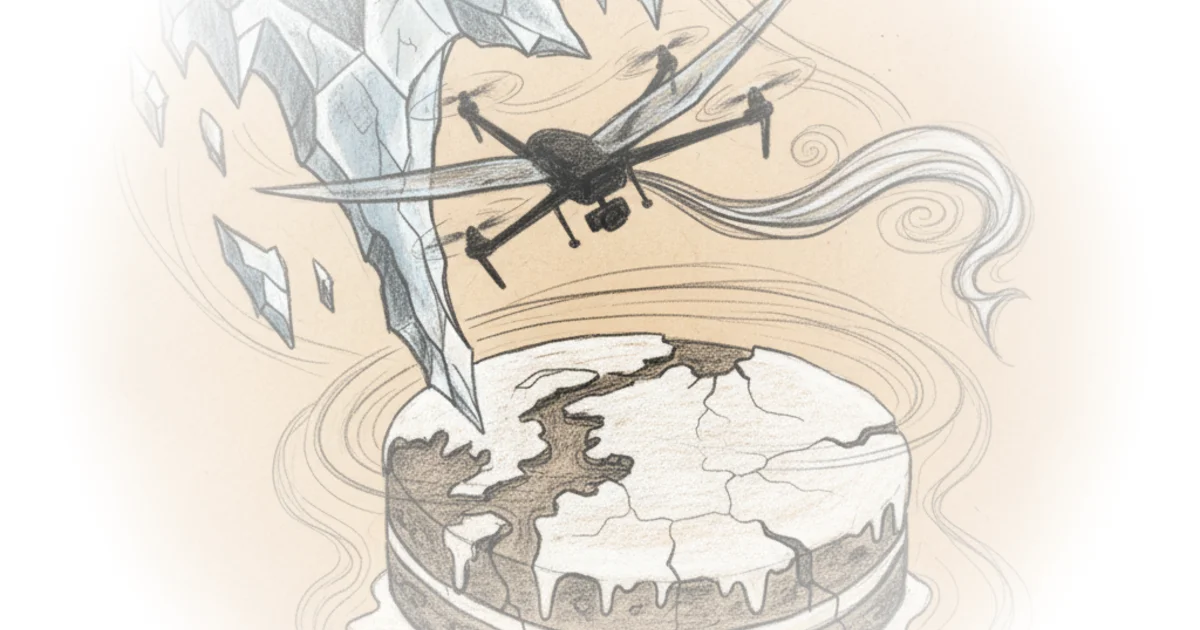
The roundup takes a surreal turn when Smith details the activities of Romanian nationalist George Simion in Washington. The author describes a gala where Simion and US representatives carved a "Greenland shaped cake draped in the American flag," a moment Smith notes Simion defended by saying, "This is the atmosphere at a reception in Washington DC these days." This section serves as a counterpoint to the serious diplomatic work of President Sandu, illustrating the rise of populist, anti-establishment movements that seek to unite the "MAGA and MEGA" movements. Smith's inclusion of Simion's comment, "We need to get rid of Macron," underscores the growing rift between traditional Atlanticist alliances and these new sovereignist blocs.
While the cake-cutting is a political spectacle, the real threat remains physical. Smith reports on another armed drone crash in Moldova, a Geran-2 equipped with a 50kg warhead found in an uninhabited house. The author captures the President's frustration with the limits of diplomatic condemnation. "Russia violates our airspace. The solutions are not simple... just expressing our position and condemning, in the case of Russia, is not enough," Sandu states. Smith uses this to highlight the desperate scramble for air defense equipment, noting that demand far outstrips supply. This is not a theoretical debate; it is a race against time where the failure to secure airspace could have fatal consequences for civilians.
Hybrid Warfare and Judicial Reform
The piece concludes with a deep dive into the ongoing hybrid war, focusing on the Shor network's attempts to evade sanctions through cryptocurrency. Smith details how the A7A5 stablecoin has become a "safe harbor" for those seeking access to USDT, with transactions surpassing $100 billion. The author notes that while sanctions are constraining growth, the network is adapting with new features like virtual debit cards for Russians to access global services. This illustrates the evolving nature of modern economic warfare, where digital tools are used to bypass traditional financial blockades.
Simultaneously, Smith reports on the judicial system's slow but steady work against corruption, citing the 8-year sentence for former MP Constantin Țuțu. The author describes the details of Țuțu's crimes as "frankly, stupid," noting his repeated extortion of the same family. This serves as a reminder that while high-level geopolitical maneuvering dominates the headlines, the fight against petty and grand corruption remains a daily reality for Moldovans. Smith also touches on the political standoff in Gagauzia, where the central government is attempting to rein in a region historically influenced by pro-Russian forces, a move that has sparked protests and appeals to foreign intervention.
Bottom Line
David Smith's coverage is most compelling when it connects the dots between Moldova's domestic struggles and the broader geopolitical storm brewing on its borders. The strongest argument here is that Moldova's resilience is not accidental but the result of deliberate, albeit imperfect, institutional preparation. However, the piece's biggest vulnerability lies in the sheer asymmetry of the threat: no amount of domestic reform can fully insulate a small nation from the direct military aggression of a nuclear superpower. As the drone crashes and the ice melts, the world must watch whether Moldova's "anchor of safety" can hold against the rising tide of hybrid warfare and regional instability.