A federal judge has just delivered a stinging rebuke to the idea that independent journalism can be legally silenced by the very book critics claim bought it out. In dismissing Matt Taibbi's defamation suit, the court didn't just rule on a legal technicality; it affirmed that the chaotic, often transactional nature of modern media is a matter of public debate, not a crime. This ruling forces us to confront an uncomfortable reality: when a journalist's career pivots, the public's right to critique their motives often trumps their right to a pristine reputation.
The Rhetoric of "Owned"
The core of the dispute centered on the book Owned: How Tech Billionaires Bought the Loudest Voices on the Left by Emily J. H. Higgins. The book argues that a specific group of journalists, including Taibbi, abandoned their traditional liberal roots to court conservative tech elites. Reason reports that the court found the book's most inflammatory language—specifically the title itself—to be "attention-grabbing rhetoric" rather than a statement of fact. The judge noted that Taibbi himself admitted the book contained "no evidence of any financial transaction, payment, contract, or quid pro quo involving Plaintiff."
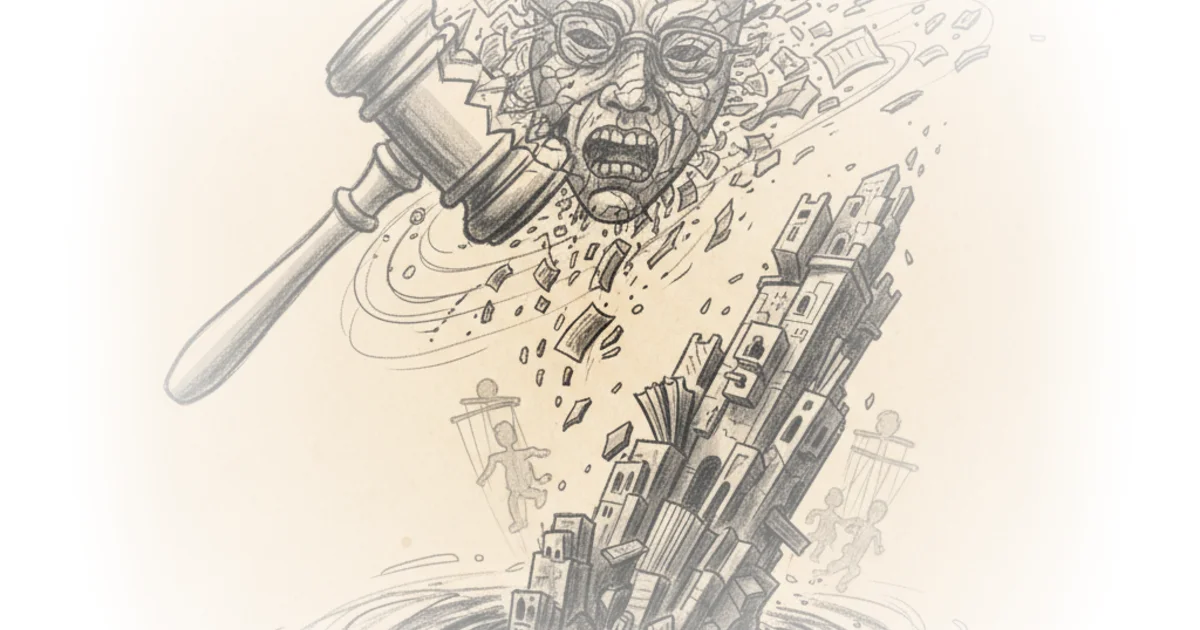
This admission was fatal to the lawsuit. The piece argues that calling someone "bought" or "owned" in a book review or cover blurb is inherently subjective. As the court concluded, "Plaintiff may not like Higgins's subjective conclusions, or agree with their accuracy, but that does not make them actionable defamation." This is a crucial distinction for any reader navigating the current media landscape. It suggests that the line between a scathing critique and a lie is drawn by the presence of verifiable facts, not by the emotional sting of the accusation.
Critics might argue that this ruling lowers the bar for character assassination, allowing authors to smear reputations under the guise of "opinion." However, the court's insistence that the book's claims were based on disclosed facts—such as Taibbi's move to Substack and his work on the Twitter Files—provides a necessary check. The argument holds that if the underlying facts are true, the interpretation of those facts as "selling out" is a protected viewpoint.
"Whether someone is motivated out of greed or ambition is a subjective determination that is not capable of being proven true or false."
The Twitter Files and the Definition of a Windfall
The lawsuit also hinged on the financial narrative surrounding the Twitter Files. The book claims that Taibbi's reporting on the internal documents, released after Elon Musk's acquisition of the platform, generated a "financial windfall." The piece highlights that Taibbi alleged he actually lost over $20,000 in revenue during the project due to subscriber cancellations. Yet, the court found that the book's assertion of a "windfall" was a "subjective determination" rather than a provable falsehood.
The court reasoned that even if Taibbi's revenue dipped initially, the subsequent growth in subscribers meant the term "windfall" was a matter of perspective, not a lie. "Whether this 'small percentage' of increased subscribers represented a 'financial windfall' is a subjective determination," the ruling states. This touches on a broader tension in the digital age: the monetization of controversy. The book frames the Twitter Files project as a cynical cash grab, while Taibbi frames it as a principled stand that cost him money. The court refused to adjudicate the morality of the deal, focusing instead on the legal standard for defamation.
This context is vital when recalling the history of the Twitter Files. The project, which began in late 2022, revealed how the platform had suppressed stories like the Hunter Biden laptop narrative. The book posits that this access was the "payment" for Taibbi's silence on other issues. Reason notes that the court dismissed the idea that the phrase "cash in" implied a literal bribe, stating it referred to trading reputation for access. "This sort of loose, figurative language would naturally lead a reasonable reader to interpret this as a statement of opinion," the judge wrote.
The Limits of "Crony" Capitalism
Perhaps the most significant aspect of the ruling is its treatment of the term "crony." The book describes Taibbi and Glenn Greenwald as "cronies" of billionaires like Musk and Peter Thiel. The court cited precedent holding that calling someone a "crony" is "nonactionable rhetorical hyperbole." The piece argues that this classification is essential for free discourse. If every accusation of political alignment or financial symbiosis could be sued as defamation, the ability to critique the power structures of the tech industry would vanish.
The ruling emphasizes that the book's claim that Taibbi was in the "snug patronage of billionaires" is not a verifiable fact. "The language 'snug patronage' does not have a readily understood precise meaning," the court observed. This linguistic ambiguity is the shield that protects the book's narrative. It forces the reader to engage with the argument rather than the legal technicalities. The court's decision effectively says: You can argue that a journalist is compromised, but you cannot prove they are a puppet without concrete evidence of a quid pro quo.
Critics might note that this leaves a gap in accountability. If a journalist truly is being paid off, but the payment is off the books or disguised as "access," the law offers little recourse. The ruling assumes that the marketplace of ideas will correct these imbalances, but that is a faith-based assumption in an era of algorithmic amplification.
Bottom Line
The strongest part of this argument is its defense of the messy, opinionated nature of modern media criticism, refusing to let the courts sanitize the debate over who influences whom. Its biggest vulnerability, however, is the potential to let bad actors hide behind "opinion" while making damaging insinuations that are impossible to disprove. The reader should watch for how this precedent shapes future lawsuits involving the intersection of tech wealth and journalism, as the line between critique and libel continues to blur.