The Performance That Changed the Definition of America
Bad Bunny's Super Bowl halftime show looked like pure entertainment to millions of viewers. What Kahlil Greene documents is something far more deliberate: a 13-minute act of cultural insertion that reframed colonial history, queer visibility, and Puerto Rican resistance at the center of American spectacle.
The Politics Nobody Noticed
Greene's central observation cuts through the noise. "Bad Bunny smuggled radical critique into the center of the most corporate, flag-waving American event of the year," he writes. The conservative meltdown—Turning Point USA's alternative halftime show featuring what Rolling Stone called a "half-assed lip-synch"—proved the culture war was already lost. Bad Bunny's Spotify streams spiked 470 percent in the U.S. after the performance.
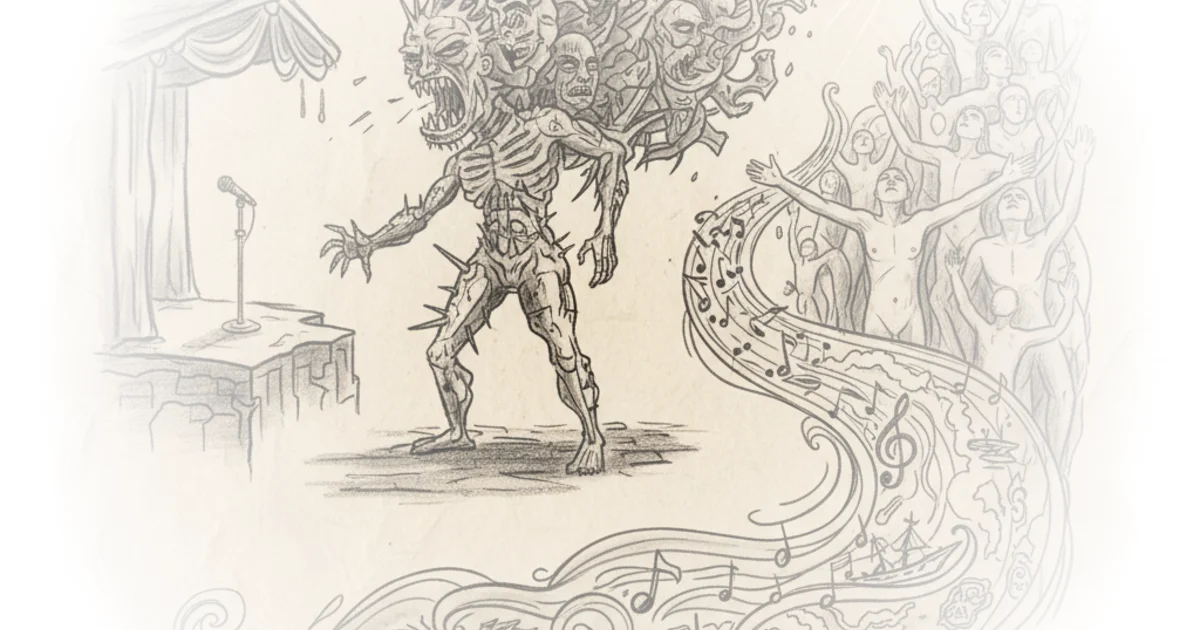
What's more revealing is the moderate audience. "He delivered a 13-minute history lesson on colonialism, gentrification, and resistance to 130 million people, and most of them thought they were just watching a good show," Greene notes. A huge chunk thanked him for being neutral. That misreading is part of how he's winning.
"That's not a failure of messaging. That's mastery of it."
Six Acts of Embedded Critique
Greene identifies six political moves that audiences missed.
The sugar cane opening. The first image showed labor—dancers swinging machetes through sugar cane fields in traditional pava hats. Greene cites Rolling Stone's Vanessa Diaz and Petra Rivera-Rideau: "sugar plantations have also long been symbols of the legacy of colonialism and slavery in the region." Enslaved Africans worked those fields until 1873. After the U.S. took control in 1898, American corporations extracted profits while laborers stayed broken. "On a night designed to celebrate American excess, he made sure 130 million viewers saw who built the foundation of American prosperity," Greene writes.
Toñita against gentrification. Maria Antonia "Toñita" Cay appeared mid-set—the woman who has run the Caribbean Social Club in Williamsburg for 50 years and famously refused to sell. Williamsburg is one of the most aggressively gentrified neighborhoods in the country. On an album built around gentrification's dangers, Bad Bunny brought its living embodiment onto the Super Bowl stage.
Queer intimacy normalized. Two male dancers shared clear romantic intimacy on stage. No disclaimer. "Bad Bunny normalized queer intimacy on a stage historically dominated by hypermasculine spectacle," Greene observes. In reggaeton—a genre built on machismo—that quiet moment was one of the loudest statements of the night. Lady Gaga and Ricky Martin, both globally recognized LGBTQ+ artists, joined him.
Ricky Martin's political crossover. Martin didn't perform "Livin' la Vida Loca." He performed "Lo Que Le Pasó a Hawaii," a direct plea for Puerto Rico not to end up like Hawaii after U.S.-backed overthrow. The song draws parallels on displacement, overmilitarism, and overtourism. Greene quotes Angel Santiago Cruz, a Puerto Rican who moved to Hawaii in 1979: "What I noticed when I got to Hawaiʻi was the first thing to do in order to colonize is to take your identity away, your language, your history."
The flag they killed people for. During "El Apagón"—the blackout song referencing Puerto Rico's nearly year-long power crisis—Bad Bunny and dancers climbed sparking electric poles. The performance referenced citizens who, after Hurricane María, taught themselves electrical skills and risked lives reconnecting damaged lines. The federal response included what Greene describes as an inadequate and inhumane reaction that contributed to nearly 3,000 deaths. Bad Bunny emerged with a light blue Puerto Rican flag—the azul clarito associated with independence movements. "They killed people here for having the flag. That's why now I take it with me everywhere," Greene quotes from Bad Bunny's "La Mudanza." This references the Ley de la Mordaza, or Gag Law, which from 1948 to 1957 banned Puerto Ricans from displaying their flag.
"America" redefined. The closing moment: Bad Bunny said "God bless America" and listed countries—Argentina, Uruguay, Paraguay, Colombia, Venezuela, Cuba, Mexico, Canada, the United States. Hundreds carried flags from across the Americas. The football he held read: "Together, we are America." "Bad Bunny didn't argue for his inclusion. He expanded the definition until the question made no sense," Greene writes. Then two words in Spanish: "Seguimos aquí." We're still here.
The Counterpoints
Critics might note that embedding politics in entertainment risks diluting the message—audiences who missed the symbolism may feel manipulated if the subtext becomes explicit later. Others could argue that corporate sponsorship of the Super Bowl inherently co-opts resistance, making any critique within it compromised by the platform itself. And some Puerto Rican activists might question whether light blue flag symbolism, while historically significant, has become aesthetic rather than actionable in mainstream contexts.
Bottom Line
Greene's piece captures a rare moment when cultural insertion worked better than confrontation. Bad Bunny didn't demand recognition—he made the existing framework too small to contain him. The performance's genius wasn't hiding politics. It was making 130 million people feel like they'd discovered something themselves. That's how embedded critique survives: not by winning arguments, but by making the questions that fuel them impossible to ask.