In a media landscape often paralyzed by ideological echo chambers, Dan Perry delivers a jarring diagnosis: the Western intellectual establishment has become so fixated on a singular narrative of "oppressor and oppressed" that it has lost the moral capacity to distinguish between a flawed democracy and a death cult. This is not a standard review of Douglas Murray's controversial new book, On Democracies and Death Cults, but a searing indictment of the silence that greeted it. Perry argues that this silence is not an oversight, but a symptom of a deeper crisis where the progressive left has pathologically conflated opposition to Zionism with virtue, rendering the horror of October 7 unintelligible to many of its own voices.
The Anatomy of a Death Cult
Perry's central thrust is that Murray's book succeeds precisely where the mainstream media has failed: by forcing a confrontation with the intrinsic nature of Hamas. The author writes, "Hamas is evil. The fact that an accomplished writer felt compelled to devote an entire book to persuading educated Western readers of that proposition — and that this is controversial — says volumes about what our society has mutated into." This framing is potent because it shifts the debate from tactical disagreements about the war to the fundamental nature of the adversary. Perry notes that Murray rejects the comforting fiction that Hamas is merely a national liberation movement using regrettable tactics; instead, he argues that "barbarism is not incidental to Hamas. It is intrinsic to its worldview."
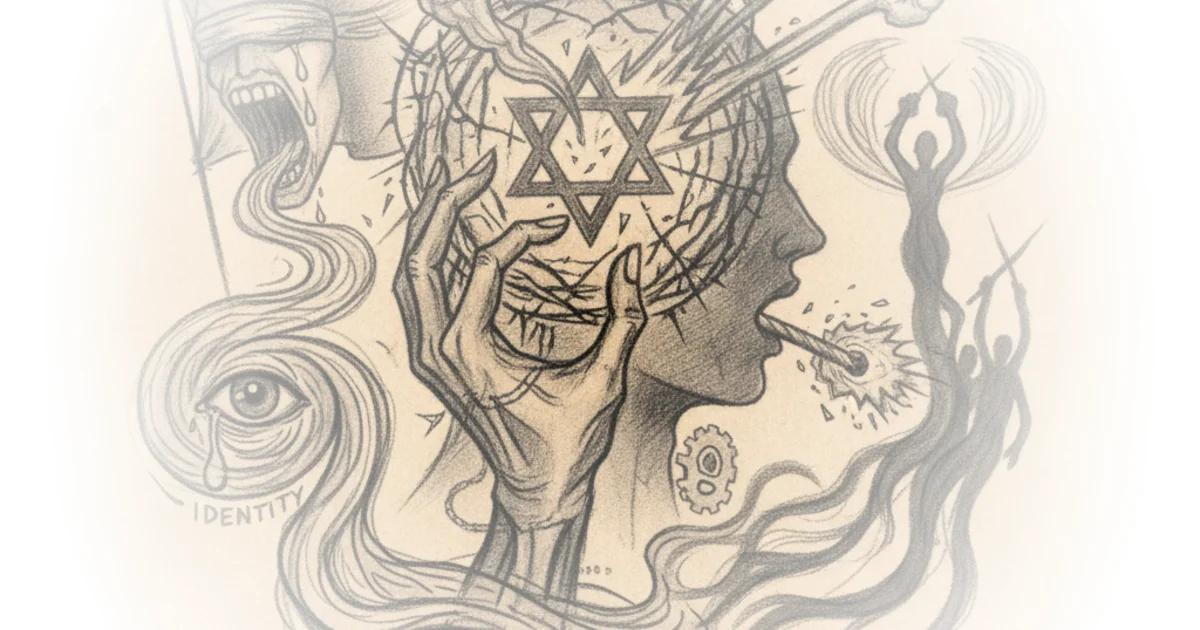
The commentary highlights how Murray documents the systematic embedding of militant infrastructure within civilian life, from weapons stored in schools to the recruitment of fake journalists. Perry emphasizes the strategic use of suffering, noting that Hamas "exploits the deaths of its own people... as readily as those of its enemies." This distinction is crucial. As Perry puts it, "When Gen. Gadi Eisenkot, now running for prime minister, lost his son fighting in Gaza, Israel mourned with him. When Hamas big Ismail Haniyeh's sons were killed, he publicly celebrated their martyrdom. One response grieved the loss of life. The other glorified it. That distinction is civilization, not merely political."
One response grieved the loss of life. The other glorified it. That distinction is civilization, not merely political.
Critics might argue that focusing solely on the ideology of Hamas risks absolving the Israeli government of its own accountability for civilian casualties and the humanitarian crisis in Gaza. Perry anticipates this, acknowledging that "Israel has extremists of its own" and that the occupation is "unsustainable and plain wrong." However, he insists that the moral gulf remains vast between a democracy that views civilian deaths as tragedies and an organization that celebrates death itself. The argument gains weight when contextualized by the 2008-2009 Gaza War, where similar patterns of tunnel usage and civilian integration were documented, yet the current discourse often treats the conflict as a unique moral failure of Israel alone.
The Selectivity of Outrage
Perry turns his critique toward the Western left's selective moral fervor. He questions why the world focuses so intensely on a nation smaller than Rhode Island while ignoring other massive atrocities. "Do those denouncing Israel know that while more than half a million Arabs were displaced during the 1948-49 war, an even greater number of Jews were driven from or compelled to flee Arab countries?" Perry writes. This historical context, often omitted from campus debates, serves to challenge the simplistic "settler vs. indigenous" binary that dominates current discourse. He asks whether the fixation on Israel is simply ignorance or something darker, noting that the "sheer selectivity of the outrage demands an explanation."
The author points out that the media's refusal to engage with Murray's thesis is telling. "Had he written 250 pages arguing that Israel's campaign in Gaza was criminal, reviews would almost certainly have followed," Perry observes. "Instead, he argued that Hamas is a death cult... and that much of the Western left has become morally incapable of distinguishing between a liberal democracy from an organization that celebrates the murder of civilians." This suggests that the silence is a form of ideological protectionism, preventing the public from grappling with the reality that the enemy in this conflict does not seek coexistence but total annihilation.
A Crisis of Liberalism
The most compelling part of Perry's commentary is his refusal to offer a comfortable political home for these views. He explicitly rejects the populist right's embrace of Donald Trump, stating, "Trump is no defender of the civilization Murray wishes to preserve... Contempt for expertise, hostility toward science, casual and colossal corruption, attacks on independent institutions and the elevation of personal loyalty above constitutional principle are not expressions of the Western tradition. They are threats to it." This creates a difficult but necessary space for readers who agree with the assessment of Hamas but reject the rise of illiberal populism.
Perry writes, "Many of us now occupy an uncomfortable place. We believe Hamas is evil and that Israel has every right to defend itself... At the same time, we believe in climate science, vaccination, expertise, the rule of law... We reject identity politics that reduces history to oppression, but we reject populism that dismisses knowledge, institutions and liberal norms just as firmly." This nuanced position highlights the current fragmentation of the liberal center, where holding a coherent set of values has become increasingly difficult. He notes that the lack of engagement with Murray's book reflects a "profound unseriousness" among institutions that claim to value intellectual openness.
The lack of engagement with On Democracies and Death Cults is almost more revealing than the book itself.
Bottom Line
Dan Perry's commentary is a powerful defense of moral clarity in an era of relativistic confusion, successfully arguing that the inability to name evil is a greater threat to liberalism than the evil itself. Its greatest strength lies in refusing to let the reader off the hook with easy political tribalism, demanding instead a rigorous engagement with uncomfortable truths about both Hamas and the Western left's response. The argument's vulnerability remains the practical difficulty of sustaining this "uncomfortable place" in a polarized political environment where nuance is often punished, but Perry makes a compelling case that this is the only ground from which a true defense of liberal civilization can be mounted. The silence surrounding Murray's book is not just a media failure; it is a warning sign of a civilization losing its moral compass.