A Lecture That Transforms Autumn Into Revolution
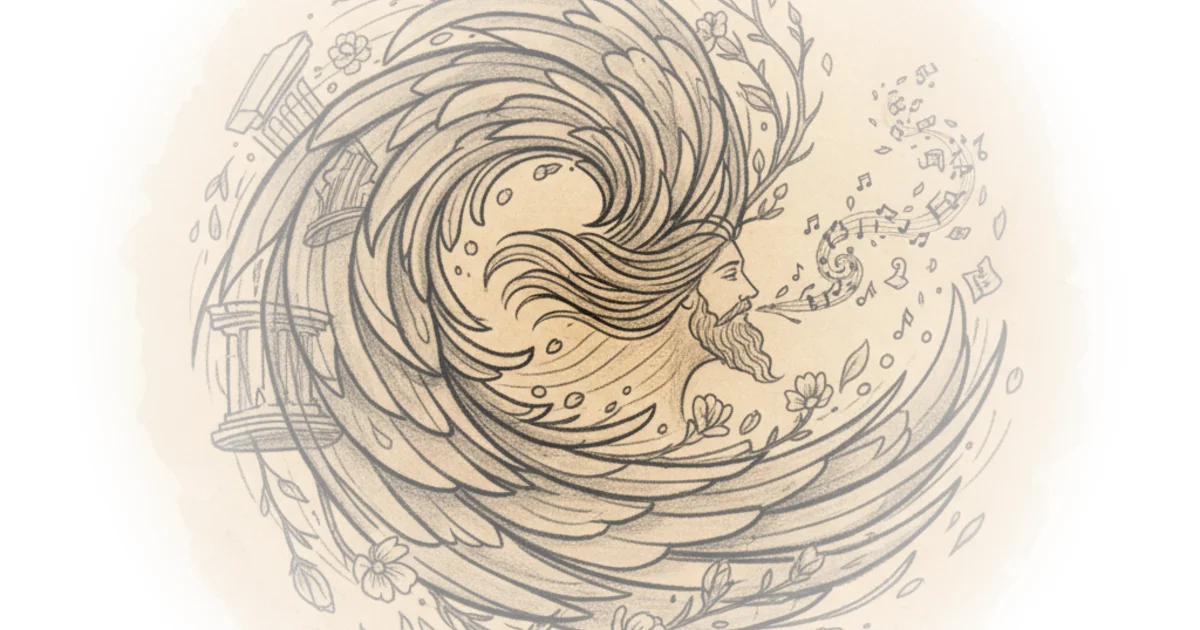
This isn't a typical academic poetry analysis. What makes Adam Walker's lecture on Shelley's "Ode to the West Wind" distinctive is how he frames seasonal change as something far more ambitious: a metaphor for political and social rebirth. He doesn't see autumn simply as leaves changing color — he sees it as "the hope for political and social justice change" and "New Birth." That's a bold claim for a poem about falling leaves, and Walker builds toward it methodically.
The Romantic Context
Walker begins by anchoring his audience in the physical world — walking through Harvard Yard with his wife, noticing early hints of autumn in sweet gum trees. This isn't accidental. He's establishing what matters to the Romantics: direct perception of nature, immediate experience rather than abstract analysis. "I always loved the changing of the seasons," he says, and that personal confession sets up everything that follows.
The lecture then pivots to historical context with precision. Walker explains Romanticism as responding to "the rapid industrialization and urbanization of England in the late 1700s" — factories replacing farmland, enclosure movements displacing agricultural communities. He names what many readers overlook: this wasn't simply nostalgia for nature, but a deliberate rejection of classical Greek and Roman models. The Romantics "look to Nature" instead of ancient gods.
They were more interested in a passionate mode, a personal mode of relating to each other and the world through lyrics.
This distinction matters because it reframes what Shelley is doing. "Ode to the West Wind" isn't ornamental — it's revolutionary.
What Poetry Actually Does
Walker takes an unusual approach to explaining lyric poetry. He explicitly pushes back against utilitarian reading: "Don't think of it as a riddle... poem's not a riddle to dissect with the meddling intellect." Instead, he offers something more mysterious and ultimately more satisfying: "It's instead a mystery which is meant to be encountered, experienced, enjoyed."
This is the lecture's most valuable insight. Walker argues that poetry isn't primarily communication — it's "the Incarnation of senses into sound." That distinction separates verse from prose in an important way. A poem isn't "just the communication of an idea" like a newspaper article or essay. The meaning isn't separable from its sonic qualities.
Critics might note this approach could frustrate listeners seeking clear takeaways. But Walker explicitly warns against that impulse: "Don't seek to pluck the meaning from it... the meaning will come of its own and the experience itself will be the reward." That's a remarkably generous offer — and it's also a teaching strategy that respects both the poem and the audience.
The Portrait and the Open Neck
One of the lecture's most evocative moments comes when Walker describes Shelley's portrait: "his hair floating, almost kind of wind-blown as if he's been looking into the West Wind itself." But he also notices something more subtle — the poet wearing an open shirt without a cravat. "A cravat which is that thing that would wrap around the neck would shield you from the wind, the cold, but an open shirt where the neck... is laid open, bear to the elements of nature."
This is brilliant close reading applied to biographical evidence. The portrait becomes evidence for what Walker calls "this state of receptivity in nature" — vulnerability rather than protection. It's a physical metaphor for what makes Romantic poetry different from classical formality: openness, sensitivity, willingness to be influenced rather than armored.
Missing Context
The lecture occasionally gestures toward context without fully developing it. Walker mentions the "big six" of Romanticism (Wordsworth, Coleridge, Keats, Byron, Shelley, Blake) but doesn't explain why these six dominate undergraduate curricula. He references Mary Shelley as "Percy Shelley's wife" — though readers familiar with Frankenstein might wonder if that's the most important thing about her.
Similarly, while he names William Blake and Samuel Taylor Coleridge as part of the "first generation," listeners unfamiliar with Romantic poetry history need more scaffolding to follow along. The lecture assumes some baseline knowledge that may not be universal.
Bottom Line
Walker transforms what could be a dry academic exercise into something genuinely moving: seasonal observation becomes philosophical possibility, and poetic analysis becomes an argument about openness versus protection. His framing of autumn as "the hope for New Birth" is the strongest move — it justifies why anyone should care about a poem written in 1819.
The vulnerability is that his historical explanations sometimes outpace his connections to the actual poem. But when he reads Shelley aloud and asks listeners simply to experience it, he's offering something rare: permission to encounter poetry without extraction, analysis without dissection. That might be the real lesson here — not the meaning of "Ode to the West Wind" but how to meet any lyric poem: with open attention rather than meddling intellect.