Hamilton Nolan delivers a rare, ground-level report that bypasses the usual political theater to locate the living heartbeat of American labor solidarity in the heartland. While most coverage of the modern left focuses on Washington gridlock or personality clashes, Nolan takes readers to a casino picket line in Indiana and a historic banquet in Terre Haute to argue that the struggle for economic dignity is not a relic of the past, but an urgent, evolving reality. The piece's most striking claim is that the cultural void left by declining religious participation and the fracturing of the political spectrum can be filled by a renewed veneration of Eugene V. Debs, whose philosophy of human solidarity offers a unifying force more potent than partisan identity.
The Geography of Solidarity
Nolan begins by dismantling the rigid "red" and "blue" state narrative that dominates political analysis. He observes a diverse crowd in Terre Haute—railroad workers, professors, and retirees—reciting Debs' famous declaration of solidarity. "While there is a lower class, I am in it; while there is a criminal element, I am of it; and while there is a soul in prison, I am not free," Nolan writes, noting that this line of solidarity runs from America's deep past into its future. This framing is effective because it grounds abstract political theory in the physical reality of Midwestern communities, suggesting that the divide between urban progressives and rural conservatives is often a media fabrication that crumbles when workers gather. The author argues that Debs serves as a better intellectual anchor than current partisan figures because his life spanned the very industrial conflicts that still define the economy today.
"We've been sold a bill of goods in this country that we're divided. We're divided by gender, we're divided by race, we're divided by who we love... Now they're trying to tell that we're divided by Democrats, Republicans, and Independents. Let me tell you something: I don't give a fuck about politics! We're workers."
This quote from union leader Sara Nelson, as reported by Nolan, cuts through the noise of modern culture wars. The author uses this moment to highlight a critical insight: the most effective labor organizing happens when it transcends identity politics to focus on shared material conditions. Critics might argue that ignoring political identity is naive in an era where policy is heavily influenced by partisan alignment, but Nolan's reporting suggests that for the workers on the picket line, the immediate threat of economic exploitation outweighs the abstract debates of the ballot box. The piece suggests that the "red state" label is a distraction from the fact that the people living there are often the ones fighting the hardest for the very rights that define the American middle class.
The Casino Picket and the Crisis of Dignity
Shifting from the historical to the immediate, Nolan details a strike at the Horseshoe Casino outside Indianapolis, where workers are fighting for union recognition against Caesars Entertainment. The author paints a vivid picture of the stakes: workers are not just asking for higher wages, but for the basic recognition of their skill. "Our voices matter. We don't want no pizza party," says a dealer named Zach, according to Nolan. "We want respect, dignity, and a voice." Another worker, Jade, adds, "I like my compliments in the form of compensation." These quotes are powerful because they strip away the romanticism of labor movements to reveal the raw, practical demand for fair treatment. Nolan argues that the company's refusal to bargain, blaming the government shutdown as a stalling tactic, exemplifies the modern corporate strategy of delaying worker rights until the political moment passes.
The author connects this local struggle to a broader national pattern of "crisis capitalism," where corporations exploit tragedies to erode worker protections. Sara Nelson's speech, as recounted by Nolan, draws a direct line from the 9/11 attacks to the current fight, noting that "crisis capitalists" used the tragedy to rob workers of pensions. "Caesars doesn't work without you. Airplanes don't fly without us," Nelson is quoted saying. This parallel is compelling because it universalizes the struggle, showing that the tactics of exploitation are consistent across industries and decades. However, the piece could be critiqued for underplaying the specific legal hurdles that unions face in right-to-work states like Indiana, which make the path to recognition significantly harder than in other regions. Despite this, Nolan's reporting makes it clear that the workers' resolve is not diminished by the legal landscape.
The Legacy of Debs and the Political Cycle
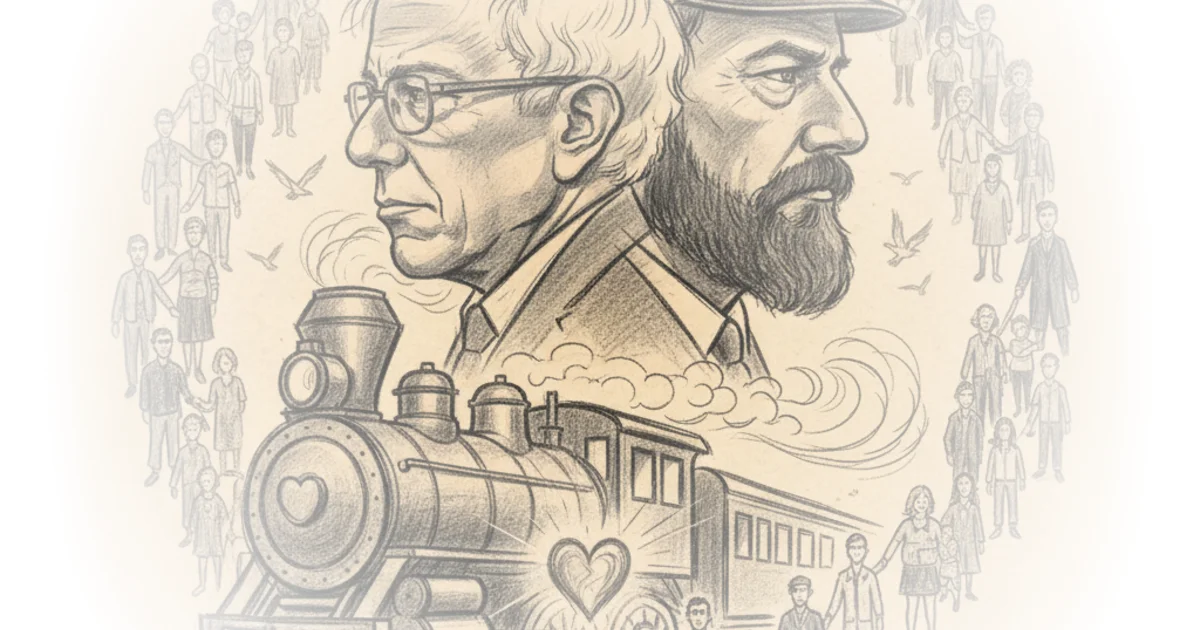
The narrative then moves to the Debs Foundation banquet, where Bernie Sanders is honored as the modern inheritor of Debs' legacy. Nolan posits that Sanders' role as a "dogged spokesman for socialism" is not a new phenomenon but a continuation of a century-old fight. "Looking backwards from today, it is impossible not to be struck by the fact that we seem to have completed an entire political cycle since the time of Debs," Nolan writes. The author suggests that the current political moment is a return to the same battles Debs fought a hundred years ago, but with higher stakes. Sanders' speech, as quoted by Nolan, drives this point home: "I am opposing a social order in which it is possible for one man who does absolutely nothing that is useful to amass a fortune of hundreds of millions of dollars, while millions of men and women who work all the days of their lives secure barely enough for a wretched existence." Sanders notes that the only change is the scale of wealth, from hundreds of millions to hundreds of billions.
"Under [the current administration] we have an 'America First' that gives a trillion dollars in tax breaks to the one percent. Which denies trying to throw 15 million people off the healthcare they have... Same business. Wrap yourself around the flag, exploit working people, and give tax breaks to the billionaires."
Nolan uses this quote to critique the current executive branch's use of nationalist rhetoric to mask economic policies that favor the wealthy. The author argues that the administration's "America First" stance is a modern iteration of the same tactics Debs identified: wrapping exploitation in the cloak of patriotism. This is a sharp, necessary critique that reframes the political debate from a left-right spectrum to a class-based one. While some might argue that Sanders' comparison of current policies to early 20th-century socialism is hyperbolic, Nolan's reporting on the specific grievances of the casino workers and the historical context of Debs' prison activism lends weight to the argument that the fundamental conflict between capital and labor remains unresolved. The piece effectively argues that the "red state" label is a distraction from the fact that the people living there are often the ones fighting the hardest for the very rights that define the American middle class.
The Power of Human Solidarity
In the conclusion, Nolan reflects on the enduring power of Debs' philosophy of "human solidarity" over mere trade unionism. With union membership in the private sector at a historic low, the author suggests that the movement must expand its definition of solidarity to include all working people, regardless of their union status. "Idealism has the power to transcend personality," Nolan writes, explaining that Sanders' ability to inspire comes not from his own charisma but from the universal appeal of human solidarity. The piece ends with a poignant reminder of Debs' sacrifice: "I could have been in Congress long ago. I have preferred to go to prison." Nolan argues that this willingness to endure hardship for the cause is the true measure of the movement's strength.
"If the fight gets hard, it is worth remembering that it was hard back then, too. Time goes on and so do we."
This final sentiment encapsulates the article's core message: the struggle for economic justice is a long-term endeavor that requires patience, resilience, and a deep belief in the power of collective action. Nolan's reporting suggests that while the political landscape may shift, the fundamental need for solidarity remains constant. The author's choice to focus on the human element of the story—the workers on the picket line, the attendees at the banquet, the historical figure of Debs—makes the argument more relatable and urgent than a purely policy-based analysis ever could. Critics might note that the piece offers little concrete roadmap for how to translate this solidarity into legislative victory, but its strength lies in its ability to reframe the narrative around shared humanity rather than partisan victory.
Bottom Line
Hamilton Nolan's piece is a powerful reminder that the fight for economic justice is not a relic of the past but a living, breathing reality in the American heartland. The strongest part of the argument is its ability to connect the historical legacy of Eugene V. Debs with the contemporary struggles of workers in Indiana, showing that the fundamental conflict between capital and labor remains unchanged. The biggest vulnerability is the lack of a clear strategic path forward, as the piece focuses more on the moral imperative of solidarity than on the practical mechanics of achieving it. Readers should watch for how this renewed sense of human solidarity translates into political action in the coming years, particularly in states that have long been considered hostile to labor movements.