This piece challenges a deeply ingrained assumption: that religion is primarily a manual for self-improvement. Instead, the author argues that scripture—specifically its most skipped sections, the genealogies—reveals a God who acts despite human failure, not because of our perfection. In an era obsessed with optimization and personal branding, this reframing offers a radical alternative: faith is not about fixing yourself, but trusting a story larger than your own flaws.
The Myth of the Self-Made Saint
The author begins by dismantling the transactional view of faith that dominates modern religious discourse. "I think I'd win a bet that most Sunday school teachers skip the genealogies in the Bible," they note, observing that these lists are often treated as "odd footnotes or appendices with little relevance." Yet, the author insists these passages are central to understanding the divine narrative. The core argument is that we have conflated religion with the "ideology of American self-help manuals," a tradition stretching from Benjamin Franklin's relentless optimism in his Autobiography to today's productivity hacks. As the author puts it, "All of these books take as their premise that your life could be idealized if you just worked harder."
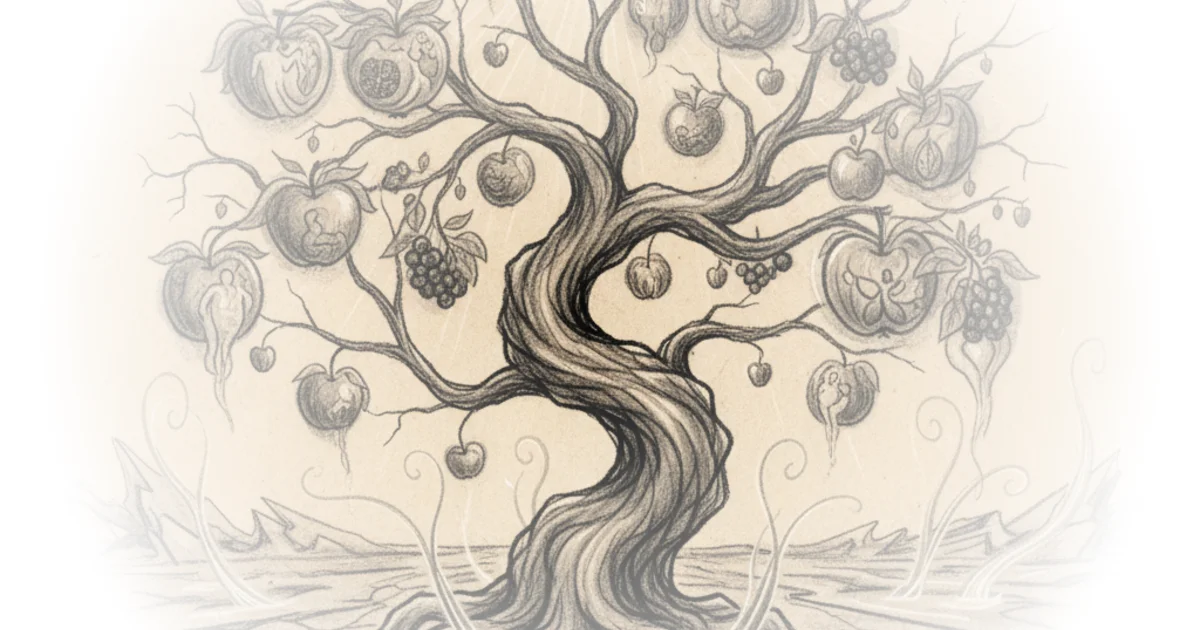
This critique lands with force because it exposes a subtle theological drift. The author points out that phrases like "qualify for exaltation" or "access the atonement" suggest a system where "obeying these instructions will result in rewards for us." This framing reduces the divine to a cosmic vending machine. But the text argues that this is a modern invention, not a biblical one. In scripture, the main character is never the human hero. "The main character of the Bible is not Adam or Moses or Paul; the main character is God," the author writes. This distinction is crucial. It shifts the burden of salvation from human effort to divine initiative. "In scripture, religion is something that God instigates," they continue. "God reaches out. God seeks humanity."
Critics might argue that this view risks absolving individuals of moral responsibility, turning faith into passive waiting. However, the author anticipates this, clarifying that the point is not to stop trying, but to stop believing that our efforts are the engine of redemption. The goal is to "understand the world of justice and mercy that God is creating around us," rather than obsessing over our own moral ledger.
The main character of the Book of Mormon is not Nephi or Alma or Mormon; it is God.
Barrenness as a Divine Playground
The commentary then pivots to a brilliant literary analysis of the genealogies in Genesis, specifically the transition from the long, decaying line of Shem to the barrenness of Abraham's wife, Sarai. The author describes the genealogy in Genesis 11 as a record of "slow entropy," where lifespans shrink and the family line moves inevitably toward collapse. "The genealogy claims that collapse is natural; that our lives, left to themselves, will eventually and ultimately simply unwind," they observe. This mirrors our contemporary experience of "doomerism," where negativity dominates our feeds and we expect institutions to fail.
Yet, the author highlights a stunning reversal. "The marvel of the Bible is that barrenness is God's playground." When God speaks to Abraham in Genesis 12, it is an echo of creation itself, moving from emptiness to order. The author draws on Marilynne Robinson's reading of Genesis 50:20, where Joseph tells his brothers, "Even though you intended to do harm to me, God intended it for good." This is the theological pivot: God's covenant is not a legal contract dependent on human performance. "God lets human beings be human beings, and that His will is accomplished through or despite them but is never dependent on them," the author writes.
This perspective is particularly potent when applied to the Book of Mormon's book of Omni. The author notes that in this short text, the purpose of the record shifts from spiritual instruction to a mere genealogy, and eventually to a statement of stasis. Abinadom, one of the record keepers, declares, "I know of no revelation save that which has been written... that which is sufficient is written." The author interprets this as a moment of spiritual freezing, where the community believes "all the important things have already been written about" and change is impossible. It is a moment of "barrenness" where the voice of God seems to have vanished.
Breaking the Stasis
The piece concludes by showing how divine intervention shatters this frozen state. Just as God spoke to Abraham in the face of barrenness, God breaks into the stagnation of Omni's lineage. The author notes that Abinadom's son, Amaleki, suddenly reports that God called King Mosiah to lead a people into the wilderness. This is not a reward for perfect behavior; it is an act of grace in the midst of decay. The author writes, "When God speaks to Abraham here, he is calling into existence something new... a new promise to Abraham that he and his family will be blessed and changed and made something altogether new."
The argument here is that faith is the capacity to imagine this newness. "Abraham's ability to imagine this is why Genesis says that he had faith," the author explains. This reframes the entire religious experience. It is not about being the hero of your own story, but recognizing that you are part of a larger, redemptive narrative that God is writing. "The point for human beings is not that we need to work harder on personal self-improvement; it is that we need to understand the world of justice and mercy that God is creating around us."
Bottom Line
The strongest part of this argument is its reclamation of the genealogies, transforming them from boring lists into profound theological statements about grace and entropy. By contrasting the "self-help" model of religion with the "God-centric" model of scripture, the author offers a compelling antidote to modern spiritual burnout. The biggest vulnerability lies in the potential for this view to be misread as fatalism, though the text carefully navigates this by emphasizing God's active role in history. Readers should watch for how this framework applies to their own experiences of failure and stagnation, asking not "How can I fix this?" but "What new thing is God doing here?"