This piece does more than recount the history of a viral animation; it exposes the brutal economic reality of the early internet's creative boom. Animation Obsessive argues that the global phenomenon of Xiao Xiao was not just a triumph of style, but a cautionary tale about how the infrastructure of digital fame failed to protect the artists who built it. For a generation raised on algorithmic virality, the story of Zhu Zhiqiang—who turned a stick-figure martial arts series into a worldwide sensation only to lose a landmark lawsuit against a multinational corporation—offers a stark, necessary precedent for today's creator economy.
The Flash Revolution and the Rise of the Flashers
The coverage begins by contextualizing the technological shift that made this explosion possible. Before the dominance of modern video platforms, the Shockwave Flash file format democratized content creation, allowing amateur animators to reach millions on dial-up connections. The editors note that this was particularly transformative in China, where Flash arrived in the late 1990s and became "era-defining." The piece draws a powerful parallel to other underground movements, citing scholar Weihua Wu: "Chinese underground films and rock 'n' roll music were once the expression of rebellious passions in the pursuit of ... new cultural dimensions, but today these passions are expressed through the channels of Flash."
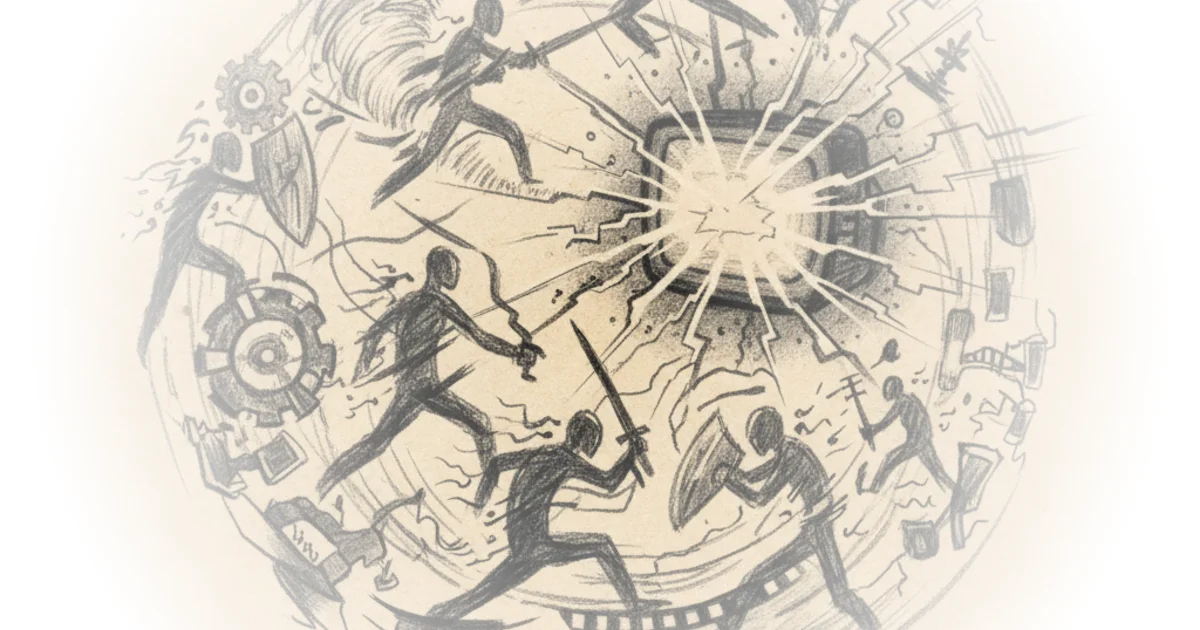
This framing effectively positions the medium not merely as a technical novelty, but as a cultural vessel for a generation seeking new modes of expression. The narrative highlights how internet cafes in China became packed with viewers by the early 2000s, creating a unique ecosystem where a solo artist could bypass traditional gatekeepers. This mirrors the early days of Newgrounds in the West, where the barrier to entry was low, but the ceiling for success was surprisingly high. However, the piece also hints at the fragility of this ecosystem; it was built on a technology that would eventually be retired, leaving the creators of that era with a legacy that was difficult to monetize or preserve.
"Chinese underground films and rock 'n' roll music were once the expression of rebellious passions in the pursuit of ... new cultural dimensions, but today these passions are expressed through the channels of Flash."
The Unlikely Architect of a Global Phenomenon
At the heart of the story is Zhu Zhiqiang, a man the editors describe as an "unlikely star." The coverage meticulously details his background: a graphic designer with no formal animation training, who dropped out after junior high and struggled to make ends meet in Beijing. His journey from drawing stick figures in the corners of books to mastering Flash animation using only a mouse is presented as a testament to raw passion rather than institutional privilege. The piece reports that Zhu "had no computer skills, my English was not good, I couldn't program and my drawing [ability] was average," yet he produced work that stunned the global community.
The editors emphasize the sheer scale of his success with Xiao Xiao No. 3, which featured choreography reminiscent of Hong Kong action cinema and The Matrix. When the film was released in April 2001, the reaction was immediate and overwhelming. Zhu recalled, "The part that made the deepest impression was on the third day, I received 1,200 emails in one day. There was no junk in them, and 80% of them were not written by Chinese people, but by people from all over the world." This anecdote underscores the borderless nature of the early internet, where a creator in Beijing could captivate an audience in Detroit or Tokyo without a marketing budget.
Critics might note that the piece romanticizes the "hustle" of the early web, glossing over the systemic barriers that kept many talented artists in poverty. While Zhu achieved fame, the editors admit that "most Flashers have very difficult lives," suggesting that his success was the exception rather than the rule. The narrative acknowledges that the scene was defined by self-expression—"TV is made for everyone to watch; Flash is made for oneself to watch"—but this ethos often clashed with the harsh realities of making a living.
The Collision with Corporate Power
The turning point of the article arrives with the introduction of corporate interests. As Zhu's stick figure became a recognizable brand, major companies began to take notice. The editors detail a fateful collision with Nike, which launched its own "Stickman" campaign in early 2003. The campaign's moves were "suspiciously similar" to Zhu's work, leading the creator to sue. The piece captures the arrogance of the corporate response, quoting a Nike lawyer who dismissed the suit: "It is obvious that the plaintiff intended to promote himself and his Flash works by accusing a famous multi-national company."
This section serves as a critical examination of the power imbalance between individual creators and multinational corporations in the early 2000s. Zhu's fear was palpable: "Once Nike uses [these characters], how is anyone going to come to me to make them?" The editors argue that this was not just a legal dispute, but a fundamental failure of the internet's promise to empower the individual. Despite Zhu's initial victory in court, the appeals process dragged on until 2006, when he ultimately lost. The judges ruled that the stick figures were "too different" and the imagery "too simple to copyright."
The outcome was devastating. Zhu faced thousands of dollars in legal fees and effectively stopped animating. The piece notes that by 2008, he had transitioned to coding, leaving his creative legacy behind. This trajectory highlights a recurring theme in digital history: the infrastructure of the internet often allows corporations to co-opt the innovations of independent creators without providing a fair return. The editors observe, "Zhu was new media at a time when old media ruled. What could he do?"
The Legacy of a Lost Era
In its conclusion, the coverage reframes the story not as a failure, but as a foundational chapter in the history of animation. The editors assert that Xiao Xiao paved the way for a new generation of Chinese animators and filmmakers. "Chinese Flash, which Xiao Xiao helped to pioneer, trained a new generation of animators and filmmakers," they write, noting that key figures like Zhang Ping, creator of Legend of Hei II, started in that scene. The simplicity of Zhu's work, which made it approachable and imitable, was its greatest strength, even if it prevented him from securing long-term financial security.
The piece ends on a reflective note, acknowledging that the roadmap from viral success to sustainable income was non-existent in 2003. "If the roadmap from viral success to solid income is faint today, it didn't exist at all in 2003," the editors state. This observation remains deeply relevant today, as creators continue to grapple with the monetization of their work in an environment dominated by platforms and corporations.
"Zhu was new media at a time when old media ruled. What could he do?"
Bottom Line
Animation Obsessive delivers a compelling, human-centric history of the Flash era, using Zhu Zhiqiang's rise and fall to illustrate the structural vulnerabilities of the early internet. The piece's strongest asset is its refusal to treat Xiao Xiao as a mere nostalgia trip, instead exposing the legal and economic traps that ensnared its creator. Its primary vulnerability lies in its brief treatment of the broader legal landscape of intellectual property in China during that period, which might have provided further context for the court's decision. For the modern reader, the story serves as a sobering reminder that viral fame is not a substitute for legal protection or economic infrastructure.