In an era where streaming algorithms demand constant stimulation, this piece from Animation Obsessive makes a radical claim: slowness is not a bug in storytelling, but its most potent feature for holding attention. The editors argue that the fear of losing a child's focus has long driven Hollywood toward a frantic, "popcorn" pace, yet history proves that quiet, atmospheric moments often create deeper engagement than explosions ever could.
The Popcorn Metric and the Fear of Silence
The article dissects a specific era of American animation defined by Jeffrey Katzenberg's infamous directive: "I'm going for popcorn." Animation Obsessive reports that Katzenberg believed unless a film raced nonstop, audiences would inevitably tune out to get snacks or fidget. This philosophy reshaped Disney in the 1980s and early 90s, leading to notes like making The Little Mermaid more like Die Hard. The piece highlights how this pressure nearly killed one of cinema's most iconic moments: "Katzenberg famously tried to cut Part of Your World from The Little Mermaid. It was too slow, he argued — it was losing kids."
This framing is crucial because it reveals that the demand for speed wasn't just an artistic preference; it was a calculated risk management strategy based on a deficit model of childhood attention spans. Howard Ashman, who saved the song, ironically echoed these fears, noting in 1989 that "kids have such a short attention span... but the kids run up and down the aisles and get popcorn." The editors use this to illustrate a persistent industry anxiety: that without constant external stimulation, the audience will disengage.
"He felt that unless a movie raced nonstop to its conclusion, an audience would inevitably lose interest."
However, the piece effectively counters this by showing how this approach often resulted in films that were "fast, loud and sharp-edged" but lacked subtlety. Critics might argue that Katzenberg's method produced undeniable box-office hits and that his instinct for pacing was simply a different kind of success metric. Yet, the article suggests that while he turned out big hits, he also frustrated artists who valued nuance over noise.
The Courage to Be Quiet
The commentary then pivots to the Japanese alternative, centering on Hayao Miyazaki and Isao Takahata. Animation Obsessive notes that these directors were "willing to be subtle, quiet — slow," directly challenging the Western assumption that children cannot sit through a quiet film. The article traces this back to Horus: Prince of the Sun (1968), where a sequence involving a hero walking through an abandoned, flooded town was cut from the television broadcast because executives worried it would bore young viewers.
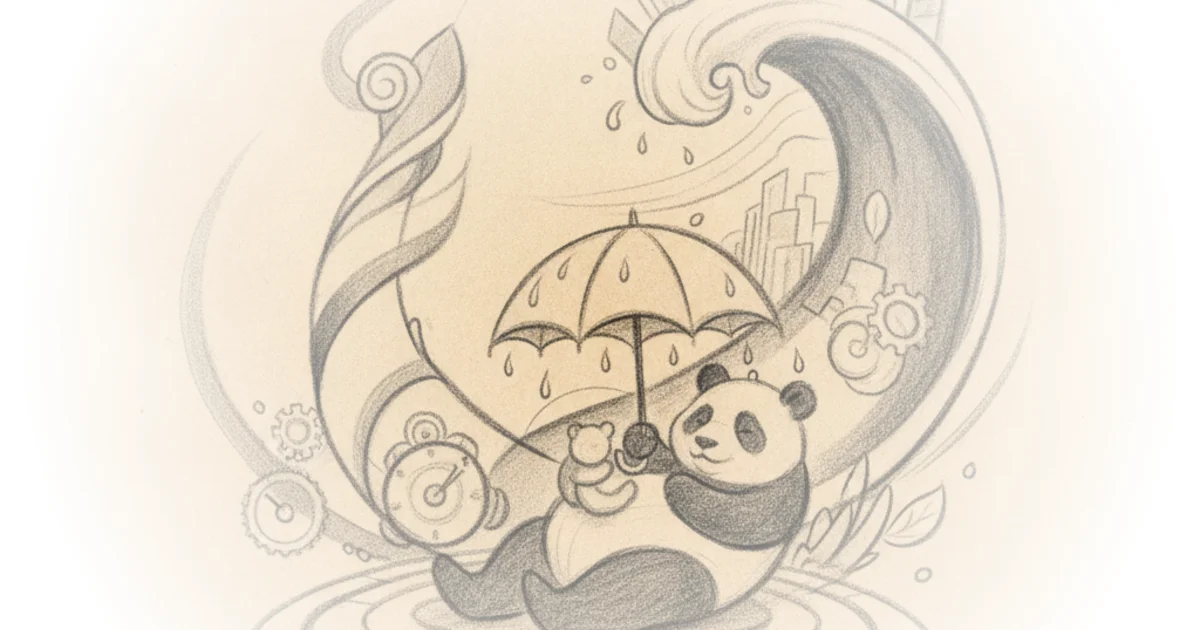
The editors argue that Takahata and Miyazaki doubled down on this philosophy rather than retreating. They point to Panda! Go, Panda! (1972) as the "proof of concept" for a leisurely film about everyday life. The piece paraphrases Takahata's internal debate: producers were told they had to make things intense and detailed because children's attention spans wouldn't last, yet the team decided to create something "soothing and relaxing."
The core argument here is that engagement comes from visceral believability, not just plot momentum. As Takahata wrote in his outline for a Pippi Longstocking project: "Unless there's a tangible portrayal of the lively Pippi as lively... only the story will be able to hold the audience's interest." This suggests that if a film can make an audience feel the texture of reality, they will stay. The editors validate this by noting that when Takahata and Miyazaki took their own children to see Panda, "they were afraid that the younger viewers in the theater would get bored... But they didn't."
"[W]e should not only depict the intentions and outcomes of Pippi's actions, but also clearly depict the process of the actions in such a way that they themselves evoke enjoyment and interest."
This section is particularly compelling because it reframes "slow" as "detailed." It isn't about doing nothing; it's about observing everything. Glen Keane, quoted in the piece, reflects on this influence: "A situation doesn't always require a big explosion or a crazy gag." The article suggests that the "breathing room" Miyazaki championed allows for atmospheric moments—like the wind moving flowers—that ground the fantastical elements of the story.
The Battle for Breathing Room
The piece concludes by examining how this philosophy clashed with modern Hollywood, specifically at Pixar during the development of Toy Story. Animation Obsessive reports that while the team tried to add breathing room, the film was subjected to Katzenberg's "popcorn notes." Even after his departure, the anxiety remained. The editors cite Lee Unkrich's visit to the Ghibli Museum, where he watched a short featuring a girl meticulously unwrapping candy.
Unkrich recalled his initial shock: "My God, how can he get away with just focusing on this one little detail?" But the realization was that these moments are not dead air; they are the emotional anchor of the film. The article argues that the point isn't simply to add slowness for its own sake, but to hold interest through "visceral believability."
"It can be something as simple as the way the wind moves flowers... or the sound of a bee buzzing around a girl as she watches the clouds drift overhead."
A counterargument worth considering is that this level of detail requires immense skill and budget, making it a luxury that smaller studios cannot always afford. However, the piece implies that the intent to slow down is what matters most for audience connection, regardless of scale. The editors note that even in high-stakes adventures like Castle in the Sky, mundane things get a chance to shine, grounding the drama in a world that feels lived-in.
Bottom Line
The strongest part of this argument is its historical evidence: the fear that children cannot handle quiet storytelling has been disproven repeatedly by audiences who remain rapt during atmospheric sequences. The piece's biggest vulnerability lies in its somewhat idealized view of the industry, occasionally glossing over how difficult it is to convince executives to fund "slow" projects in a risk-averse market. Ultimately, this commentary serves as a vital reminder that audience attention is not a finite resource to be managed with noise, but a capacity to be expanded through genuine immersion.