Gary Marcus delivers a chilling diagnosis of the artificial intelligence sector, arguing that the industry is not merely overheating but actively constructing its own collapse through unsustainable economics and eroding trust. While much of the financial world remains fixated on hype cycles, Marcus brings a forensic attention to the specific mechanics of failure: from the "all-you-can-eat" pricing models that bleed companies dry to the sudden refusal by major banks to accept AI equity as collateral. This is not a prediction of a slow correction; it is an analysis of a potential systemic rupture where the gap between valuation and reality finally snaps under the weight of billions in unfunded obligations.
The Subprime Parallel
Marcus anchors his argument in a conversation with Steve Eisman, the investor famously known for predicting the 2008 housing crash. He uses their dialogue to draw a direct line from the subprime mortgage crisis to the current AI boom, suggesting that the mechanism of collapse will be identical: a loss of confidence among end-users and investors. "What broke Subprime was the credit quality got so bad that the end user, the investor, stopped buying the paper," Marcus recounts Eisman saying. "And if the end user, the investor stopped buying the paper, the whole machine stopped dead in its tracks."
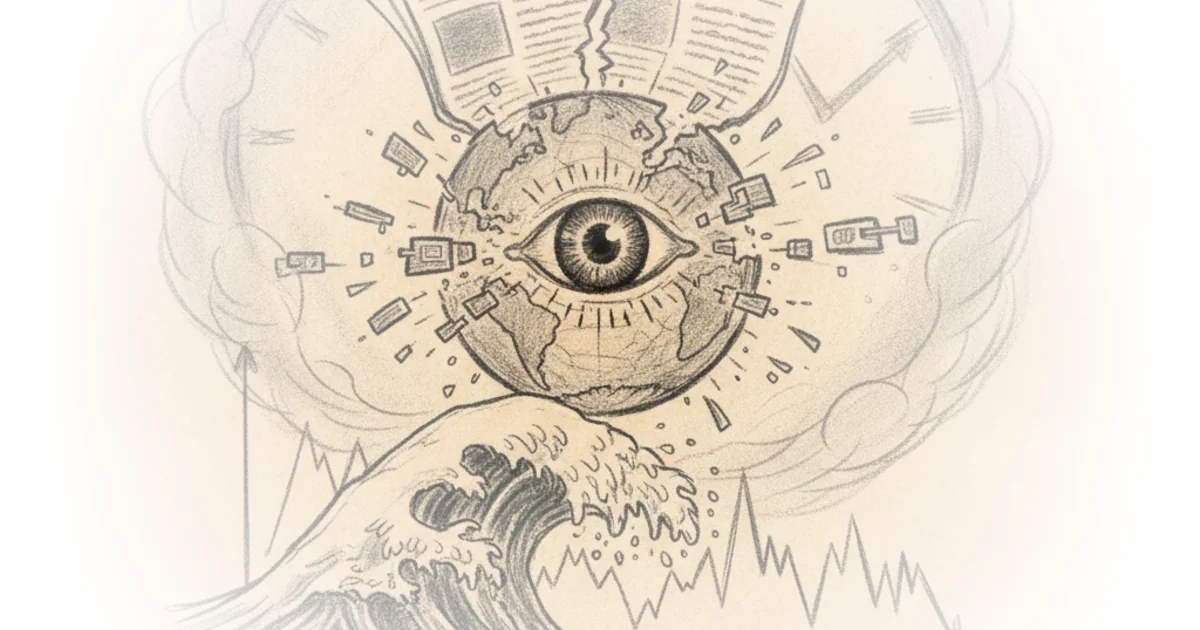
This framing is powerful because it shifts the focus from technological capability to financial fragility. Marcus argues that the AI industry has built a house of cards on token pricing models where the cost of generating answers far exceeds what customers are willing to pay. He likens the current subscription model to an "all-you-can-eat buffet" where the providers are serving food at a loss, hoping volume will eventually cover the deficit. But as agent-based systems emerge—requiring thousands of times more computation—the math breaks down. Marcus notes that when companies like Oracle reported massive backlogs driven by AI contracts, the market initially cheered until it realized those revenues were contingent on OpenAI's ability to raise endless capital. "The problem was it turned out... three hundred and fifty billion was just [from] openAI," he explains, highlighting how quickly the narrative shifted from excitement to panic once the dependency became clear.
Critics might argue that historical parallels to subprime mortgages are often overused in tech bubbles, ignoring that AI offers genuine productivity gains that housing derivatives did not. However, Marcus counters this by pointing out that even with utility, the unit economics must eventually work; if a product costs more to deliver than it generates in revenue, no amount of utility can sustain an infinite burn rate.
"They are burning money the fastest... they've made the most commitments. At some point they might not be able to pay their bills."
The Trust Deficit and the WeWork Scenario
The commentary takes a darker turn as Marcus dissects the specific vulnerabilities of OpenAI, positioning it as the likely epicenter of any future crash. He argues that the company's leadership has squandered its early lead through mismanagement and a culture of secrecy that has eroded institutional trust. "Nobody trusts Sam Altman," Marcus states bluntly, citing recent media scrutiny and legal testimony as evidence that the company can no longer rely on blind faith from investors or partners.
This loss of confidence is quantifiable in the market's behavior. Marcus points to SoftBank's failed attempt to secure a $10 billion margin loan using its OpenAI stake as collateral. When banks rejected even a reduced loan request, it signaled a profound lack of faith in the company's valuation. "SoftBank took an immediate hit; dropping the ask reeks of desperation," Marcus writes, interpreting this as a clear signal that major financial institutions no longer view AI equity as a safe asset. This mirrors the trajectory of WeWork before its collapse, where Masa Son's massive investment preceded a spectacular fall.
The argument here is particularly sharp because it connects corporate governance issues to macro-financial stability. If OpenAI cannot secure financing or maintain customer loyalty against competitors like Anthropic and Google, the ripple effects will be catastrophic for the entire supply chain, including hardware giants like NVIDIA and cloud providers like Oracle. Marcus warns that this scenario could play out quickly: "I frequently use the metaphor of Wily Coyote over the edge of the cliff... where he's kinda like flailing his legs and doesn't fall." The moment the coyote looks down is when the illusion ends, and the fall begins.
A counterargument worth considering is that the AI sector has deep pockets in tech giants like Google and Microsoft that could absorb losses from smaller players, preventing a total market collapse. Yet, Marcus suggests that even these giants are hedging their bets by shifting to token-based pricing, effectively admitting that the current model is untenable.
"If OpenAI at some point can't really make ends meet... that's gonna have ripples throughout the market. And it's gonna be interesting sets of ripples."
The Death of Tokenmaxxing
The final piece of Marcus's puzzle is the sudden shift in industry strategy, which he terms the "death of tokenmaxxing." For months, companies competed on who could offer the most tokens for the lowest price, a race to the bottom that masked underlying inefficiencies. Now, as margins turn negative and IPOs loom, the industry is pivoting to usage-based pricing that customers are likely to reject.
Marcus cites recent reports indicating a rapid shift from "tokenmaxxing" to "tokenpanic," where both providers and consumers are realizing the economic model is broken. The transition to agent-based AI—where systems perform complex tasks rather than just answering questions—has exacerbated the cost problem, making the old subscription models obsolete. "The fundamental problem is that to make a reliable version of the product you either have to charge more than customers want to pay, or the providers have to take a loss," he concludes. This dilemma forces companies into a corner where they must choose between profitability and growth, a choice that historically precedes a market correction.
Bottom Line
Gary Marcus's analysis is strongest in its refusal to treat AI as an exception to economic laws, grounding its potential collapse in the tangible mechanics of credit quality and unit economics rather than abstract hype. Its biggest vulnerability lies in underestimating the political will of governments to bail out strategic tech assets, though the banking sector's current reluctance suggests such intervention may not be guaranteed. Readers should watch closely for any further rejections of AI-backed loans or sudden shifts in enterprise contracts, as these will likely be the first dominoes to fall.