Tom van der Linden makes a startling claim that recontextualizes the entire genre of medical drama: HBO's The Pit didn't just depict a crisis; it structurally remade the Battle of Helm's Deep, the most iconic siege in fantasy literature, within the sterile, fluorescent-lit corridors of an emergency room. This is not a mere metaphor for chaos, but a rigorous analysis of narrative architecture that reveals how the show elevates the mundane, underfunded struggle of healthcare workers into an epic myth of human resilience. For busy readers who crave depth over plot summaries, this piece offers a fresh lens on why a hospital show can feel as adrenaline-fueled as a war movie, arguing that the true stakes lie not in the medical outcomes, but in the spiritual survival of the staff.
The Architecture of Siege
Van der Linden begins by dismantling the assumption that hospital dramas and battle sequences occupy different narrative territories. He argues that the show's intensity stems from its adherence to the classic "grand battle" structure, a framework usually reserved for armies clashing on a field. "This hospital show had basically remade the battle of Helm's Deep," he writes, noting that while the setting is a Pittsburgh ER, the emotional beats mirror the climax of The Lord of the Rings: The Two Towers. The author identifies the "greater war" not as a single event, but as the chronic, grinding reality of an understaffed, underfunded system where professionals are "continuously confronted with defeat, with aggression, and with their own limits as human beings."
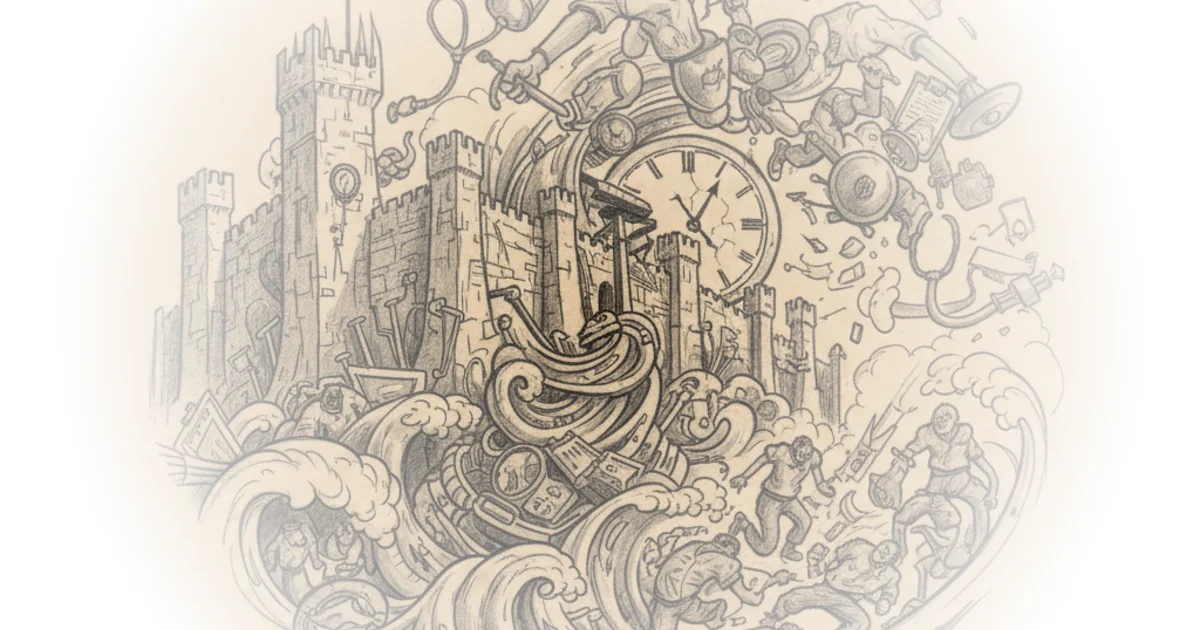
This framing is effective because it validates the exhaustion of medical workers as a legitimate epic struggle rather than just a backdrop for personal drama. Van der Linden suggests that the show's genius lies in treating the "nursing shortage" and the lack of resources as the enemy army itself. "If you paid them a living wage, they'd be lining up to work here," he paraphrases the show's reality, grounding the fantasy structure in a harsh socioeconomic truth. By establishing this desperate status quo first, the show earns the subsequent chaos.
"The unique thing about a narrative structure like that of the grand battle is that it puts the heroic action front and center."
The Battle Plan and the Breaking Point
The commentary then dissects the specific phases of the narrative arc, starting with the preparation. Van der Linden notes how the show suspends normal procedures to establish a "battle mode," where the ambulance bay becomes a triage zone and the staff must improvise defenses with limited supplies. He observes that the tension is built on the realization that "extraordinary circumstances call for extraordinary measures," forcing the characters to abandon protocol for survival. This mirrors the tactical shifts seen in epic sieges, where the defense must adapt instantly to overwhelming odds.
As the crisis deepens, the author highlights the shift from tactical success to the inevitable erosion of resources. "We can burn through all that in the first hour," a doctor warns in the show, a line Van der Linden uses to illustrate the ticking clock of a siege. The narrative then moves to the "breaking points," where supplies run dry and the staff faces the psychological weight of the "reckless hate" of the situation. Here, the commentary shines by pointing out that heroism is not about winning every fight, but about the "collective force" that emerges when individuals unite. Van der Linden writes, "It's the worst of humanity, but it brought out the best in the rest of us," capturing the paradox that extreme crisis often reveals our highest virtues.
Critics might argue that applying a fantasy war structure to real-world medicine risks romanticizing a system that is fundamentally broken, potentially distracting from the need for structural reform. However, Van der Linden anticipates this by emphasizing that the show does not offer a magical solution. The "cavalry" that arrives in a traditional battle is absent here; instead, the victory is internal and communal.
The Nature of Victory
The most profound part of Van der Linden's analysis is his rejection of the deus ex machina ending. In traditional epics, a sudden external force saves the day. In The Pit, the salvation comes from within the staff's unwavering commitment. "It is not a deus ex machina. It is not an intervention suddenly coming to the rescue from the outside," he explains. Instead, the "final rally" is a symbol of hope and the cumulative effect of countless small acts of courage. The author argues that this makes the victory more poignant because it is earned through sheer will rather than luck.
The aftermath, or the "return to the ordinary world," is where the show's true gravity lands. Van der Linden notes that while the staff has survived the siege, the war is not over; the ER immediately fills with regular patients, and the adrenaline fades into exhaustion. "This place will break your heart, but it is also full of miracles," a character reflects, summarizing the dual nature of the profession. The author posits that this sobering return to reality is what transforms the story from a simple thriller into a testament to the "proactive heroic effort" required in modern society.
"True victory doesn't come from one grand moment of deliverance. No, it comes from within. It comes from the unwavering commitment to the heroic cause and to each other."
Bottom Line
Van der Linden's analysis succeeds by using the familiar language of epic fantasy to illuminate the unrecognized heroism of healthcare workers, effectively arguing that the most important battles of our time are fought in hospitals, not on fields. The piece's greatest strength is its refusal to offer a tidy resolution, instead insisting that the true victory is the refusal to give up despite the odds. The only vulnerability is the potential for this framing to inadvertently suggest that individual heroism can compensate for systemic failure, a tension the author touches on but does not fully resolve. Readers should watch for how this narrative lens might shift public perception of the medical profession from a service industry to a frontline of societal defense.