In an era where the phrase "think for yourself" has become a rallying cry for rejecting established science, a 1985 philosophical paper offers a startling counter-intuitive truth: true rationality sometimes requires you to stop thinking for yourself. Kenny Easwaran's commentary on John Hardwig's "Epistemic Dependence" reframes our understanding of expertise, arguing that insisting on personal verification of every fact is not just impossible, but often irrational. This is not a call for blind obedience, but a rigorous defense of why we must trust the specialized work of others to function as a society.
The Distinction Between Evidence and Good Reason
Easwaran begins by dissecting Hardwig's crucial distinction between possessing "evidence" and having a "good reason to believe." The author notes that Hardwig argues we constantly hold beliefs without direct evidence, from the safety of nuclear power to the correlation between grades and life success. "I believe too much; there is too much relevant evidence... intellect is too small and life is too short," Easwaran quotes Hardwig, highlighting the sheer impossibility of individual verification. The commentary suggests this is the piece's most vital insight for modern readers: we are forced to rely on the epistemic labor of others simply because our cognitive bandwidth is finite.
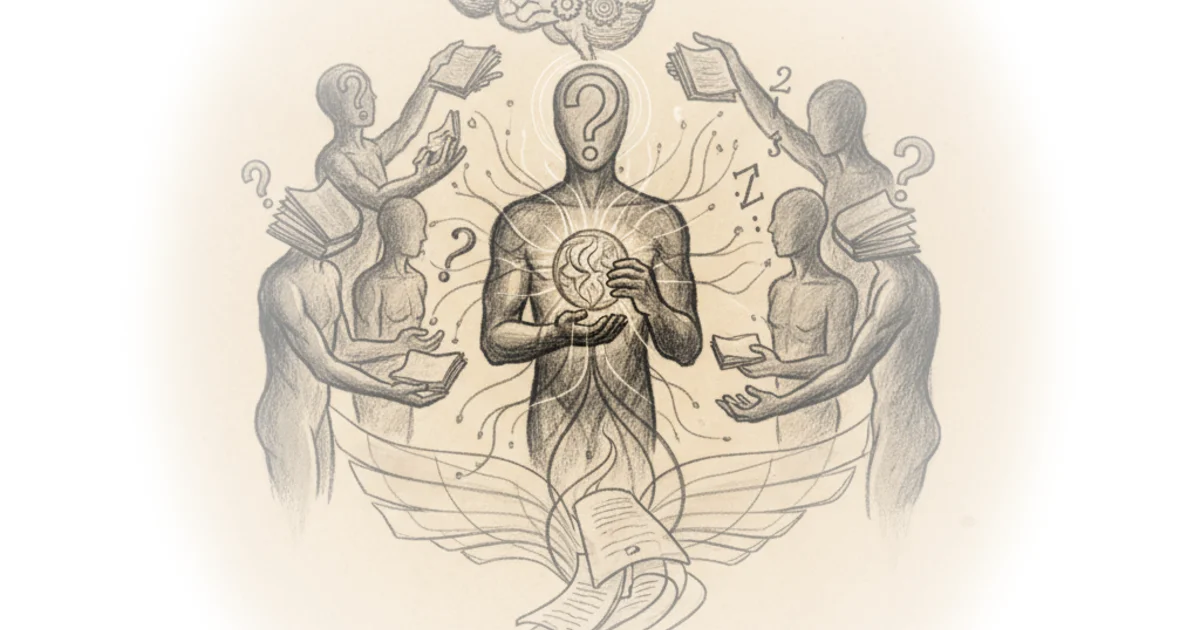
Hardwig's argument rests on a specific logical structure. If person A has evidence for a claim, and person B has good reason to believe that A has that evidence, then B has a good reason to believe the claim itself—even if B lacks the evidence. Easwaran explains that this creates a form of justification that is distinct from evidence. "The mere fact that someone claims that something is true could never count as evidence in his sense, but the fact that someone claims something is true could provide me with good reason," the author paraphrases. This distinction is powerful because it allows us to trust experts without needing to become experts ourselves, a nuance often lost in public discourse.
"If there really are good experts on something available, then insisting on thinking for yourself rather than deferring to the expert will often constitute some sort of irrationality."
Critics might argue that this framework opens the door to gullibility or authoritarianism, but Easwaran clarifies that Hardwig's model requires B to have good reasons to believe A is an expert, not just to believe A's claim. The burden of proof shifts to identifying the expert, not replicating their work.
The Rationality of Refusal
The commentary then pivots to Hardwig's most provocative claim: that rationality can consist in refusing to think for oneself. Easwaran connects this directly to contemporary struggles, noting how the public's insistence on independent verification regarding vaccines and epidemiology has led to widespread misinformation. "Much of the public discussion in the past couple years has consisted of people thinking for themselves and getting themselves into all sorts of trouble," Easwaran observes, grounding the 1985 theory in current events. The argument here is that when a layperson attempts to replicate the work of a specialist, they are not being more rational; they are being epistemically inefficient.
Hardwig suggests that the chain of authority must end with someone who possesses the original evidence. "Truth claims cannot be established by an appeal to authority, nor by investigating what other people believe about them," Easwaran quotes, emphasizing that the system relies on a foundation of actual evidence held by someone, even if that someone is not you. The commentary effectively uses this to dismantle the idea that "thinking for yourself" is always the highest virtue. Instead, it proposes that recognizing one's own limitations and deferring to the community's collective knowledge is a higher form of rationality.
Reconceptualizing Knowledge
Finally, Easwaran explores the implications for the definition of knowledge itself. If we accept epistemic dependence, then knowledge may not be an individual possession but a communal one. "Perhaps sometimes knowledge can be had without any understanding and or perhaps knowledge is something that a community has rather than an individual," the author summarizes Hardwig's conclusion. This challenges the traditional educational model that prioritizes individual autonomy above all else.
Easwaran addresses the obvious counter-question: if deferring to experts is so rational, why do schools emphasize independent research? The answer lies in the long-term goal of the education system. We learn to find evidence and think for ourselves not so we can do it for everything, but so we can better identify who the true experts are. "By working through these things in your education you're going to get some sense of what is involved in expertise so that you might get better at identifying experts to defer to," Easwaran explains. This reframes education not as a factory for independent knowers, but as a training ground for discerning judges of authority.
"The epistemic individualism implicit in many of our epistemologies is thus called into question with important implications for how we understand knowledge and the knower."
Bottom Line
Kenny Easwaran's analysis of Hardwig provides a necessary corrective to the cult of individualism that plagues modern information consumption. The strongest part of the argument is the rigorous separation of "evidence" from "good reason," which allows for a robust defense of expertise without demanding blind faith. Its biggest vulnerability lies in the practical difficulty of distinguishing genuine experts from charlatans in a polarized media landscape, a challenge Hardwig acknowledges but cannot fully solve. Readers should watch for how this framework applies to the growing crisis of trust in scientific institutions, where the refusal to defer is often mistaken for intellectual independence.