In a cultural landscape often saturated with spectacle, Tom van der Linden offers a startling reframing of the most famous movie monster in history: Godzilla is not merely a creature to be slain, but a mirror held up to humanity's nuclear hubris. This analysis, rooted in a comparative study of the 1954 Japanese original and the 2014 American reboot, argues that the monster's evolution from a tragic metaphor to a heroic defender reveals a collective desire to sanitize the trauma of the atomic age. For busy readers seeking to understand the psychological undercurrents of modern cinema, this piece provides a crucial lens on how we process global catastrophe through pop culture.
The Weight of the Original Metaphor
Van der Linden begins by grounding the discussion in the specific historical trauma of post-war Japan. He notes that the 1954 film, Gojira, emerged while Japan was still under United States occupation, a context where direct political discourse on nuclear devastation was heavily censored. "The Godzilla movie was one of this first like cultural touchstones where people were able to connect with sort of this like Reckoning with this this metaphorical Reckoning with you know this event that this tragedy that took place," he explains. This observation is vital; it transforms the film from a simple creature feature into a rare, coded outlet for national grief that could not be spoken aloud.
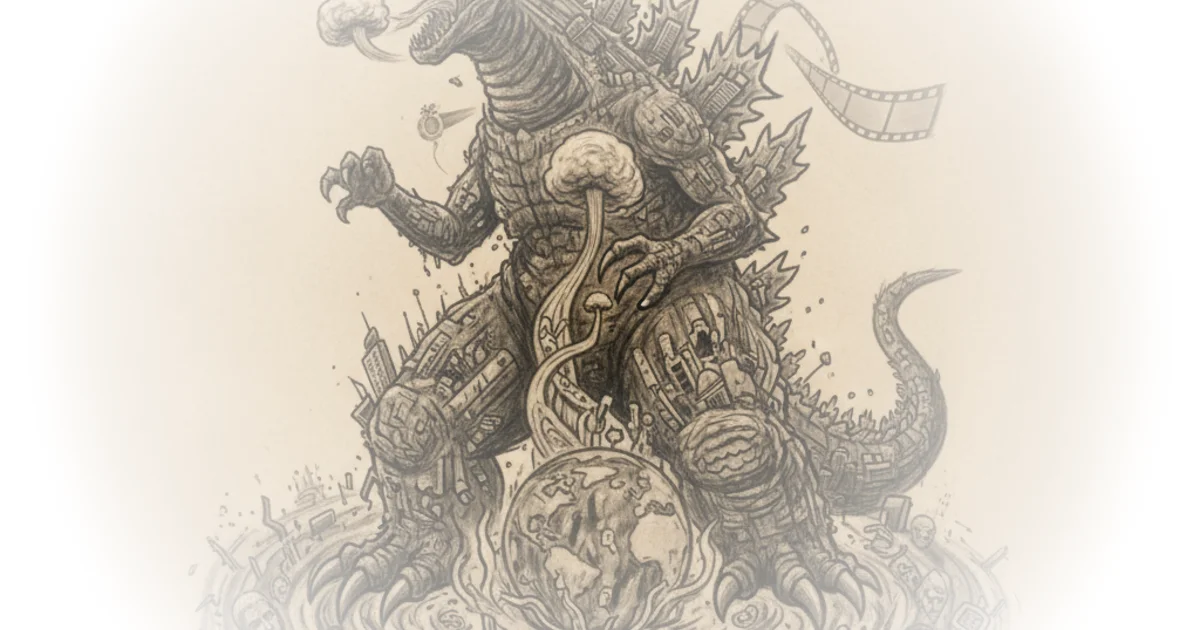
The commentary highlights how the Americanization of the film in 1956 stripped away this gravity. By centering an American character and diluting the political message, the US version turned a meditation on nuclear destruction into "silly goofy campy like monster movie." This shift underscores a persistent tension in how Western audiences consume stories of Eastern trauma. Van der Linden argues that this duality—between the monster as a symbol of destruction and the monster as a creature to be fought—has haunted the franchise ever since. The original film's ending, where a scientist sacrifices himself to destroy the creature and prevent the weapon used against it from ever being used again, serves as a grim reminder that the only way to stop the cycle of escalation is total self-sacrifice.
The only proper way to respond to Godzilla is to not try to fight it, because if you try to fight it it angers him and it gets worse.
The Shift from Trauma to Balance
As the conversation moves to the 2014 reboot, van der Linden identifies a significant thematic drift. The modern iteration reframes Godzilla not as a punishment for nuclear testing, but as a force of nature returning equilibrium to the planet. "By the time you get to 2014 Godzilla wakes up and you have the Japanese character in the movie kind of being like Godzilla is this force of nature returning balance to things," he observes. This reframing is a fascinating psychological pivot: it suggests a modern desire to view nuclear energy and its consequences as a natural order rather than a human-made tragedy.
This shift, however, introduces a new ambiguity. If Godzilla is a natural force restoring balance, does that imply nuclear destruction is a necessary correction? Van der Linden admits to struggling with this logic, noting that it feels like "very weird territory" to wrap one's head around. He suggests that while the original film was a clear warning against the bomb, the modern version blurs the line between victim and avenger. "Is he a reflection of something inside us that we need to pay attention to in some way or is he this outside force that's coming to reckon with us?" he asks. This question cuts to the heart of the franchise's identity crisis. Critics might note that this ambiguity is a feature, not a bug, allowing the character to remain relevant across generations who do not share the visceral fear of the 1950s. Yet, the loss of the specific historical anchor risks turning a profound warning into generic environmentalism.
The Commercialization of Dread
The piece concludes by examining how the franchise eventually abandoned its philosophical roots for commercial viability. Van der Linden points out that as Godzilla became an icon, the narrative focus shifted from "trying to say something meaningful" to "let's see them battle it out." The introduction of King Kong and other monsters in later sequels turned the narrative into a spectacle of "movie Monsters being pitted against each other," effectively neutralizing the political sting of the original concept.
This trajectory reflects a broader cultural fatigue with the nuclear threat. The complex, terrifying reality of the atomic bomb is too heavy to sustain as a recurring plot device, so it is repackaged as entertainment. "It became less about trying to say something meaningful and more about just hey use these two fun characters," van der Linden writes. This is a sobering conclusion: the monster that was born from the fear of extinction has been tamed into a mascot for the very industry that profits from our distraction.
It started out as a pretty serious cinematic concept and then it turned into more of a commercialized larger project, right? Became more about entertainment than about conveying like this deeper message.
Bottom Line
Tom van der Linden's analysis succeeds in exposing the uncomfortable evolution of Godzilla from a tragic symbol of nuclear horror to a sanitized hero of balance. The strongest part of the argument is the historical context provided regarding the 1956 American censorship, which fundamentally altered the monster's meaning for Western audiences. However, the piece's biggest vulnerability lies in its own admission of the metaphor's imperfection; the shift from "punishment" to "balance" is logically jarring, and the author struggles to fully reconcile why a monster representing nuclear annihilation should be viewed as a savior. Readers should watch for how future iterations of the character will attempt to re-introduce genuine dread in an era where the nuclear threat has become a distant, abstract policy issue rather than an immediate existential fear.