This piece by Meghan Davidson Ladly for The Walrus pulls back the curtain on a disturbing reality: the machinery of a brutal US detention camp is being fueled by Canadian capital, operating in a legal gray zone that shields its parent companies from accountability. While the world focuses on the tents in the Everglades, the real story lies in the boardrooms of Toronto and Montreal, where corporate structures are weaponized to bypass human rights norms. This is not just about one facility; it is a case study in how privatization and regulatory gaps allow abuses to flourish under the radar.
The Canadian Connection
The Walrus opens by detailing the squalor of Alligator Alcatraz, a facility built in eight days to hold thousands in disaster-relief tents. The conditions described are harrowing: "migrant detainees and their lawyers described worm-infested food, swarms of mosquitoes, windowless cells, flooded floors with fecal waste, and insufficient showers and toilets." Yet, the article's most striking revelation is not the conditions themselves, but who is profiting from them. The Walrus identifies two key players: IRG Global Emergency Management, a US offshoot of a Toronto-based firm, and GardaWorld, a Quebec-based security operator.
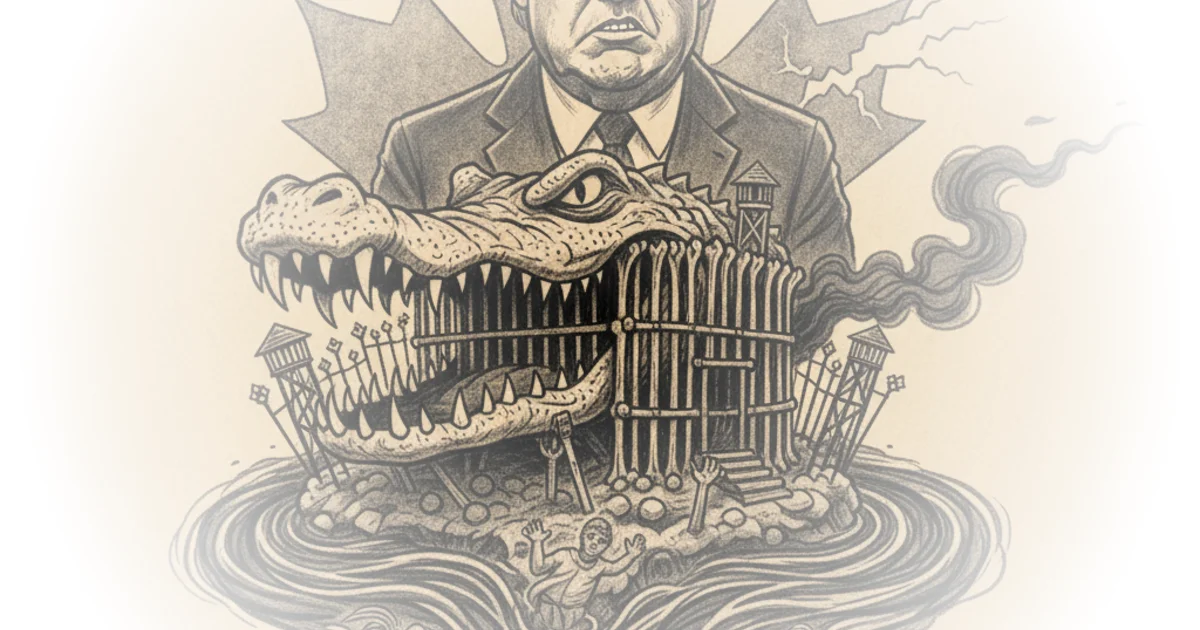
The financial ties are explicit and staggering. "IRG Global Emergency Management was incorporated only this past February, yet it has received a total of $25.8 million (US) from the state of Florida so far this year." This rapid ascent from incorporation to major contract award suggests a system primed for speed over scrutiny. The Walrus notes that GardaWorld's US arm holds an $8 million contract for the site, while their Canadian parent company claims a lack of visibility into these operations. This separation is the crux of the problem. As the article argues, "Right now, there really are not good mechanisms in Canada for accountability for abuses linked to Canadian companies outside of Canada."
This framing is effective because it shifts the blame from individual bad actors to a systemic failure of Canadian law. The piece highlights that while these companies are not technically breaking US law, they are exploiting a vacuum in Canadian oversight. The Walrus points out that the Office of the Canadian Ombudsperson for Responsible Enterprise (CORE), created in 2019 to monitor such abuses, is currently "toothless" and leaderless. "The office of CORE is intended to review complaints about human rights abuses by Canadian companies abroad in the oil and gas, garment, and mining sectors," the author writes, but it lacks the power to compel witnesses and its mandate excludes the security sector.
There is really nothing to stop a Canadian company from going out anywhere in the world and getting involved in serious human rights abuses.
Critics might argue that holding foreign subsidiaries accountable is a complex legal challenge that requires international cooperation, not just domestic legislation. However, The Walrus counters this by noting that other jurisdictions, like the European Union, are already implementing supply chain tracking regulations that mandate compliance with local laws. The absence of similar rules in Canada is a deliberate policy choice, not an oversight.
The Politics of Privatization
The article digs deeper into the intersection of corporate donations and government contracting, painting a picture of a system where public funds are effectively funneled to political allies. The Walrus details how ARS USA, the parent of IRG, made significant donations to Florida Governor Ron DeSantis's political action committee and the Republican Party of Florida. "All of this is basically a legalized form of bribery: it's favour-buying from elected officials," says Aaron Ettinger, a political science professor cited in the piece.
This section is crucial because it connects the dots between the "state of emergency" declared by DeSantis and the subsequent awarding of contracts without competitive bidding. The Walrus explains that the emergency declaration grants extraordinary powers to bypass standard procurement rules, allowing companies like IRG to secure open-ended contracts worth millions. "Moving fast often means making a lot of mistakes, and that is certainly what is happening in Florida right now," Ettinger observes. The article suggests that the speed of the operation—building a camp in eight days—was prioritized over due diligence, leading to the humanitarian crisis on the ground.
The Walrus also touches on the historical context of this trend, noting that the outsourcing of state functions to private operators began in the 1980s in the US and 1990s in Canada. This privatization wave was accelerated by conflicts in Afghanistan and Iraq, where private security companies honed their skills in managing military bases. The piece implies that Alligator Alcatraz is the latest iteration of this trend, where the state retreats from its responsibilities, and private entities step in with little regard for human rights.
The Human Cost of Legal Loopholes
The human cost of these legal loopholes is the emotional core of the piece. The Walrus describes the job advertisements for armed security guards at the facility, which warned of "extreme cold or hot weather conditions, fumes, or airborne particles, toxic or caustic chemicals, and loud noise." These warnings, intended for the workers, serve as a stark reminder of the environment created for the detainees. The article quotes Thomas Kennedy of the Florida Immigrant Coalition, who states, "Unfortunately, Florida does not have any real meaningful labor laws. We live in a hellish state."
The Walrus argues that the lack of accountability is not just a Canadian problem but a global one, enabled by the way multinational corporations structure their operations. "There is no enforceable due diligence responsibility that companies would have to monitor what their foreign subsidiaries do," says Burkard Eberlein, a professor of public policy. This legal separation allows Canadian companies to claim ignorance while their US subsidiaries engage in controversial activities. The piece notes that even voluntary codes of conduct, like those in the mining sector, are often just "reputation management" without real teeth.
Maybe Canadian companies are a little bit cleaner than other companies in a global comparison. Is that good enough? No, but if you want to do more, it would shake up the whole sector and be quite costly.
This quote captures the article's central tension: the choice between maintaining a veneer of corporate responsibility and implementing the costly, difficult reforms needed to ensure actual accountability. The Walrus suggests that the current system is designed to protect profits at the expense of human dignity, and that without significant legislative changes, this cycle will continue.
Bottom Line
The strongest part of The Walrus's argument is its unflinching exposure of how Canadian corporate law facilitates human rights abuses abroad, turning a blind eye to the actions of subsidiaries in the US security sector. Its biggest vulnerability is the lack of a clear, immediate path to reform, as the proposed legislation on supply chain due diligence remains stalled. Readers should watch for the appointment of a new ombudsperson and any new federal legislation, as these will be the true tests of Canada's commitment to holding its corporations accountable for their global footprint.