Chris Chappell delivers a scathing, satirical dissection of a week where Beijing's geopolitical maneuvering appears to have backfired spectacularly. Rather than a dry recitation of headlines, Chappell frames the narrative around a singular, biting irony: while China attempts to project strength through espionage and influence operations, its allies crumble, its agents get caught, and its economic rivals rally against its monopolies. This is not just a news roundup; it is a forensic audit of Chinese overreach, delivered with a sharp wit that exposes the absurdity of the CCP's contradictions.
The Illusion of the "No Limits" Partnership
Chappell immediately dismantles the diplomatic fiction that China and Russia are merely casual observers in the Ukraine conflict. He highlights a report from The Telegraph detailing massive shipments of dual-use technology from Beijing to Moscow. "A report by the Telegraph found that $10.3 billion worth of Chinese equipment was shipped to Russia's military, including specialized manufacturing machine tools used for making the hypersonic missiles," Chappell notes. The author's argument is that China's denials are transparently hollow, especially given the technological gap between the two nations. He observes that while Russia's manufacturing sector is "decades out of date," China possesses the cutting-edge tools necessary to keep the Russian war machine running.
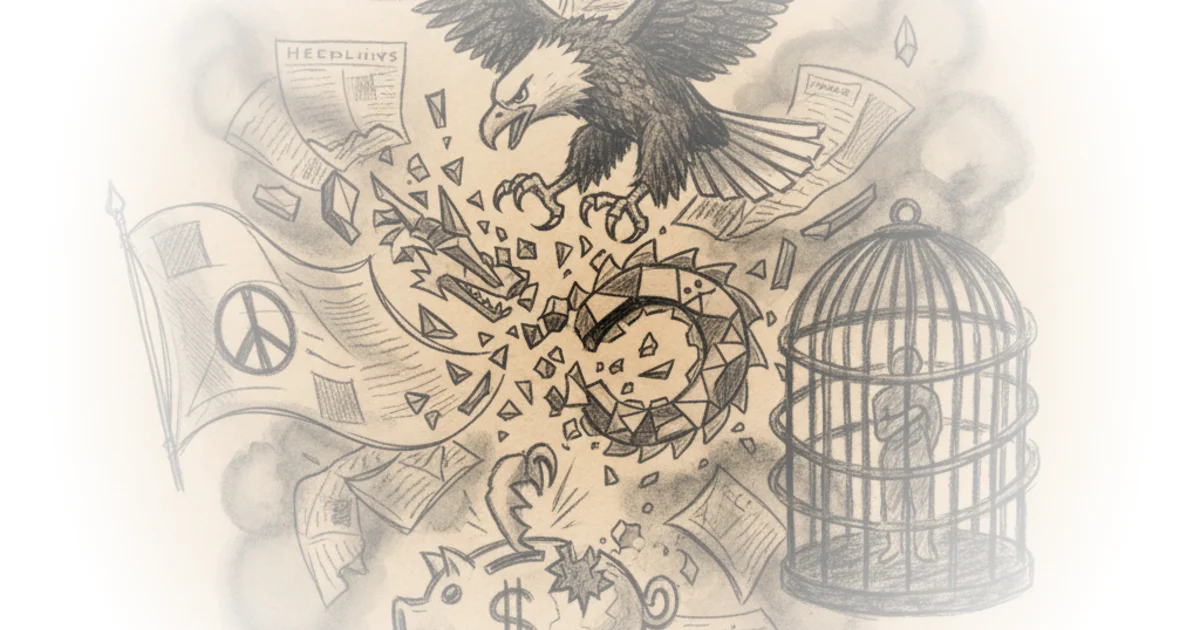
The commentary effectively uses sarcasm to underscore the absurdity of Beijing's official stance. "China says that its position on the war has been consistent and clear," Chappell writes, before immediately undercutting it with, "They're helping Russia with this invasion to test the world's reaction to gauge how they'd feel about China invading Taiwan." This framing forces the reader to confront the strategic calculation behind the "neutrality" narrative. Critics might argue that attributing such a specific, long-game motive to Beijing oversimplifies the chaotic nature of the war, but the evidence of material support makes the skepticism difficult to dismiss.
The Domestic Front: Spies and Influence
The piece shifts to the United States, where Chappell exposes the brazenness of Chinese espionage operations. He details the conviction of Yaoing Mike Sun, a former People's Liberation Army officer who acted as an unregistered agent. "His tasks include spying on former Taiwanese President Tsai Ing-wen during her California visit in 2023, reporting her movements back to Chinese officials, and promoting CCP propaganda," Chappell explains. The most damning revelation, however, is the attempt to engineer an election. "Sun's main task was apparently engineering the election of a Chinese national to public office as a Democrat in California by funneling CCP cash into her campaign, which is outrageous," he states.
Chappell's delivery here is particularly effective because it juxtaposes the gravity of foreign interference with the mundane reality of American politics. "Here in the US, our politicians shouldn't be bought by hostile foreign forces. They should be bought by corporations. That's the America I know," he quips. This dark humor serves as a potent critique of the American political system even as it condemns the foreign actor. The author also connects this to broader influence operations, citing a State Department report that identifies groups like Code Pink as vectors for Chinese propaganda. "The report alleges that China, Iran, and Russia have been working to sow chaos and undermine the US from within," Chappell summarizes, noting the irony of a billionaire Marxist funding leftist movements. "If you're wondering, hey, isn't it hypocritical to be a Marxist and a billionaire? Congrats, you understand Marxism more than most Marxists," he adds, a line that perfectly captures the cognitive dissonance of the situation.
Here in the US, our politicians shouldn't be bought by hostile foreign forces. They should be bought by corporations. That's the America I know.
The Human Cost and Strategic Retreats
Moving from the geopolitical to the human, Chappell addresses the sentencing of Hong Kong activist Jimmy Lai. The tone shifts from satire to somber realism as he describes the 20-year sentence for a man in his late 70s. "Rights groups who have been pushing for his release warned that it's basically a death sentence for Lai," Chappell writes. He highlights the brutal efficiency of the National Security Law, noting that "if someone in Hong Kong says, 'Don't give me hope,' they're not quoting Hawkeye. They just know hope is illegal under the CCP." This metaphorical connection underscores the totalizing nature of the repression.
The commentary then pivots to the Pacific, where China's influence is being checked. In Palau, US sanctions against corrupt officials for accepting Chinese bribes signal a successful counter-move. "Both men and their immediate family members are banned from entering the US," Chappell reports, emphasizing that Palau remains a strategic ally. The narrative arc here suggests that while China can buy influence, the US is increasingly willing to enforce consequences, turning the island into a battleground where Beijing's sway is actively eroding.
The Rare Earth Reversal
The final and perhaps most significant section of Chappell's coverage focuses on the economic front: rare earth minerals. He details President the administration's launch of "Project Vault," a $12 billion initiative to stockpile critical minerals and break China's monopoly. "The executive order sets up a stockpile of critical minerals for industry rather than just national security, which is great because China loves weaponizing its monopoly over rare earths," Chappell explains. The author frames this as a direct counter to Beijing's leverage, noting that the project combines private funding with government loans to reactivate American mining.
Chappell also touches on the diplomatic friction this causes, noting that Japan is stepping in to fill the gap. "TSMC says it will produce advanced chips at a plant in Japan," he reports, suggesting that the threat of Chinese aggression is driving tech giants to diversify their supply chains. The irony is palpable as Chappell notes that China's attempt to restrict exports to Japan may have backfired. "Pro tip, maybe cool it with the active genocide. That sort of thing tends to hurt your Yelp reviews," he jokes, using humor to drive home a serious point about the long-term economic costs of human rights abuses. Critics might argue that the timeline for re-establishing a domestic supply chain is optimistic, but the strategic intent of the move is clear: to deny China the ability to hold the global economy hostage.
Bottom Line
Chris Chappell's coverage succeeds because it refuses to treat Chinese aggression as a distant abstraction, instead grounding it in specific, verifiable failures of strategy and morality. The strongest element of the piece is its ability to weave together disparate threads—espionage, human rights abuses, and economic warfare—into a cohesive narrative of a superpower overextending itself. The biggest vulnerability, however, is the reliance on satire, which while effective for engagement, may occasionally obscure the sheer scale of the threat China poses to global stability. Readers should watch for how the US administration translates these rhetorical victories into tangible, long-term supply chain resilience.