Most coverage of the semiconductor industry treats chipmakers as the sole architects of the digital age, but Asianometry flips the script to reveal a far more fragile truth: the entire ecosystem hinges on a Dutch machine builder that nearly went bankrupt decades ago. This piece cuts through the nationalist noise to expose a critical, decades-long collaboration between rivals that birthed the technology powering modern AI, while also clarifying why the U.S. government holds the keys to a machine it didn't build. It is a necessary correction to the myth of solitary genius in high-tech manufacturing.
The Oligopoly That Almost Wasn't
Asianometry begins by dismantling the assumption that market dominance is inevitable. The author notes that ASML, now the undisputed leader in lithography, "lost money for the first six years of its life" and struggled to compete against entrenched Japanese firms like Nikon and Canon. The core of the argument is that ASML's survival wasn't just about better engineering; it was about a strategic pivot to a technology so risky that even its customers hesitated. The author writes, "Many things are not working out when it came to EUV developing it could turn out to be a money pit." This framing is effective because it highlights the sheer financial audacity required to push Moore's Law forward when the industry was already satisfied with incremental improvements.
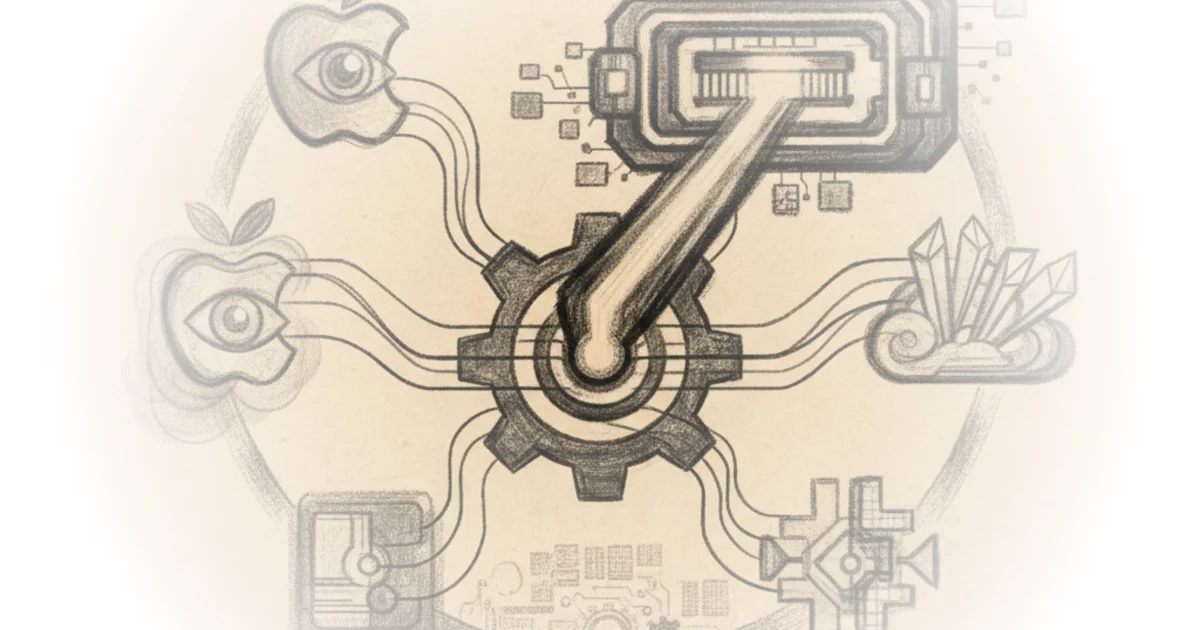
The turning point, as Asianometry details, was a radical shift in business model. Instead of selling machines, ASML sold a stake in the future. In 2012, the company announced a customer co-investment scheme where Intel, Samsung, and TSMC poured billions into development. "ASML could not have finished EUV without intimate participation and financing from its customers," the author argues. This is a crucial insight for busy readers: the supply chain isn't a linear vendor relationship but a shared risk pool. Without this capital injection, the technology likely would have stalled, leaving the industry with no path to the most advanced nodes.
Critics might note that this narrative downplays the sheer technical brilliance of ASML's engineers in executing the vision. While the funding was essential, the execution of extreme ultraviolet lithography required solving physics problems that had stumped the world for decades. Asianometry acknowledges the risk but focuses heavily on the financial architecture that made it possible.
Without this buy-in, ASML would have ended up like Canon, unable to sustain this decades-long odyssey without going bankrupt.
The American Roots of a Dutch Machine
Perhaps the most surprising revelation in the piece is the explanation for why the U.S. government can restrict exports of a Dutch company's technology. Asianometry traces the lineage of the technology back to a 1997 consortium called EUV LLC, founded by American firms Intel and Micron in partnership with the U.S. Department of Energy. The author writes, "Think of EUV as a startup and the U.S. as its controlling shareholder." This reframing is vital; it moves the discussion from geopolitical posturing to intellectual property rights. The argument is that the U.S. intervention isn't an overreach but an enforcement of the original licensing agreement that allowed ASML to leapfrog its competitors.
The author points out that without this specific American foundation, the technology landscape would look entirely different. "The EUV LLC participation allowed ASML to leapfrog the Japanese's progress in EUV and get that critical first buy-in from major customers," Asianometry states. This evidence holds up well against the common narrative that the U.S. is simply bullying allies. Instead, it suggests a complex web of international R&D where American foundational research was commercialized by a European entity, creating a unique jurisdictional overlap that still dictates trade policy today.
The Baker and the Oven
To resolve the endless internet debates over whether TSMC or ASML is more important, Asianometry employs a powerful metaphor: baking a pound cake. The author suggests that TSMC is the baker, while ASML is the high-tech oven. "You can try but it all ends up in a ridiculous exercise of numbers pulled out of your butt because the reality is they all came together in a single harmonious moment," the author concludes. This analogy effectively neutralizes the nationalist posturing that often clouds this discussion. It reminds the reader that while the oven (ASML) is critical, the baker's skill (TSMC's yield and process control) determines the final quality.
The commentary notes that even with identical equipment, outcomes vary wildly. "Intel was literally the lead investor in making EUV happen, neither of those foundries are at the same level of yield and output," the author observes. This distinction is often lost in headlines that treat semiconductor manufacturing as a monolith. The argument lands because it acknowledges that technology transfer is not a simple copy-paste operation; it requires deep, tacit knowledge that takes decades to cultivate.
Bottom Line
Asianometry's strongest contribution is its refusal to let the narrative be hijacked by simplistic nationalism, instead revealing the intricate, shared-risk architecture that underpins the modern chip industry. The piece's biggest vulnerability is its slight gloss over the geopolitical friction that this shared ownership model inevitably creates, particularly as nations seek to decouple supply chains. Readers should watch for how this delicate balance of shared IP and national security interests evolves as the next generation of chip technology emerges.
You can try but it all ends up in a ridiculous exercise of numbers pulled out of your butt because the reality is they all came together in a single harmonious moment.