Michael Ruhlman does not merely share a recipe; he constructs a narrative where a single dish becomes a vessel for memory, regional identity, and the quiet persistence of culinary tradition against the tide of American simplification. In a newsletter often dominated by the ephemeral, this piece argues that the true value of food lies not in novelty, but in the "dead simple" mechanics of a dish that has survived centuries of change to deliver a specific, repeatable joy. The evidence he brings is not data, but the visceral experience of a traveler in Bologna and the tangible connection to a father who once cooked a pale imitation of the same meal in Cleveland.
The Anatomy of a Dish
Ruhlman anchors his argument in a specific moment of discovery at All' Osteria Bottega in Bologna, a humble establishment recommended by the late Jonathan Gold. He writes, "It is Italian simple—a schnitzel with ham and cheese. But none of us knew this particular Italian preparation." This admission is crucial; it highlights how even well-traveled food enthusiasts can miss the nuance of a region's core identity. The author uses this gap in knowledge to pivot from mere consumption to active participation, noting that "great dishes nudge themselves into your life's repertoire of repeatable recipes."
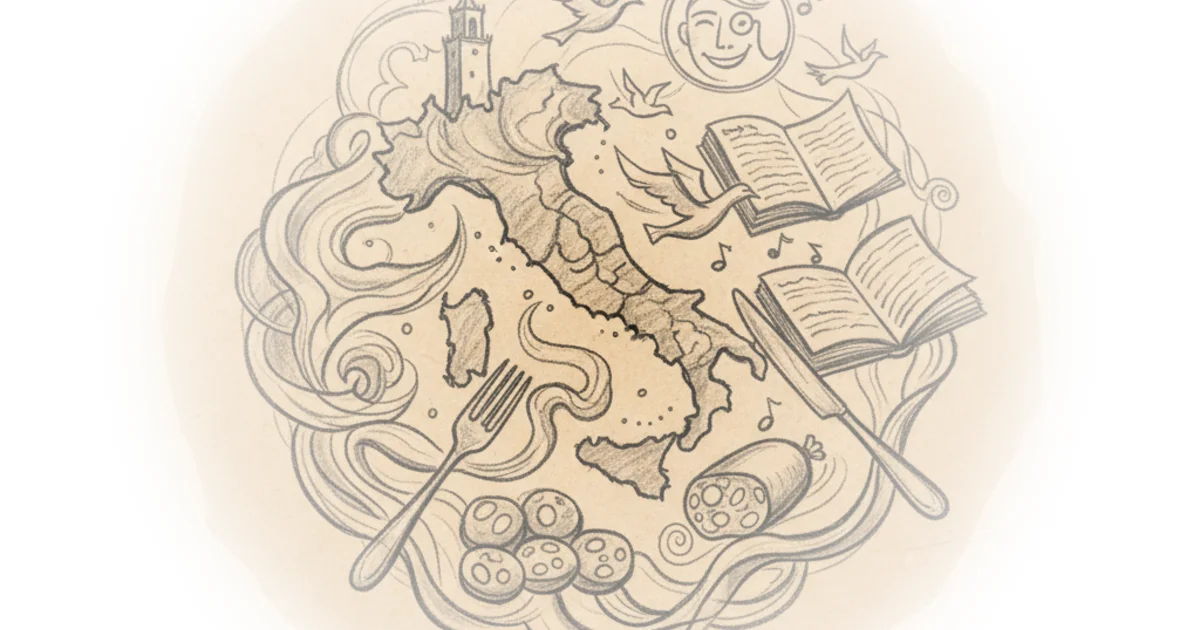
The commentary here is sharp: Ruhlman insists that the dish's power comes from its accessibility. "Repeatable because, like so much of the Italian repertoire, it's dead simple," he observes, dismantling the idea that authentic Italian cooking requires arcane techniques. Instead, the focus is on the quality of ingredients and the specific method of finishing the cutlet in broth. This approach mirrors the culinary philosophy found in the region's other staples; just as the history of Emilia-Romagna is defined by the specific pairing of prosciutto di Parma and Parmigiano-Reggiano, the Cotoletta Petroniana relies on the precise interaction of fat, bone, and steam. Ruhlman notes that "all cotolettas in this style finish the cutlet in a small amount of broth," a technique where "steam helps melt the cheese and the broth tenderizes the cutlet without drying it out."
"One reputable cook does it with chicken. Oy. If you only eat chicken breast, fine, but I wouldn't call it alla Bolognese."
This refusal to compromise on the protein choice is the piece's most defiant stance. Ruhlman argues that substituting veal with chicken or cauliflower, while perhaps delicious, fundamentally alters the dish's cultural DNA. He writes, "Bologna is the capital city of the Emilia-Romanga region, famous both for its prosciutto di Parma and its Parmagiano-Reggiano, so it's a natural pairing." By insisting on the bone-in cutlet, he champions a method of cooking that prioritizes flavor and presentation over convenience, a direct counter to the modern trend of boneless, skinless uniformity.
The Ghost of Midwestern Imitation
The narrative deepens when Ruhlman connects the high art of Bologna to the low-rent adaptations of his childhood. He recalls his father's "pork chops Italianne," a dish made with "Progresso 'Italian-style' breadcrumbs" and "processed Swiss." He wonders, "I wonder if its provenance can be found in Bologna's Cotoletta Petroniana." This is a profound observation on the diaspora of food: how a complex regional tradition gets flattened into a generic comfort food as it crosses the Atlantic. The emotional weight of the piece lands here, as Ruhlman reflects, "Wish my dear dad were around so I could make the original for him."
Critics might note that the insistence on veal ignores the ethical and economic realities of modern meat production, where veal is often a byproduct of the dairy industry and less accessible to the average home cook. Ruhlman acknowledges this, admitting that in the US, "pork is typically used," and he validates the pork version found in Queens. However, his primary argument remains that the method—the broth finish, the specific cheese, the bone—is what defines the dish, not just the species of animal. He writes, "Bone-in chops cook better because of the bone, and the bone makes for a more impressive presentation," suggesting that the physical structure of the meat is integral to the culinary experience.
"Holding a hard copy of the letter, the type so deep into the paper I could feel the impression of the letters, I thought, 'Someone took the time to roll a sheet of paper into a typewriter, compose a letter, correct it in pen, find the address of my agent, type the envelope, stamp and mail the thing.'"
While this quote comes from the newsletter's section on fan mail, it perfectly encapsulates the ethos of the food piece: the value of slowness and intentionality. In an era of instant digital gratification, Ruhlman argues for the "slow" preparation of a dish that requires patience, just as the fan letter required physical effort. The connection is subtle but potent; both the recipe and the letter are acts of resistance against the speed of modern life.
The Broader Context of Connection
Ruhlman weaves in the history of the region to strengthen his argument, noting that the dish is so beloved "there's a FB page called friends of Petronaina, Amici della Petroniana, devoted to the dish." This communal devotion underscores the idea that food is a social glue. He also briefly touches on the historical context of the region, mentioning that "in the northern region of Emilia-Romagna, the cooking fat would traditionally have been butter or lard," a detail that grounds the recipe in a specific time and place. This is similar to the deep dives on Cardoon or Veal Milanese, where the history of the ingredient is inseparable from the dish itself.
The piece also serves as a critique of the "Americanized" version of Italian food, where "pork chops Italianne" became a symbol of a culture that was understood only through a lens of convenience and availability. Ruhlman's recipe is an attempt to reclaim the original, to bridge the gap between the Midwestern memory and the Italian reality. He writes, "I think butter is the best choice for flavor, but you can use olive oil or vegetable oil," offering flexibility while maintaining a standard of quality.
"We write in solitude and send books out into space and we don't know who they're going affect, or even if they'll affect anyone at all. But holding a hard copy of the letter... I thought, 'Someone took the time...'"
This sentiment extends to the recipe. By sharing a recipe that is "dead simple" yet deeply rooted in tradition, Ruhlman is sending a message into the space of the reader's kitchen, hoping to affect their dinner table. The act of cooking becomes a way to connect with the past, with the region, and with the people who came before.
Bottom Line
Ruhlman's strongest argument is that authenticity in cooking is not about rigid dogma, but about understanding the why behind the what: the bone adds flavor, the broth tenderizes, the cheese melts in steam. His biggest vulnerability is the potential elitism of insisting on specific ingredients like veal or high-quality Parmigiano-Reggiano in a world where such items are often cost-prohibitive. However, the piece succeeds because it frames the recipe not as a test of culinary skill, but as an invitation to slow down, to honor the history of the dish, and to find a moment of connection in the kitchen. The reader is left not just with instructions for a cutlet, but with a renewed appreciation for the labor and love that go into every meal.