In a geopolitical standoff where official narratives often diverge wildly from ground realities, Brad DeLong offers a chilling diagnosis: the crisis with Iran is not a failure of negotiation, but a failure of trust so profound that a comprehensive deal is structurally impossible. DeLong moves beyond the surface-level debate of who is bluffing to argue that the administration's entire theory of victory collapses because it assumes the executive branch can be trusted to honor a surrender that never comes. This is not a chess game of economic pressure; it is a collision between a desperate need for security and a leadership that believes any concession made today will be weaponized tomorrow.
The Illusion of a Deal
The piece begins by dismantling the administration's public optimism. DeLong highlights the stark contradiction between the White House's claims of imminent success and Iran's flat denial of any talks. He notes that while the administration insists Iran is "economically broken and desperate," Tehran is simultaneously "raising its price for even a temporary Strait-of-Hormuz reopening." DeLong writes, "The Iranian government over the past month or so has repackaged things that it once saw as its goals for a comprehensive settlement into mere preconditions for reopening the Strait of Hormuz. They are not climbing-down. They are escalating."
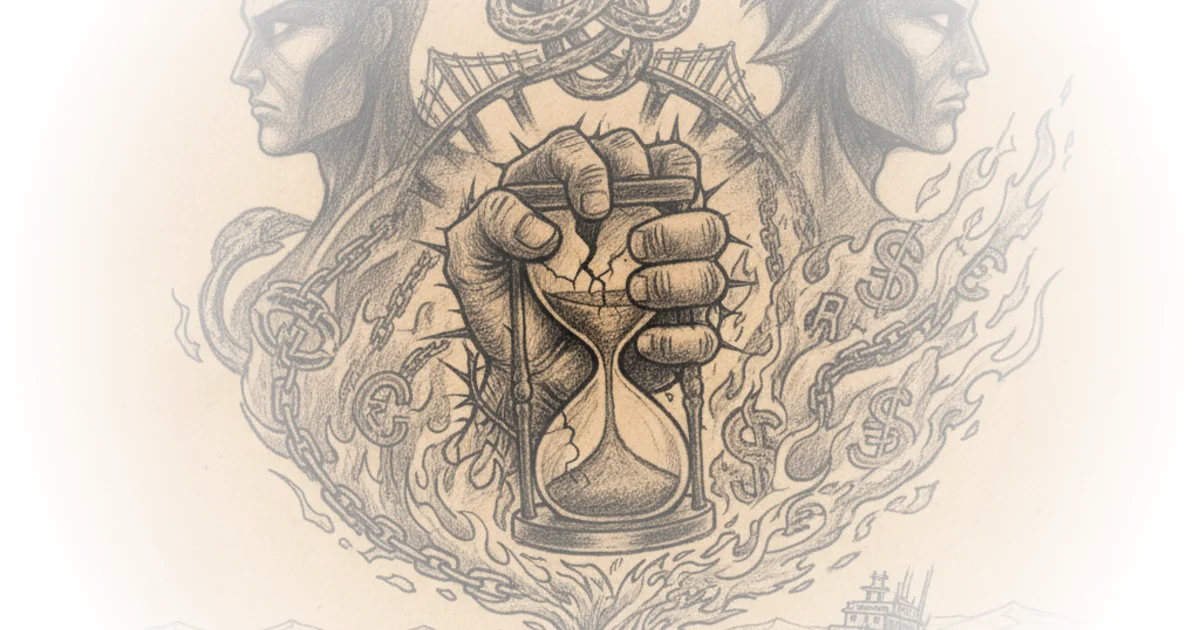
This observation is critical. It suggests that the administration is misreading desperation as leverage. While the executive branch believes the "maximum pressure campaign" is forcing Iran to the table, DeLong argues that Tehran is actually hardening its stance. The administration sees a wounded adversary looking for a way out; DeLong sees a government that has concluded that the cost of surrender exceeds the cost of continued conflict. As he puts it, "Iran's economic condition can be genuinely terrible while its leadership simultaneously concludes that surrendering now would be worse." This distinction is often missed in Washington, where economic metrics are treated as direct proxies for political will.
The question is, rather: Is accepting the terms even possible, given that Bibi and Donald will then alter the terms afterwards whenever one of them feels like it?
The Credibility Gap
DeLong's most provocative argument centers on the fundamental lack of trust between the parties. He rejects the idea that this is a standard negotiation where terms can be tweaked. Instead, he frames the situation as a confrontation with an adversary who believes the US will renege on any agreement the moment it is signed. DeLong invokes a vivid analogy to illustrate this dynamic: "You face a Clown Darth Vader: 'This deal is getting worse all the time! I am altering the deal. Pray I do not alter it any further.'"
This framing shifts the blame from Iranian intransigence to the reliability of the US government itself. DeLong argues that the Iranian leadership is not merely holding out for better terms, but is operating under the rational assumption that the US cannot guarantee the terms of a deal. He draws a parallel to the situation in Venezuela, noting that even when cosmetic concessions were made and oil payments were authorized, the lack of transparency and the shifting political winds meant no real security was gained. "There have been real resource transfers," DeLong observes, "but no audit reports I can find anywhere, however, not even to the most reliable of Republican congressional leaders."
This lack of institutional credibility is the silent driver of the crisis. The administration assumes that Iran's refusal to negotiate is a bluff born of weakness. DeLong contends it is a rational response to the fear that the US will simply change the rules once the pressure is lifted. A counterargument worth considering is that this view underestimates the potential for back-channel diplomacy or the influence of intermediaries like Oman, who have successfully facilitated technical agreements on shipping. However, DeLong's point remains that without a mechanism to enforce the US side of the bargain, no amount of economic pain will force a comprehensive settlement.
The Battle of Endurance
The article concludes by reframing the conflict not as a contest of firepower, but as a test of political stamina. The administration believes it can inflict enough damage to break Iran's will. DeLong suggests the opposite: Iran is betting that the US political system will fracture under the weight of prolonged conflict and economic disruption before Iran collapses. "The battle is no longer primarily over who can inflict more physical destruction," DeLong writes. "The battle is over who can endure the consequences longer. And right now, both Washington and Tehran appear convinced the answer is: we can."
This endurance test has profound human costs that are often obscured by the high-level strategy. The continued closure of the Strait of Hormuz and the threat of escalation threaten to destabilize global energy markets, driving up costs for ordinary citizens worldwide. Furthermore, the rhetoric of "maximum pressure" often ignores the humanitarian toll on the Iranian population, whose suffering is used as a bargaining chip rather than a reason for de-escalation. DeLong's analysis forces readers to confront the reality that the current trajectory leads not to a victory, but to a prolonged stalemate where both sides absorb damage while the world watches.
Bottom Line
Brad DeLong's most compelling contribution is his insistence that the crisis is driven by a crisis of credibility, not just a crisis of economics. The strongest part of his argument is the logical conclusion that no deal is possible when one party believes the other will alter the terms immediately after signing. The biggest vulnerability in this analysis is the assumption that the US administration is incapable of changing its approach, potentially overlooking the possibility that a shift in political dynamics could restore trust. Readers should watch for whether the administration moves from demanding unconditional surrender to offering verifiable, enforceable guarantees, as the current path leads only to escalation.