Sarah Kendzior delivers a startlingly original meditation on the crisis of artificial intelligence by locating its antidote not in a tech hub, but in a St. Louis cemetery. By weaving together personal grief, linguistic heritage, and the literary ghost of T.S. Eliot, she argues that the only true sanctuary from algorithmic erasure is the physical, unalterable reality of death. In an era where history is being rewritten by machines, Kendzior suggests that the dead offer the only reliable record of a life actually lived.
The Architecture of Memory
Kendzior begins by framing the modern digital experience as a form of confinement, describing the screen as a source of light "as harsh as the internet." She contrasts the artificial comfort of a flat, microwave-ready existence with the relentless, magnetic pull of the real world. The core of her argument rests on the idea that digital platforms flatten human experience, turning the complex terrain of life into a "safe and shallow" loop. She writes, "The ones I have line my phone like little prisons. 'Walled gardens,' they call them, like you can stop to smell the roses and the hills don't have eyes."
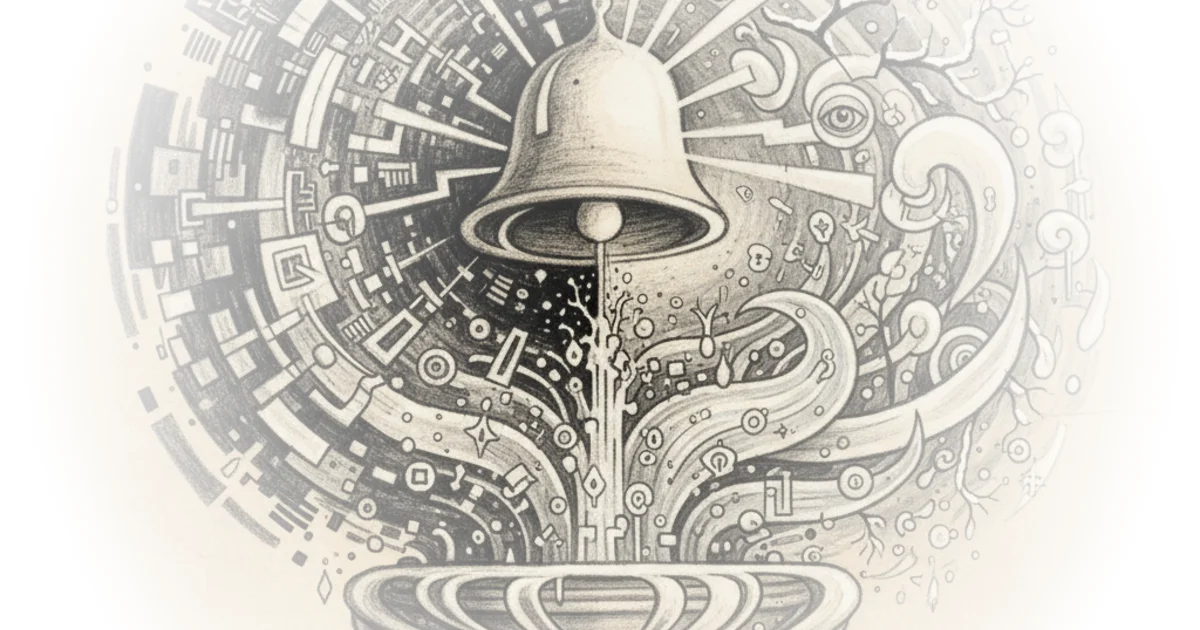
This framing is effective because it moves beyond the usual complaints about screen time to address a deeper existential threat: the loss of the subconscious. Kendzior posits that AI, by its very nature, cannot engage in the messy, paralyzed struggle of self-discovery that defines the human condition. She notes that in 2025, with seasons scrambled and democracy desecrated, the stakes have never been higher. "AI has no subconscious," she asserts. "With AI there can be no soul searching because there is no soul."
Critics might argue that this romanticizes the past or ignores the utility of digital tools in preserving history, yet Kendzior's point is specific to the quality of that preservation. She warns that relying on algorithms for memory is a surrender of agency. "You surrender that struggle by turning to AI for answers on what Eliot called 'the overwhelming question'." The strength of this section lies in its refusal to treat AI as a neutral tool; instead, it is presented as an active agent of forgetting.
AI may be the antichrist, but it cannot outwit the dead.
The Subconscious of St. Louis
The piece deepens as Kendzior connects her personal linguistic identity to the literary history of St. Louis. She refuses to apologize for her "Polack French" accent, framing it not as a defect but as a bridge to the past. This accent, she explains, is an "insur-MAH'ihble problem" that actually connects her to the subconscious of T.S. Eliot. She draws a fascinating parallel between her own speech patterns and Eliot's own "transatLAH-ic" identity, noting that the poet never truly escaped his Midwestern roots despite his British affectations.
Kendzior highlights how Eliot's famous poem, The Love Song of J. Alfred Prufrock, was born from a forgotten memory of a local furniture salesman named William Prufrock. This connection serves as a powerful metaphor for the power of the subconscious: "I did not have, at the time of writing the poem, and have not yet recovered, any recollection of having acquired this name in any way, but I think that it must be assumed that I did, and that the memory has been obliterated." By stumbling upon the real Prufrock's grave in Bellefontaine Cemetery, Kendzior claims to have found the physical manifestation of Eliot's subconscious.
This historical weaving is masterful. It transforms a local cemetery into a site of global literary significance, proving that place and memory are inextricably linked. She observes that while online blogs and search engines are now filled with "AI slop," the stone monuments remain untouched. "All that remains are books and stones," she writes, emphasizing that physical artifacts possess a permanence that digital data lacks. The dead, she argues, are "infinitely more alive than AI will ever be" because they represent lives that were fully realized, not simulated.
The Sanctuary of the Stone
The narrative culminates in a visit to the cemetery with her daughter, a moment that grounds the abstract arguments in tangible human connection. The cemetery has survived a recent tornado and the chaos of the changing seasons, standing as a testament to resilience. Kendzior describes the graves as a counter-narrative to the erasure happening in the wider world. "Democracy is desecrated, seasons are slain, history is being erased," she writes, contrasting this with the quiet endurance of the dead.
She points out the absurdity of modern attempts to digitize these sacred spaces, noting the presence of QR codes near graves. "I refuse to use a QR code in a cemetery," she states. "It would feel like performing an exorcism." This rejection of the digital overlay is a crucial part of her thesis: the act of remembering requires the friction of the physical world. When her daughter asks who is buried in the grave of the man who inspired Prufrock, Kendzior's reply is profound: "Everyone."
This conclusion reframes the entire piece. The cemetery is not just a place for the dead; it is a repository for the collective human experience that AI cannot replicate. The argument holds up because it acknowledges the pain of loss—her father's terminal illness, her daughter leaving home—without offering a technological fix. Instead, it offers the solidity of stone and the continuity of memory.
Bottom Line
Sarah Kendzior's strongest move is her refusal to separate the personal from the political, using her own accent and family history to illustrate a global crisis of memory. The argument's vulnerability lies in its potential to alienate readers who view technology as a necessary bridge rather than a barrier, yet her evidence of digital decay is compelling. The reader should watch for how this defense of physical memory plays out as AI increasingly attempts to curate and rewrite our collective history.
The dead of Bellefontaine are infinitely more alive than AI will ever be.