Karim Zidan delivers a searing indictment of how global sporting institutions are increasingly becoming tools for political whitewashing, arguing that the spectacle of the peloton often obscures a darker reality of state violence and human rights abuses. This is not merely a recap of race results; it is a forensic examination of how the Union Cycliste Internationale (UCI) and other governing bodies prioritize prestige over ethics, turning stadiums into stages for authoritarian legitimacy. Zidan forces the reader to confront the uncomfortable truth that the champagne sprayed on makeshift podiums in Madrid was paid for by a system that ignores the blood spilled to build the road.
The Myth of Neutrality in Cycling
Zidan opens by dismantling the illusion that sports exist in a vacuum. He describes the chaotic conclusion to the 2025 Vuelta a España, where the top three finishers—Jonas Vingegaard, Joāo Almeida, and Tom Pidcock—celebrated on a podium constructed from drinks coolers. This imagery serves as a stark metaphor for the event's fractured nature. "The 2025 edition was characterized by multiple pro-Palestine protests which caused crashes that forced two riders to quit the race, several changes to stage finishes and distances, and the abandonment of the final stage of the event," Zidan writes. The author argues that these disruptions were not random acts of disorder but a direct response to the presence of Israel-Premier Tech, a team backed by a philanthropist known as the "self-appointed Ambassador at large for the State of Israel."
The commentary here is particularly sharp in its refusal to treat the protests as a distraction. Instead, Zidan frames them as a necessary correction to the sport's narrative. He notes that "campaigners seized on the Vuelta's visibility" to highlight that "there is no clean separation between cycling's landscapes and its political reality." This framing is effective because it shifts the burden of disruption from the protesters to the organizers who invited a team representing a state engaged in what Zidan terms "ethnic cleansing of Gaza." By linking the race directly to the humanitarian crisis, Zidan forces the reader to question the ethics of allowing a team funded by a state actor to compete while civilians are suffering.
Critics might argue that sporting events should remain apolitical to preserve the integrity of the competition. However, Zidan's evidence suggests that neutrality is impossible when the participants themselves are deeply entangled in geopolitical conflicts. The administration's refusal to ban the team, and the subsequent chaos, proves that the political reality has already invaded the sport; the only question is whether the sport will acknowledge it.
The protesters insisted that there is no clean separation between cycling's landscapes and its political reality.
The Rwandan Mirage and the Cost of Prestige
The piece then pivots to the upcoming UCI Road World Championships in Kigali, Rwanda, exposing the darker machinery behind the event's "historic" branding. Zidan identifies the host nation's leader, Paul Kagame, not as a post-genocide hero, but as an autocrat using sports to launder his reputation. "Serving as the de facto ruler of Rwanda since 1994, Kagame drew international praise for commanding the rebel force that ended the Rwandan genocide in 1994. However, he has since ruled his country with an iron fist, committing severe and systematic human rights abuses both within Rwanda and beyond its borders," Zidan writes.
The author does not shy away from the scale of the violence facilitated by Kagame's regime. He details how the regime "helped fuel two wars in the neighbouring Democratic Republic of Congo as part of a struggle to control the country's mines with valuable mineral resources, leading to the deaths of more than five million people." This statistic is the anchor of the argument: the road to the finish line in Kigali is literally paved with the deaths of millions. Zidan argues that the UCI's decision to proceed with the event, despite "monitoring" the situation in February 2025, was a choice to prioritize the event's location over human life.
Zidan describes Kagame's strategy as part of a broader trend where "authoritarian leaders who exploit sports to whitewash their reputations on the global stage and advance their political agendas." The author points out the hypocrisy of the regime closing schools and setting up fan zones to "embrace the 2025 UCI Road World Championships together," while simultaneously deploying soldiers to eastern DRC to back the M23 paramilitary group. The contrast between the celebratory atmosphere of the race and the "massacres, rapes and other gross human rights abuses" in the region is jarring, and Zidan uses it to devastating effect.
The argument holds weight because it connects the dots between the glamour of the World Championships and the brutal reality of regional dominance. "The UCI World Championships may light the way for Africa's next cycling generation, but the path towards the finish line winds across roads paved in blood," Zidan concludes. This is the piece's most powerful line, encapsulating the moral bankruptcy of the event. It suggests that the "globalization" of cycling is being sold at the price of human dignity.
Global Patterns of Exploitation and Erosion
Beyond cycling, Zidan weaves in a tapestry of other sporting-political intersections to show that this is a systemic issue, not an isolated incident. He highlights Spain's Prime Minister Pedro Sánchez, who called for an international sports ban on Israel, stating that "as long as the barbarism continues, Israel can't use any international platform to whitewash its presence." Zidan uses this to validate the protesters' stance, showing that even established political leaders recognize the ethical imperative to separate sport from state-sponsored violence.
The newsletter also touches on the collapse of "cricket diplomacy" between India and Pakistan, where the refusal to shake hands after a match underscored the "erosion of their once celebrated cricket diplomacy." This serves as a counterpoint to the idea that sports can heal political rifts; instead, Zidan suggests that sports often mirror and amplify existing tensions. Furthermore, the piece addresses the plight of transgender athletes in the US, noting how Lindsay Hecox abandoned her lawsuit due to safety fears, illustrating how political polarization is dismantling the very concept of fair play.
In the section on FIFA's dynamic pricing, Zidan critiques the commodification of the game, quoting a petition by Zohran Mamdani that calls out the "gatekeeping" of fans through real-time price hikes. This adds a layer of class critique to the broader argument, showing that the exploitation of sport is not just geopolitical but also economic. The author's inclusion of Morocco's plan to use stadiums as judicial courts for the 2030 World Cup further cements the theme of authoritarian overreach, where the state uses the tournament to tighten legal control rather than celebrate community.
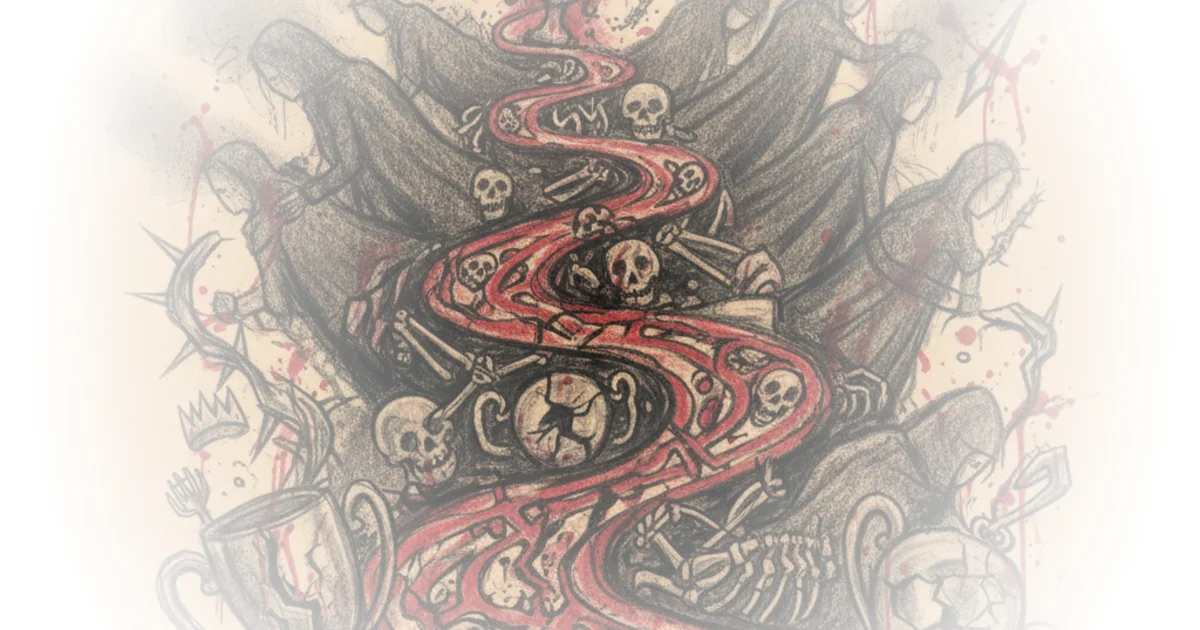
The path towards the finish line winds across roads paved in blood.
Bottom Line
Karim Zidan's piece is a masterclass in connecting the dots between sporting spectacle and geopolitical violence, refusing to let the reader look away from the human cost of the games. The strongest element of the argument is its unflinching linkage of the UCI's decision-making to the five million deaths in the Congo, a connection that exposes the moral bankruptcy of the sport's governing bodies. Its vulnerability lies in its potential to alienate fans who wish to keep sports separate from politics, but Zidan effectively argues that such separation is a myth that serves only the powerful. The reader must now watch to see if the UCI and other institutions will continue to prioritize the calendar over conscience, or if the road paved in blood will finally force a change in direction.