This piece from Compact Magazine offers a startling reframing of American history: it argues that the Revolution was not merely a political break from Britain, but the birth of an entirely new social order where free labor and individual agency replaced hereditary caste. For busy readers seeking to understand the deep roots of modern liberty versus current authoritarian trends, this is a vital reminder that our current struggles are echoes of a centuries-old clash between the 'Old Regime' and the 'New World.'
The Social Revolution Hidden in Plain Sight
The article's most compelling claim is that the Declaration of Independence was primarily a social document, not just a political one. Compact Magazine reports, "America is not a country that had a revolution, but a revolution that has a country." This distinction shifts the focus from geography to ideology, suggesting that the American experiment was an attempt to institutionalize a specific way of life—one based on free labor and mutual cooperation rather than subjugation.
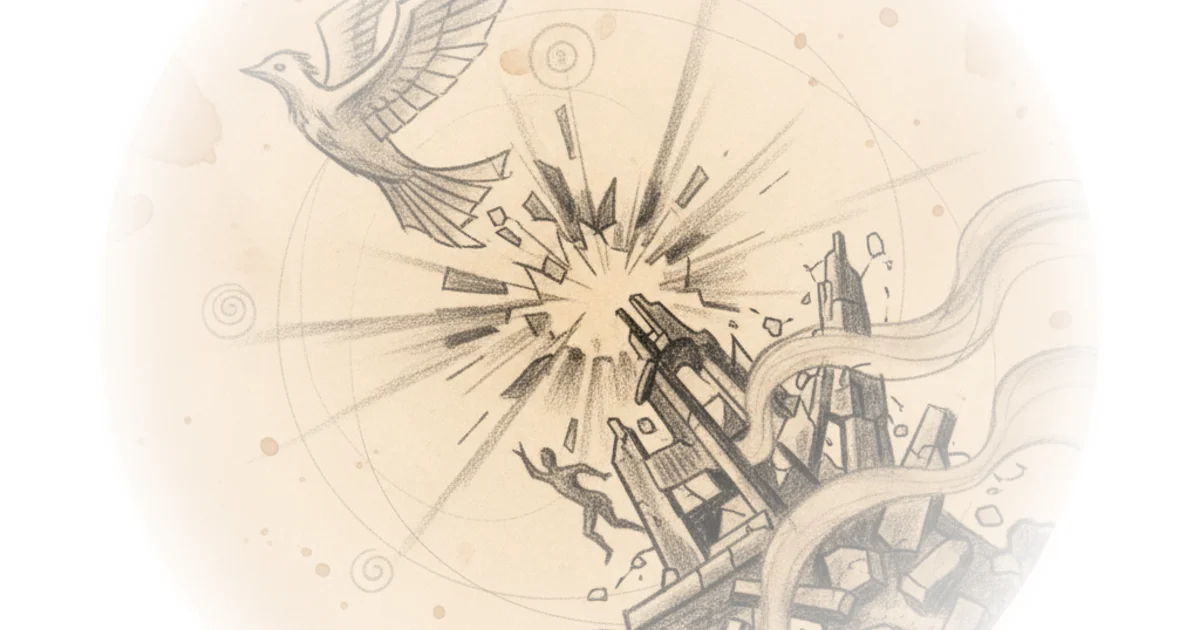
The editors argue that the famous lines about "Life, Liberty and the pursuit of Happiness" were radical because they announced a society where humans have no masters. They paraphrase the historical context effectively: while Europe was still bound by the logic that "some command and others obey," as French jurist Charles Loyseau wrote in 1610, American founders dared to claim that truth is not defined by the status quo. The piece notes that even Adam Smith observed in the 1760s that "A small part of the West of Europe is the only portion of the globe that is free from slavery," highlighting how isolated this new idea was.
The Declaration's unalienable rights are the rights of the society of free labor, of universal social cooperation based on the free exchange of labor and its products.
This framing is powerful because it grounds abstract ideals in economic reality. However, a counterargument worth considering is that the piece glosses over how deeply embedded slavery was in the very "commercial society" it praises. By focusing on the theoretical breakthrough of free labor, the article risks minimizing the brutal contradiction of a nation founded on liberty while simultaneously enslaving millions.
The Old Regime's Last Stand
The commentary then pivots to the resistance faced by these new ideas, drawing a sharp parallel between 18th-century Britain and modern institutional inertia. Compact Magazine draws on the "Wilkes and Liberty" movement in Britain and the Genevan Revolution of 1782 to illustrate that the struggle was global. The editors note that ruling establishments from London to Vienna faced movements demanding that "the state should be the servant of society, not its master."
The piece highlights how the British establishment dismissed these demands as "sophistical reasoning," with Allan Ramsay arguing that the master-servant relationship was a "natural and divine appointment." This historical echo feels particularly resonant today when modern bureaucracies often treat citizens as subjects to be managed rather than partners in governance. The article suggests that the American victory was fragile, describing it as a "bridgehead for the New World in its struggle with the Old Regime across the globe."
Practical Utopians and the Future of Consent
In its final section, the text celebrates the founders as "practical utopians" who believed that humanity could govern itself through consent rather than divine right. Compact Magazine quotes John Adams, who warned that the "domineering spirit" of feudalism still lingered in English institutions long after the Glorious Revolution. The editors argue that the true revolution was a shift in consciousness: viewing humanity not as a product of God or nature, but as a creation of society itself.
The piece concludes with Jefferson's vision that these truths would spread "to some parts sooner, to others later, but finally to all." This optimism is the article's emotional core. It suggests that the struggle for modern freedom is ongoing and that the "New World" is not a place on a map, but a continuous project of social self-creation.
The revolutionary spirit of the modern, bourgeois world was crystallized in a document drafted by Thomas Jefferson... [which] made clear that a new society had come into existence and that it would brook no power outside of itself.
Critics might argue that this narrative is overly idealistic, ignoring how often the "New World" has reverted to old patterns of exclusion and hierarchy. Yet, the piece's strength lies in its insistence on the radical potential of the original promise, urging readers to see current political battles as part of a long historical arc toward genuine self-governance.
Bottom Line
Compact Magazine delivers a sophisticated argument that the American Revolution was a global watershed moment for human agency, successfully linking 18th-century philosophy to the mechanics of free labor. Its greatest vulnerability is a tendency to romanticize the "bourgeois revolution" without fully grappling with the systemic exclusions that accompanied it, but its core thesis—that liberty requires constant social re-creation rather than passive inheritance—remains a crucial lens for understanding our current political climate.