Mehdi Hasan cuts through a year of official spin to reveal a startling admission from within the executive branch: the administration that started a war in the Middle East now finds itself held hostage by its own adversary. While public rhetoric suggests strength, anonymous insiders confess that the United States has lost its leverage and is desperate for an exit strategy before the global economy collapses.
The "Lazy Warmonger" Paradox
Hasan opens with a scathing characterization of the current executive leadership, citing an unnamed appointee who described the president as a "lazy warmonger." This label captures a specific contradiction in recent foreign policy: the willingness to initiate conflict without the sustained political will or strategic discipline required to see it through. Hasan argues that while this hesitation may have inadvertently spared some lives by preventing a full-scale ground invasion, it has also resulted in significant loss of life and a "gratuitous imperial humiliation" for the United States. The author notes that after starting a fight with what he believed was a weaker nation, the administration is now effectively surrendering at the Palace of Versailles, unable to admit defeat publicly.
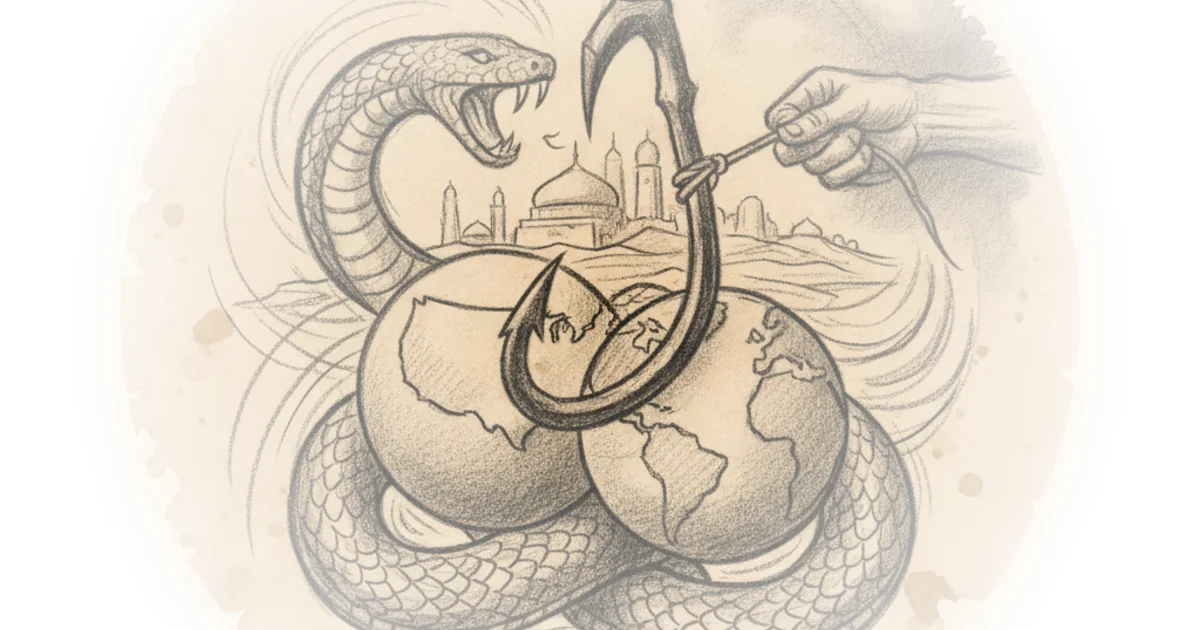
The core of Hasan's argument rests on the credibility gap between public threats and private reality. He highlights how the president's repeated promises of "mass slaughter" and "ground invasions" have been met with such consistent pullbacks that even Tehran no longer believes Washington will follow through. As Hasan writes, "We cannot afford to keep this war going much longer. We are weeks away from it plunging the global economy off a massive cliff." This assessment suggests that economic pressure, rather than military victory, is the primary driver behind the sudden push for a deal. Critics might argue that framing the withdrawal as a surrender ignores the diplomatic complexities of de-escalation, but Hasan's evidence points to internal panic regarding the Republican Party's political future and the stability of the administration itself.
"They've got him by the balls," this official — who, like others, is remaining anonymous because they don't want to be fired or jailed by Team Trump — noted. "We want out, and [the Iranians] know we don't have all the cards."
The Domestic Fallout of a Failed Campaign
The commentary shifts to the domestic political repercussions, detailing how the administration's handling of the conflict has fractured its own coalition. Hasan points to Republican figures like Senator Bill Cassidy and Thom Tillis, who are now free to speak critically after facing primary challenges or nearing retirement. Their assessments are brutal: the war failed to curb nuclear ambitions, lifted sanctions prematurely, and resulted in the deaths of American service members for no strategic gain. Hasan paraphrases their view that this represents "the worst foreign policy blunder in decades," noting that the administration is now scrambling to find a scapegoat.
The author focuses heavily on Vice President JD Vance, who has been positioned as the chief negotiator and is now facing intense backlash from within his own party. Hasan quotes a Republican source claiming that conservatives are "stunned" by how Vance would "erase all of Trump's military victories in such a terrible deal." The narrative suggests a dangerous internal dynamic where the Vice President could become the fall guy for a policy failure initiated by the President. While this framing highlights the fragility of the administration, it also overlooks the possibility that the deal reflects a pragmatic recognition of stalemate rather than mere incompetence.
The human cost remains central to Hasan's critique. He does not shy away from the casualties, noting that 13 American service members are dead and thousands more have been injured in the region. The author also addresses the civilian toll, referencing the "double tap" strike that killed over a hundred children—a tragedy the President dismissed with a shrug: "Mistakes are made, war is nasty." This dismissal underscores the moral distance between the decision-makers and the consequences of their actions.
A Deal Born of Desperation
The terms of the preliminary agreement outlined by Hasan reveal the extent of the administration's retreat. The deal includes ending military operations in Lebanon, removing U.S. forces from key positions, lifting sanctions, and establishing a $300 billion reconstruction fund for Iran backed by Gulf states. Perhaps most controversially, the agreement appears to accept that Iran will retain its ballistic missile capabilities, a war aim the administration had previously insisted on eliminating. Hasan notes the irony of the President admitting he "didn't want to see economic catastrophe" as the primary reason for ending the conflict, effectively conceding that the war was unsustainable.
Hasan argues that this outcome proves the administration never held the leverage it claimed. The narrative of a "strong deal" is dismantled by the reality that Iran has successfully leveraged its control over the Strait of Hormuz to force concessions. As Hasan puts it, "No one believes the U.S. is negotiating from a position of strength, no matter how many times JD Vance says we are." This admission from within the government suggests that the entire public posture of toughness was a bluff that ultimately failed.
Trump lost this one, badly. He will soon have more time to focus on his administration's true top priority: His war on the American people.
Bottom Line
Hasan's most compelling contribution is the unmasking of the administration's internal desperation, revealing a leadership paralyzed by its own overreach and economic vulnerability. The piece's greatest strength lies in its reliance on anonymous insiders who confirm that the "war" was never winnable under current conditions. However, the argument occasionally leans too heavily into the personality of the leadership rather than analyzing the broader structural failures of U.S. foreign policy that made this conflict inevitable. Readers should watch for how the administration attempts to spin this surrender as a diplomatic victory in the coming months, even as the terms clearly favor Iranian strategic interests.