Heather Cox Richardson delivers a chilling diagnosis of a government operating in direct opposition to its own legal framework, arguing that the current administration is not merely making policy errors but actively dismantling the rule of law to serve a specific ideological agenda. The piece is notable for its forensic dissection of how rhetoric is weaponized to override statutory requirements, specifically in the case of Haitian immigrants, while simultaneously exposing the administration's aggressive, extra-legal maneuvers to secure political power ahead of the 2026 midterms.
The Collision of Ideology and Law
Richardson anchors her argument in the recent federal court ruling that halted Secretary of Homeland Security Kristi Noem's attempt to terminate Temporary Protected Status (TPS) for 353,000 Haitians. She highlights the stark contrast between the legal intent of the TPS program and the administration's execution of it. "Congress established Temporary Protective Status in 1990 to change previously haphazard executive decisions... In its place, Congress created 'a system of temporary status that was predictable, dependable, and insulated from electoral politics,'" Richardson writes. This framing is crucial because it establishes that the current conflict is not a debate over policy preference, but a fundamental breach of the statutory design intended to protect vulnerable populations during national disasters.
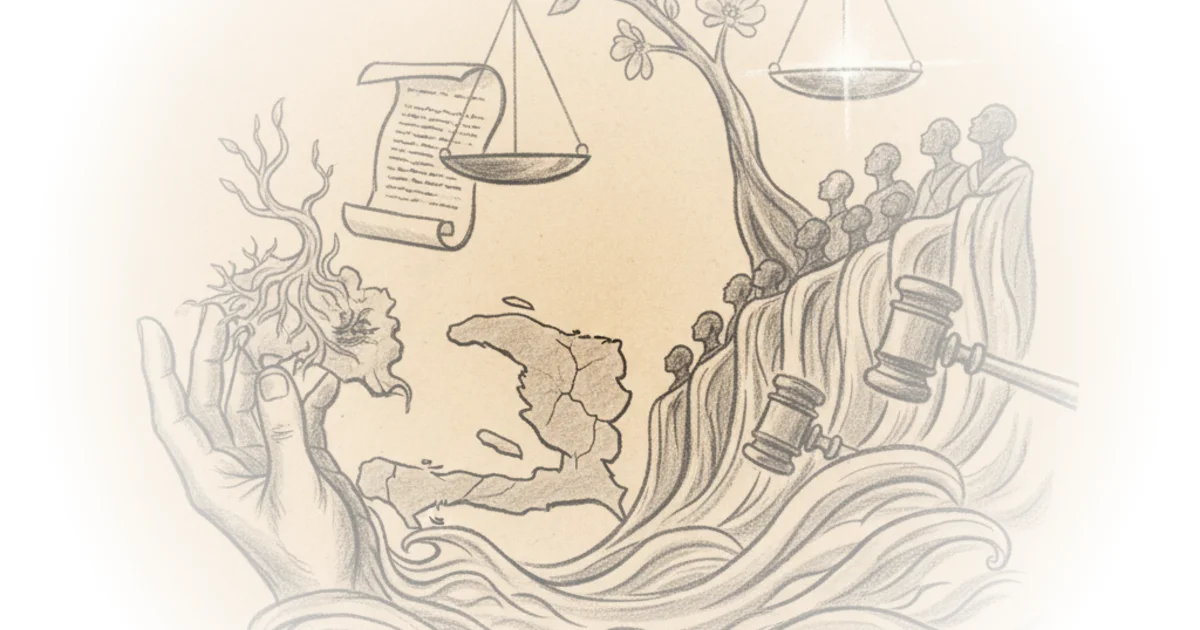
The author points to the administration's reliance on inflammatory rhetoric rather than factual evidence as the primary driver of policy. She cites Noem's December 2025 social media post where she recommended a travel ban on countries "flooding our nation with killers, leeches, and entitlement junkies." Richardson argues that this language is not accidental but indicative of a deeper motive: "As Judge Reyes explains... Secretary Noem ignored the process and the criteria, instead relying on ideology." This connection between the Secretary's public vitriol and her official actions provides a compelling narrative thread, suggesting that the administration views the law as an obstacle to be circumvented rather than a constraint to be followed.
"If you have the facts on your side, pound the facts. If you have the law on your side, pound the law. If you have neither, pound the table. Secretary Noem, the record to-date shows, does not have the facts on her side—or at least has ignored them."
The evidence Richardson marshals to debunk the administration's claims is stark. She notes that TPS holders participate in the workforce at a rate of 94.6% and contribute $3.4 billion annually to the U.S. economy, directly contradicting the "leeches" narrative. The plaintiffs in the lawsuit are described not as burdens, but as a neuroscientist, a software engineer, and a registered nurse. This humanizes the abstract legal battle, forcing the reader to confront the real-world consequences of the administration's "white nationalist ideology." Critics might argue that the administration has the sovereign right to set strict immigration standards, but Richardson effectively counters this by demonstrating that the Secretary's actions were not based on a re-evaluation of safety or economic criteria, but on a pre-determined hostility that ignored the established legal process.
The Erosion of Democratic Norms
The commentary shifts from immigration policy to a broader assessment of the administration's relationship with democratic institutions, specifically the electoral process and the Department of Justice. Richardson details the removal of Ed Martin, the head of the "Weaponization Working Group," and the subsequent appointment of Thomas Albus to conduct a raid on a Fulton County, Georgia, election office. "The raid was significant not just because the FBI took the ballots Trump has complained about for years... but also because Director of National Intelligence Tulsi Gabbard was there," Richardson notes. This detail is pivotal; it highlights the blurring of lines between intelligence gathering and domestic law enforcement, a violation of long-standing norms designed to prevent the politicization of the justice system.
The piece further explores the administration's attempt to centralize control over elections, a move Richardson describes as an effort to "rig the 2026 election." She quotes the former President's suggestion to "nationalize the voting" and his false claim that undocumented immigrants are imported to vote illegally. "Voting by undocumented immigrants, or any noncitizens, is both illegal and incredibly rare," Richardson states, dismantling the premise of the administration's grievance. The argument here is that the administration's actions are not a response to actual fraud, but a preemptive strike to manufacture a crisis that justifies federal overreach.
A counterargument worth considering is that the administration views these actions as necessary corrections to a system they believe was previously biased against them. However, Richardson's evidence of the raid occurring without proper jurisdiction and the direct involvement of the President in a domestic criminal investigation suggests a level of desperation that undermines any claim of legitimate oversight. The public's reaction, as evidenced by the polling data she cites, supports her view that the electorate is increasingly alienated by these tactics. "Americans do not like federal agents from Immigration and Customs Enforcement and Border Patrol terrorizing their streets," she writes, noting that support for Democrats has hit historic highs in response to these perceived abuses of power.
The Bottom Line
Richardson's most potent contribution is her synthesis of disparate events—the TPS ruling, the Fulton County raid, and the rhetoric of the Kennedy Center closure—into a single narrative of institutional decay. She effectively argues that the administration is not just breaking rules, but is actively trying to replace the rule of law with a system of personal loyalty and ideological purity. The strongest part of her argument is the relentless use of direct quotes and legal findings to show that the administration's actions are indefensible even by their own stated standards. The biggest vulnerability in the piece, perhaps, is the assumption that public outrage will translate into immediate political correction, given the administration's demonstrated willingness to ignore electoral mandates. As Richardson concludes, "In the conflict between reality and white nationalist ideology, reality appears to be gaining ground," but the speed and method of that victory remain the critical variables for the coming year.