Matt Stoller delivers a startling pivot in the narrative around big tech: the era of antitrust as the primary weapon against monopolies is ending, replaced by a more visceral legal assault on the very algorithms that power these platforms. This piece is notable because it moves beyond the abstract concept of "market share" to confront the tangible human cost of engagement-driven design, arguing that courts are finally treating digital pollution with the same legal gravity as industrial waste. For busy leaders tracking the shifting tides of regulation, this is the critical inflection point where the high-margin business model of social media faces its most existential threat yet.
The End of the Algorithmic Shield
Stoller argues that for years, the tech industry successfully hid behind a dual shield: the First Amendment and Section 230 of the Communications Decency Act. These legal doctrines, originally designed to protect free speech and foster innovation, have been weaponized to prevent liability for the harms their algorithms amplify. The author notes that while antitrust cases have stalled or settled with minor penalties, a new legal strategy is emerging that targets the "tyranny of unregulated algorithms."
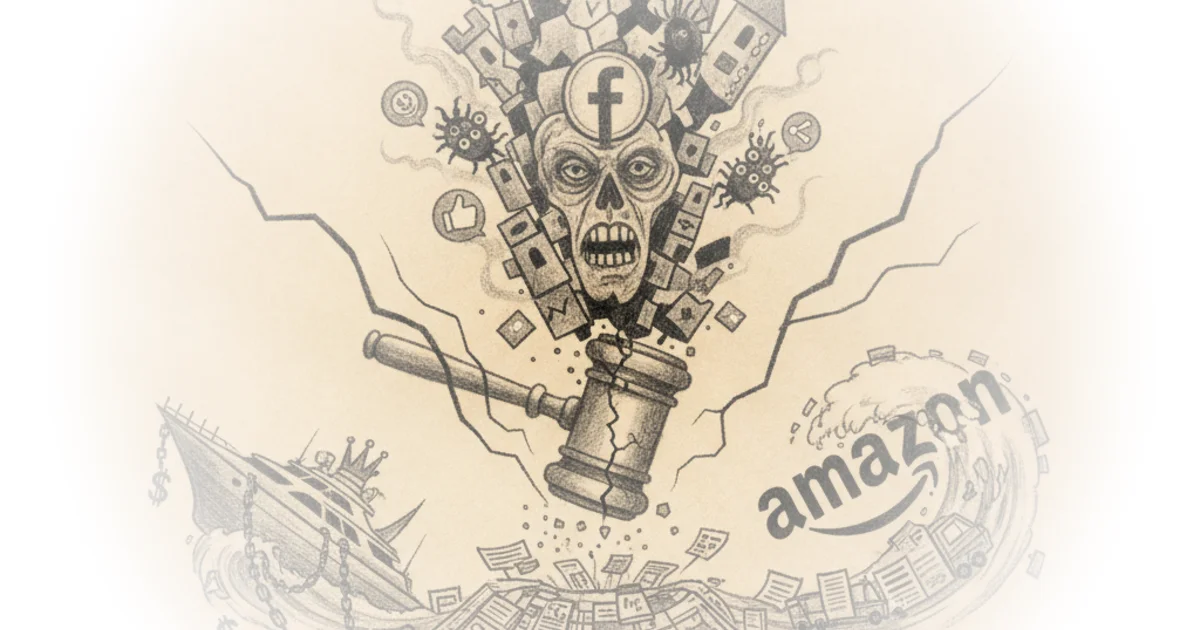
"Much of the consumer internet-economy operates on top of feeds that draw one's attention. Meta, TikTok, and YouTube all have high profit margins because they use feeds that require little human curation, and thus have low operating costs. But just because outlays are low for the companies themselves doesn't mean there aren't costs, it just means that they are borne by users and communities, in the form of bullying, sex trafficking, addiction, polarization, shorter attention spans, et al."
This framing is powerful because it reframes the debate from "competition" to "harm." Stoller draws a direct parallel to environmental law, suggesting that the legal system is finally ready to apply the concept of public nuisance to digital platforms. He highlights two recent rulings that shatter the industry's defenses. In California, Judge James Donato ruled that engagement-based algorithms are not protected by the First Amendment, distinguishing them from content moderation. Stoller writes, "In his order, he wrote that relying on 'algorithms' number-crunching capabilities' to serve engagement-bait is not an attempt to express an idea, nor is it speech. It is akin to a 'dumb pipe,' like a telephone wire, and thus it can be regulated."
This distinction is crucial. By categorizing the algorithmic feed as a utility rather than speech, the court opens the door to direct regulation of how these systems function. Critics might argue that this risks stifling innovation or that the line between "curation" and "speech" is blurrier than the judge suggests, but the ruling provides a sophisticated legal roadmap for future challenges.
The Court considers Meta's platforms to be analogous to the factory, the advertising and other content displayed on those platforms to be what is produced by the factory, and the psychological harm to and sexual exploitation of children to be the pollution that must be abated.
The Human Cost of Engagement
The argument deepens in New Mexico, where Judge Bryan Biedscheid held Meta liable for creating a public nuisance. This case is particularly striking because it moves beyond abstract market theories to the specific, horrific realities of child exploitation. Stoller details how the court found that Meta executives were aware their features—like infinite scroll and auto-play—were addictive and dangerous, yet deployed them anyway.
"The weight of evidence demonstrates that Meta's platforms are a cause of and substantial contributing factor to the youth mental health crisis in New Mexico." The judge's ruling mandates a $567 million abatement fund and, more importantly, an injunction forcing structural changes, such as adding human oversight and restricting chatbot interactions with minors.
Stoller emphasizes the severity of the evidence presented, noting that the algorithm actively facilitated "technology-facilitated sexual abuse." He quotes a former executive who bluntly stated, "The product is very good at connecting people with interests, and if your interest is little girls, it will be really good at connecting you with little girls." This quote cuts through the corporate obfuscation, revealing the mechanical nature of the harm. The court's decision to treat this as a public nuisance, rather than just a consumer protection issue, signals a shift toward holding companies accountable for the systemic side effects of their products.
Financial Fragility and Political Backlash
Beyond the courtroom, Stoller identifies two other pillars of weakness for big tech: financial fragility and a toxic political environment. The author points out that these giants are burning through cash to build AI infrastructure, leading to a "generational transfer in free cash flow" from tech firms to chipmakers. This leaves them vulnerable, as they are issuing stock and borrowing money rather than generating the free cash flow that once made them untouchable.
"When you have no free cash flow, your financial position is inherently more fragile." This financial strain is compounded by a dramatic shift in public opinion. Stoller notes that while tech was once celebrated as a progressive force, it is now viewed with deep suspicion. He writes, "Americans have decided that technology is now being deployed against their interests."
The political landscape has turned hostile, with bipartisan opposition to surveillance pricing and data centers. Stoller contrasts the current hostility with the "era of good feelings" in the 2000s and 2010s, when figures like Sheryl Sandberg were seen as future cabinet members and platforms were hailed as tools for liberation. That era ended, and the industry's attempt to pivot toward AI has only exacerbated the backlash. The construction of massive data centers has sparked local fights over water and electricity, turning tech giants into pariahs in communities across the country.
Bottom Line
Stoller's most compelling argument is that the legal strategy against big tech is evolving from a narrow focus on market dominance to a broader assault on the operational mechanics of their business models. The strongest part of this analysis is the application of public nuisance law to digital platforms, which bypasses the gridlock of federal antitrust enforcement. However, the argument's biggest vulnerability lies in the potential for these state-level rulings to be overturned on appeal or to face a fragmented regulatory landscape that favors corporate lobbying. The reader should watch closely for how the D.C. Court of Appeals handles the Google case, as its outcome will determine whether the federal courts follow the lead of state judges in treating algorithms as regulable utilities rather than protected speech.