Jordan Schneider reframes the Russian dissident movement not as a heroic uprising, but as a tragic, intellectual 'book club' that the Soviet state obsessively overestimated. By weaving a fictional screenplay dialogue with rigorous historical analysis of Benjamin Nathans's new book, Schneider argues that the movement's greatest failure was its inability to scale beyond Moscow's elite, a lesson with chilling resonance for modern civil society.
The Illusion of a Mass Movement
Schneider's most provocative claim is that the dissident movement never truly existed as a protest movement in the Western sense. He writes, "Benjamin Nathans's rockstar history book To the Success of Our Hopeless Cause (2024) is less a story about a protest movement (a mistaken assumption by contemporary Western observers) and more about a book club that the Central Committee thought way too much about." This reframing is essential because it strips away the romanticism often attached to Soviet resistance, revealing a group that was disproportionately Muscovite and intellectually insular.
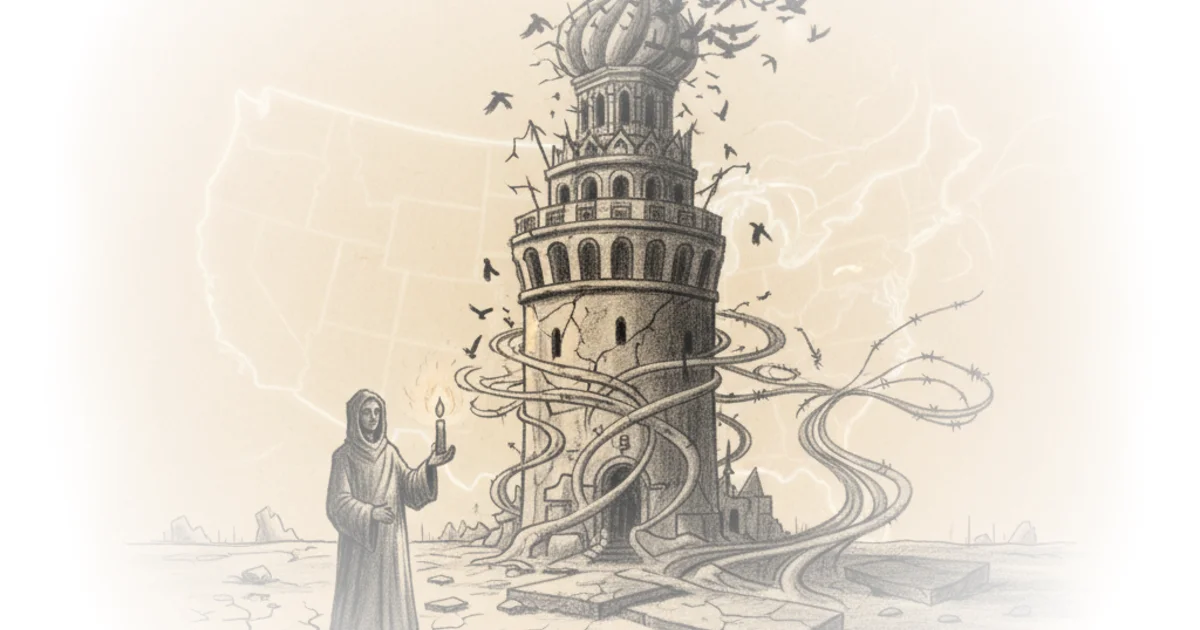
The author illustrates this isolation through a fictionalized exchange between a dissident and a KGB agent, where the agent notes, "You're reading anti-Soviet propaganda. Passed in, passed on. You know that material is harmful, right?" The dissident's retort—that the material "doesn't mean anything" and is just a way to cure boredom—highlights the movement's disconnect from the broader populace. Schneider argues that while the state viewed these intellectuals as existential threats, the average Soviet citizen saw them as irrelevant. This disconnect is the core of the tragedy: the regime was willing to deploy tanks and psychiatric hospitals to crush a movement that had already lost its own people.
The vast majority of the 'chain reaction' between 1965 and 1968 came from hip Muscovite writers defending their writer friends with more writing.
Critics might argue that this view underestimates the symbolic power of the dissidents, whose moral courage inspired later generations. However, Schneider's evidence suggests that without the specific context of the 1968 Red Square demonstration, the movement had no traction. He notes that the 1968 protest, involving only eight people, served as the "peak of direct action," yet it was also the moment the state decided to break them.
The Turning Point: Prague and the Gerontocratic Decline
The commentary pivots to the 1968 invasion of Czechoslovakia, identifying it as the moment the Soviet Union lost its soul and the dissidents lost their hope. Schneider describes Leonid Brezhnev's reaction to the Prague Spring with startling intimacy, noting that the leader "resorted to a 'friendly' negotiation at the Ukrainian-Slovakian border, mediated between train cars and swarmed with KGB agents." The image of Brezhnev sobbing over the loss of his "mentee, Comrade Dubček" while wearing pajamas underscores the absurdity and fragility of the regime.
This event crystallized the "Brezhnev Doctrine," which prioritized Party control over human faces. Schneider writes, "The '68 invasion of Prague proved the defining moment of the Brezhnev Doctrine: protect Party control over socialist states for fear of a revisionist domino effect." But he also links this to the physical and moral decay of the leadership, suggesting that the invasion precipitated a "stumbling, gerontocratic decline that defined the '70s and '80s in the Soviet Union."
The human cost of this decline was immediate for the dissidents. Schneider details how the eight protesters at Red Square were beaten and dragged away, an event he calls "the most celebrated fifteen minutes of history in the history of the Soviet dissident movement." Yet, this celebration was a "mortal blow" to the cause. Key figures like Larisa Bogoraz and Pavel Litvinov were sent to Siberia, while Natalya Gorbanevskaya was committed to a psychiatric hospital. Schneider points out that without them, the movement's most productive output, the Chronicle of Current Events, struggled to maintain its momentum.
The KGB found them in minutes, beat them, and dragged them away. This was, in Nathans' words, 'the most celebrated fifteen minutes of history in the history of the Soviet dissident movement.'
The historical parallel to the 1968 Red Square demonstration is stark when viewed against the backdrop of the 1968 deportation of the Crimean Tatars, a systematic erasure of identity that the dissidents tried to document but could not stop. Schneider's analysis suggests that the state's ability to crush dissent was not just about force, but about the dissidents' inability to articulate a vision that resonated beyond their own circle.
The Comfort of Stagnation
Perhaps the most biting critique in Schneider's piece is his observation that the Soviet Union under Brezhnev was actually a "good time" for the average citizen, making dissent a risky bet with unclear gains. He writes, "Most importantly for regular Russians, material conditions improved under Brezhnev... No one thought to ask for more, even among the dissidents." The regime traded political freedom for washing machines and refrigerators, a bargain that many were willing to accept.
Schneider uses the fictional dialogue to expose the futility of the dissidents' position. When the KGB agent asks, "Have you considered focusing on your job?" the dissident replies, "I've managed to cut maintenance costs by 25%... But it has sat on my director's desk. For three months." This exchange reveals the true nature of the Soviet system: not a totalitarian nightmare of constant terror, but a stagnant bureaucracy where competence was ignored and innovation was punished. The dissidents were fighting a system that was already rotting from within, yet they lacked the tools to accelerate its collapse.
The KGB would and did track people with samizdat, and by 1969, they had figured out how to handle them.
A counterargument worth considering is that the dissidents' focus on legalism and human rights laid the groundwork for the eventual collapse of the USSR, even if they didn't see it happen. However, Schneider's point remains that their strategy was fundamentally flawed because it relied on the state's self-interest rather than mass mobilization. The state, under Andropov's Fifth Directorate, learned to curtail influence by targeting normal people, effectively isolating the intellectuals.
Bottom Line
Schneider's analysis is a masterclass in demystifying historical movements, stripping away the myth of the heroic few to reveal the complex, often mundane realities of political resistance. The strongest part of his argument is the connection between the regime's material concessions to its citizens and the dissidents' strategic isolation. The biggest vulnerability is the potential to underestimate the long-term cultural impact of the samizdat literature, which survived despite the KGB's best efforts. Readers should watch for how this historical lesson applies to modern movements that prioritize intellectual purity over broad-based coalition building.
The dissidents were better writers than the Committee for State Security, but they were fighting a system that had already decided that their words didn't matter.