Matt Stoller delivers a stinging critique of how the legal system failed to address Meta's dominance, arguing that the real story isn't a lost antitrust case, but the broader shift of big tech from a simple monopoly into a macro-economic threat that current laws cannot touch. The piece is notable for its unflinching look at why the public has grown apathetic toward corporate malfeasance, suggesting that the courtroom drama was a distraction from the deeper, more dangerous integration of artificial intelligence and social control.
The Failure of the Morality Story
Stoller opens by highlighting a disturbing moment in the courtroom where the algorithm's recommendation of children's accounts to known predators was dismissed as a "triviality" by the judge. He writes, "The most telling moment of a long-running Facebook antitrust case occurred in May, when it came out in the courtroom that the company's algorithm had recommended millions of children's Instagram accounts to a set of users it internally called 'groomers.'" This revelation, which should have sparked a national firestorm, was met with boredom by the presiding judge, James Boasberg. Stoller argues this reaction wasn't an anomaly but a symptom of a system that has lost its moral compass when facing tech giants.
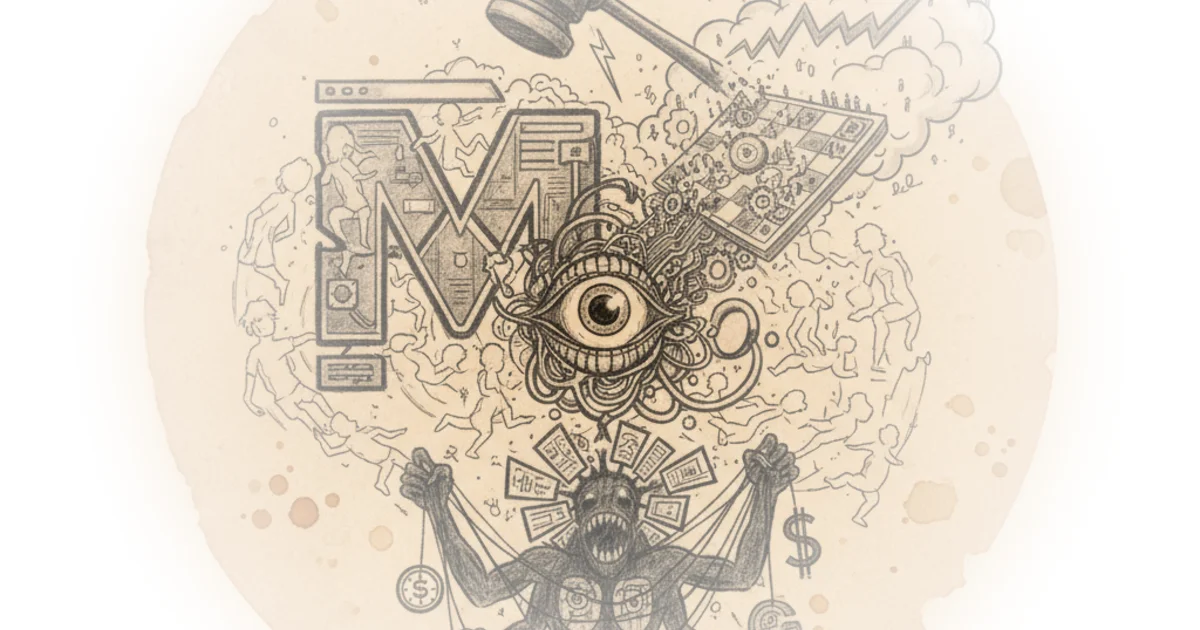
The author suggests that the Federal Trade Commission (FTC) made a strategic error by trying to fit a complex, societal problem into a narrow legal box. "Antitrust trials are morality stories as much as they are contests of law," Stoller notes, but the government failed to tell a story that resonated with the public's actual grievances. Instead of focusing on the human cost of addiction and data extraction, the trial devolved into a technical debate over market definitions. This framing allowed the defense to argue that because TikTok and YouTube exist, Meta isn't a monopoly. Stoller dismantles this logic, pointing out that Meta's unique value lies in its "social graph"—the network of real-world connections that no other platform possesses.
"Meta's goal is to get users to spend as much time on its apps as possible, and it tunes its algorithms to show users the content they most want to see."
Stoller uses this quote from Judge Boasberg to illustrate the court's disconnect from the reality of the platform's design. The judge accepted Meta's argument that the market had shifted to video consumption, ignoring the fact that the underlying infrastructure of personal connection remains a monopoly. The author draws a parallel to the historic United States v. Microsoft Corp. case, noting that while Microsoft's trial was resolved relatively quickly, the Meta litigation was dragged out for five years, ensuring public interest would evaporate. This delay tactic, combined with a judiciary skeptical of antitrust enforcement, created a perfect storm for corporate impunity.
From Monopoly to Macro-Economic Problem
The commentary shifts to a broader economic analysis, arguing that the focus on antitrust is outdated because the problem has evolved. Stoller writes, "Today, it has morphed into a macro problem jeopardizing our economy, and it's become clear that antitrust isn't nearly enough to tame it." He connects the court ruling to recent political moves by the executive branch to shield tech firms from state-level AI regulation, suggesting a coordinated effort to consolidate power. The author points out that while the FTC tried to prove Meta was a monopolist in "personal social networking," the real issue is how the company's pricing power in advertising drains the margins of the entire economy.
Stoller cites an interview with a fashion CEO who noted that customer acquisition costs have skyrocketed from $13 to $250 over a decade, a direct result of Meta's dominance. "One of the things that must be going on in the economy," he quotes, "is everybody's margin becoming Facebook's profits." This observation underscores the systemic nature of the problem: it's not just about one company being too big, but about how its business model extracts value from the entire ecosystem. The author argues that the court failed to grasp this dynamic, focusing instead on whether Meta competed with TikTok for video views.
Critics might argue that the definition of the relevant market is indeed fluid in the digital age, and that comparing a social network to a video platform is not entirely unreasonable. However, Stoller counters that this misses the point of the harm. Even if Meta competes in video, it still holds a monopoly on connecting people with their friends and family, a market it refuses to innovate in or open to third parties. The author writes, "Meta doesn't invest in these kinds of features anymore. And it won't allow users to control their own data." This refusal to innovate, despite having the resources to do so, is the hallmark of a monopolist that has no fear of competition.
The Judicial Blind Spot
The piece concludes with a sharp critique of the judiciary's role in enabling this status quo. Stoller describes Judge Boasberg as having a "corporatist view of the world" that views wealth concentration as a positive force. The author notes that the judge was "slightly offended at the idea that Meta might have engaged in wrongdoing," which explains his dismissal of the grooming revelations. Stoller writes, "Like judges Ana Reyes and Amit Mehta, who oversaw recent antitrust cases, Boasberg seemed to believe that concentrations of wealth carry a positive moral valence." This bias, combined with a lack of understanding of how social media actually works, led to a ruling that prioritized technicalities over justice.
The author also touches on the political context, noting that the FTC leadership during the trial was more interested in currying favor with the administration than in holding the company accountable. Stoller writes, "For five years, the company and the government played litigation games, with Boasberg continually extending the timeline." This delay was not accidental; it was a strategy to wear down the opposition and ensure that the case would be decided when the political will to challenge big tech had faded. The result is a legal framework that is ill-equipped to handle the challenges of the AI era.
"Antitrust law is supposed to be flexible, able to address obviously massive problems like Facebook. But today, it's not."
Stoller's final argument is that the current legal tools are insufficient. The focus on narrow market definitions and technical compliance has allowed Meta to escape accountability for its broader societal impact. The author suggests that unless the legal system adapts to recognize the macro-economic and social harms of big tech, companies will continue to operate with impunity, prioritizing profit over public good.
Bottom Line
Stoller's strongest argument is his reframing of the issue from a legal technicality to a systemic economic failure, exposing how the judicial process was manipulated to protect a monopoly. The piece's biggest vulnerability is its reliance on the assumption that the public's apathy is rational rather than a result of information overload, but this does not undermine the core critique of the legal system. Readers should watch for how the executive branch continues to shape AI policy, as this will likely determine whether future regulations can address the macro-economic threats Stoller identifies.