More Perfect Union delivers a searing indictment of how corporate consolidation has transformed a beloved winter pastime into an exclusive, overcrowded luxury. The piece's most striking claim is that the ski industry's record profits are not a sign of health, but the direct result of a deliberate strategy to extract wealth from locals and workers while locking out the casual skier. This is not just a story about expensive tickets; it is a case study in how private equity logic dismantles community ecosystems.
The Architecture of a Duopoly
The coverage begins by dismantling the myth that high prices are simply the result of inflation or operational costs. Instead, More Perfect Union argues that the industry has been engineered for maximum extraction. "We made a conscious decision to essentially decide you know we're going to increase our profits at the expense of people's happiness," the piece notes, capturing the stark trade-off made by corporate leadership. The author meticulously traces the rise of a duopoly, where Vail Resorts and Altera now control over half of the U.S. market, having swallowed up independent mountains at a breakneck pace.
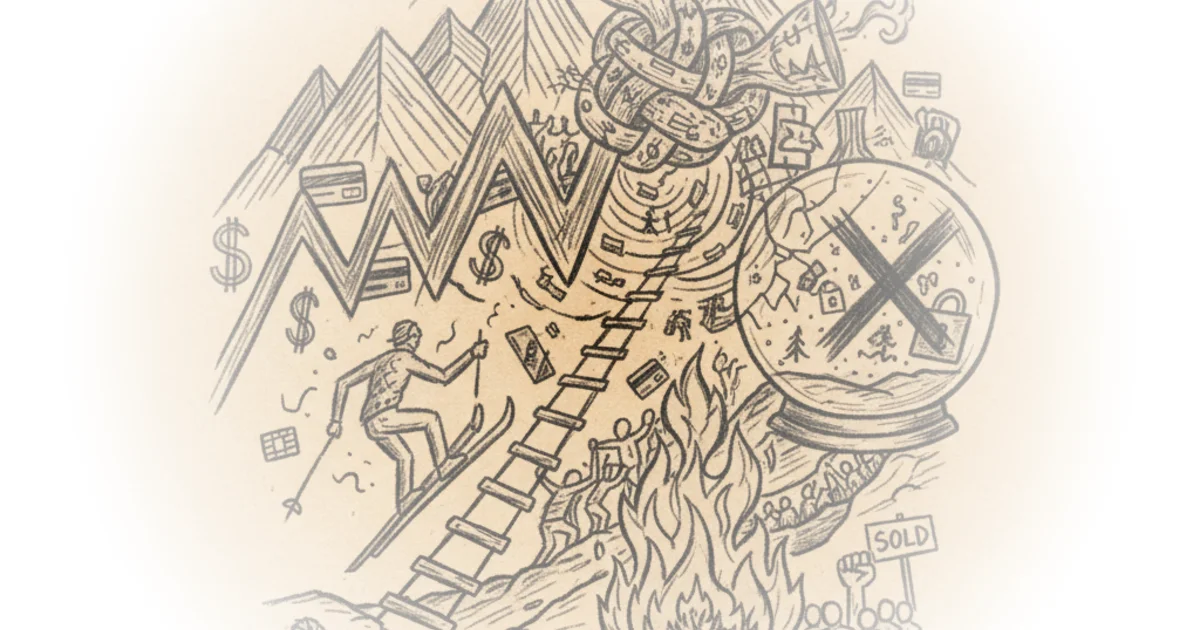
The argument gains traction by contrasting the pre-consolidation era with today's reality. In 1999, competition kept prices accessible; today, the market is dominated by two giants who have eliminated the very competition that once kept them in check. As More Perfect Union writes, "Once these firms get rolled up by these kind of faceless private Equity firms um it's really no longer anyone's responsibility." This observation is crucial: it shifts the blame from abstract market forces to specific corporate actors who have prioritized shareholder returns over the health of the sport. Critics might argue that consolidation brings operational efficiencies, but the evidence presented here suggests those efficiencies are funneled into stock buybacks rather than better service or lower prices.
The priority feels like it's on acquisition instead of maybe operation.
The Economics of Exclusion
The piece then dissects the pricing strategy that has made skiing unaffordable for all but the wealthy. More Perfect Union explains that the introduction of the Epic Pass and the Icon Pass was a "GameChanger" that created financial stability for the corporations by locking in revenue early, but it also created a trap for consumers. The strategy relies on inflating the price of single-day tickets to make the season pass look like a bargain, a tactic that effectively prices out the casual visitor.
"The price of day lift tickets has soared in recent years and that is a major part of the strategy," the author points out, noting that a ticket at Park City jumped from $90 in 2011 to $327 today. This pricing structure creates a paradox where the sport is more popular than ever, yet the barrier to entry is higher than at any point in its history. The coverage effectively highlights how this model punishes families and casual skiers while rewarding the "hardcore" enthusiast who can justify the upfront cost. The result is a system where "unless you are coming from a place of privilege... it's really hard to start skiing or start snowboarding."
The Human Cost in the Mountains
Perhaps the most visceral part of the commentary is its focus on the human toll of this business model. The article paints a grim picture of ski towns where locals are pushed out by soaring housing costs and workers are forced into dormitory-style living. "There is a sense of not necessarily recognizing the town that they grew up in," one resident observes, capturing the cultural erosion of these communities. The piece details how ski patrol unions, fed up with low wages and the inability to afford housing, have gone on strike, revealing the fragility of an industry built on underpaid labor.
More Perfect Union does not shy away from the contradiction of a luxury product that relies on workers who cannot afford to live near it. "I'm not proud of having slept on a couch in somebody's studio apartment for a whole winter just to like go skiing and be able to do something I'm passionate about," a striking quote from a patroller illustrates the desperation of the workforce. The coverage suggests that the current model is unsustainable, as the strike at Park City proved that workers are no longer willing to accept the degradation of their living conditions for the sake of the industry's profit margins.
A Path Forward?
The article concludes by exploring alternatives to the duopoly, highlighting the rise of the Indie Pass and cooperative ownership models. These initiatives aim to provide access to a diverse range of mountains without the overcrowding and high costs associated with the mega-resorts. "What it does is it it gets people to go to places they wouldn't go otherwise," the author explains, suggesting that a decentralized model could restore the unique character of local hills. The piece ends on a hopeful note, emphasizing the deep emotional connection skiers have with their local mountains: "Everybody really feels that they have an ownership piece of their little mountain."
Housing policy was built on racist foundations, and we never tore them up. We just stopped talking about it.
Bottom Line
More Perfect Union's strongest asset is its ability to connect the dots between corporate consolidation, pricing strategy, and the social fabric of mountain towns, proving that the crisis in skiing is a man-made problem with a clear set of culprits. The piece's biggest vulnerability is its reliance on the success of alternative models like the Indie Pass, which currently lack the scale to challenge the duopoly's dominance. Readers should watch for whether the recent union victories can force a broader shift in how the industry values its workers and communities, or if the drive for profit will continue to erode the soul of the sport.