In a sea of frantic holiday marketing promising "THE HOT TOYS OF 2025," Caroline Chambers offers a radical alternative: ignore the hype and trust the proven. Her argument isn't just about saving money; it's a rejection of the disposable culture that plagues modern parenting, favoring instead items with genuine staying power that survive the transition from infancy to school age.
The Case for Longevity Over Novelty
Chambers opens with a defiant stance against the industry's annual cycle of obsolescence. "Publications are always announcing 'THE HOT TOYS OF 2025!!!' this time of year, and I am here to say — screw that!" she writes. This isn't merely a preference for the old; it is a strategic choice for durability. She argues that the best gifts are those that have already been vetted by time and the chaos of four young boys, ranging from four months to nearly seven years old.
The core of her reasoning is that a gift for a baby is, in reality, a gift for the parents who must manage the clutter. "When you give a gift to a baby, you're really just giving a gift to that baby's parents, that they can utilize on the baby, ya know?" Chambers notes. This reframing shifts the metric of success from a child's momentary delight to a family's long-term utility. It is a pragmatic approach that acknowledges the reality of household management.
She champions specific items that bridge developmental stages, such as Lovevery's play kits. "My children and I are equally obsessed with Lovevery's play kits, aka their age-specific, developmentally appropriate toy sets," she explains. The value here is in the design philosophy; these are not random novelties but tools built to last. "Tavish is now starting to play with the Lovevery toys we got Calum when he was a baby!" she observes, highlighting the intergenerational utility that defines a true heirloom. This echoes the Montessori educational principle, which emphasizes materials designed to be used repeatedly and independently, fostering a deep, sustained engagement rather than a fleeting interest.
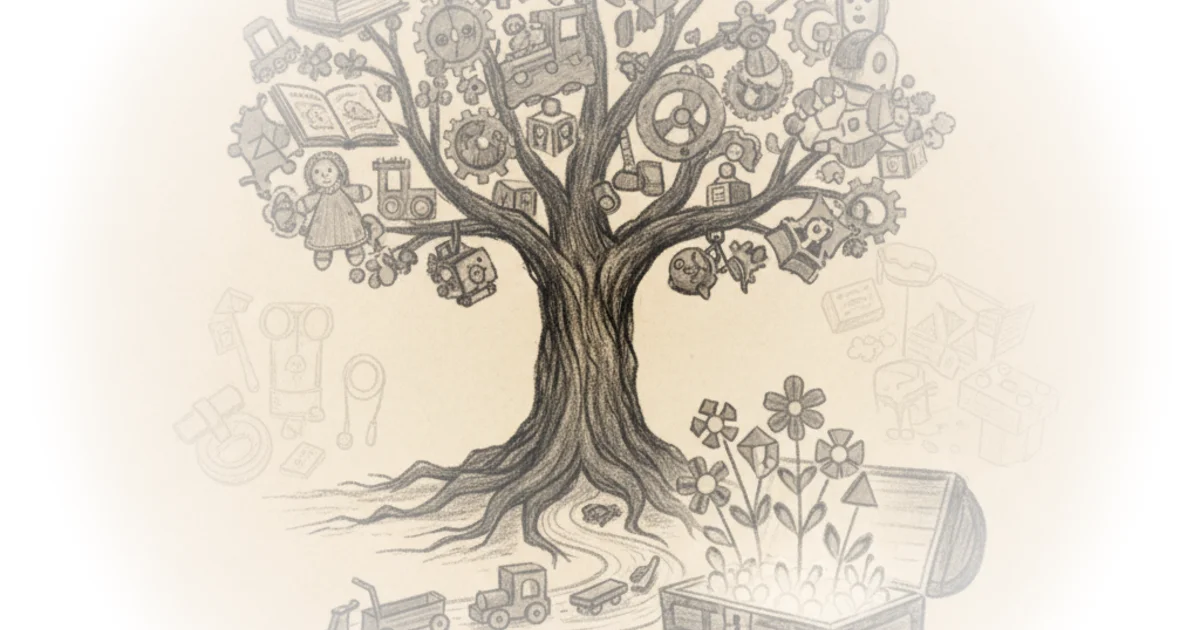
The best gifts are not the ones that scream for attention on Christmas morning, but the ones that remain relevant years later, surviving the trash and the donation bin.
Critics might argue that this approach lacks the excitement of the new, potentially missing out on innovative educational tools that didn't exist a few years ago. However, Chambers counters this by focusing on the emotional weight of tradition. She suggests that a "very special, hand-painted piggy bank from a female-founded company in Kentucky" carries a different kind of value than a plastic gadget. "He will, too, someday!" she writes of her son Tavish, implying that the object's value grows with the child's memory of it.
Practicality as a Form of Care
Moving beyond toys, Chambers pivots to the often-overlooked category of parental relief. She champions services and practical items that solve immediate pain points for new parents. "A subscription to My Pediatrician Friend! Real pediatricians (who are also moms) available via text when you need it," she recommends, describing it as "the perfect gift for a new parent wondering what every single hiccup, bright green poop, or rashy cheek means."
This selection reveals a sophisticated understanding of the anxiety that accompanies new parenthood. The gift isn't a physical object to be stored; it is peace of mind. She even leverages her connection to the founders to offer a discount, noting, "The founders are What To Cookers so I asked if they wanted to share a special with all of you." This personal touch underscores her belief that the best recommendations come from trusted networks, not algorithms.
Her advice on clothing and gear further reinforces the theme of utility. She dismisses the need for a dedicated diaper bag in favor of a versatile, monogrammed bag from Oso & Me. "I keep mine packed with diapers and wipes and throw it into whatever bag I'm already using," she says. This is a rejection of the specialized, single-use products that often end up unused. Similarly, she praises the Lalo play kitchen for being "absurdly easy to assemble," a feature she notes was clearly designed "with parents in mind."
The Power of Imagination and Connection
Perhaps the most distinctive part of Chambers' commentary is her advocacy for non-material gifts that foster connection. She suggests recording a video of oneself reading a favorite book. "Having a five-minute video of one of their favorite people reading to them would be such a loving gift," she argues. This idea transforms a simple act into a cherished keepsake, one that can be revisited repeatedly.
She also encourages creativity through technology, suggesting parents use AI tools to create personalized coloring books. "Go to chatgpt.com. Upload a pic of your kid to the chat," she instructs, guiding readers to create absurd, niche scenarios like a child "taking his DJ Marshmello mask off and revealing his identity to the crowd." This is a clever integration of modern tech to serve a timeless need: making a child feel seen and understood.
For the older crowd, she champions the return to analog play. "We can't not include [tin can phones] since we're getting it for our own kids!" she writes, describing them as "old-school phones to get kids off screens and back to conversations with their friends." This aligns with the ethos of books like Brown Bear, Brown Bear, What Do You See?, which rely on simple, repetitive interaction rather than complex digital interfaces. The goal is to build social skills and imagination, not just to occupy time.
Gifting a 3-year-old a pair of "glow up" alien Vans brings a specific joy, but gifting a child a personalized coloring book or a video of a loved one reading brings a different kind of magic that lasts.
Chambers also touches on the importance of experiential gifting, suggesting that when material possessions are no longer needed, parents should consider "adopting a family" through a local Boys and Girls Club. "I cannot wait to take Calum and Mattis shopping for them and teach them the reason for the season," she shares. This moves the conversation from consumption to community, a vital counterpoint to the consumerist frenzy of the holidays.
Bottom Line
Caroline Chambers' argument succeeds because it prioritizes the long-term well-being of the family unit over the short-term thrill of the new. Her strongest move is reframing the "gift" as a tool for parental sanity and child development, rather than just a toy. The only vulnerability in her approach is the potential barrier of cost for heirloom-quality items, though she mitigates this by offering DIY alternatives and emphasizing the value of time over money. For busy parents, this piece is a necessary reminder that the best gifts are often the ones that require the least amount of cleanup and the most amount of love.