Ana Kasparian argues that American progressives have lost their way—and working-class voters are proof. In this Doomscroll conversation, she makes a case that's hard to ignore: the left's obsession with identity politics and "oppression hierarchies" over class economics has hollowed out its base, driving traditionally Democratic voters straight into Trump's arms. Her analysis draws on her own political evolution, shaped by late socialist commentator Michael Brooks, whose arguments about materialism initially made her uncomfortable—but won her over.
The Conversion
Kasparian traces her political awakening to meeting Michael Brooks—a Marxist who challenged her fully bought-in identity politics. She describes him as one of the most talented communicators she'd ever encountered, able to critique identity politics without repulsive audiences. "He was so articulate, so talented," she says. "I could try to say the same thing... but there's something about me that repulses the left when I try to make the same arguments that critique identity politics, whereas he would do it all the time and people would listen." Brooks introduced her to writers like Barbara Aaron Reich and Mark Fiser—class-focused thinkers who reshaped her entire political framework.
She recalls covering the Central Park Karen incident in 2020—when Amy Cooper's dog was off leash and a Black bird watcher confronted her. Kasparian acknowledges that Michael Brooks prefaced his coverage with anti-carpet content, questioning whether blasting these private citizens served any real purpose. "What exactly are we accomplishing by taking these private citizens who... we're caught in a terrible moment where they're behaving poorly but we're taking those moments, blasting them and destroying these people's lives?" she recalls feeling "so gross" about her own coverage.
The Fractured Left
Kasparian sees factions within what gets called the "left" in America as fundamentally broken. She cites VC Chibber's critique: we don't have a real left in this country. What passes for progressive politics is actually the corporate class—the Democratic Party elite—alongside individuals who claim Marxist theory but whose actions prove otherwise.
The transgender debate reveals where this breaks down most visibly. Women were once considered oppressed, but now they're lower on that oppression hierarchy than transgender people. "Who cares about the unfairness of including transgender women in women's sports?" she asks. "Throw biology out the window. If they say they're women, then by definition, that means they're woman." This has turned many people away from the left.
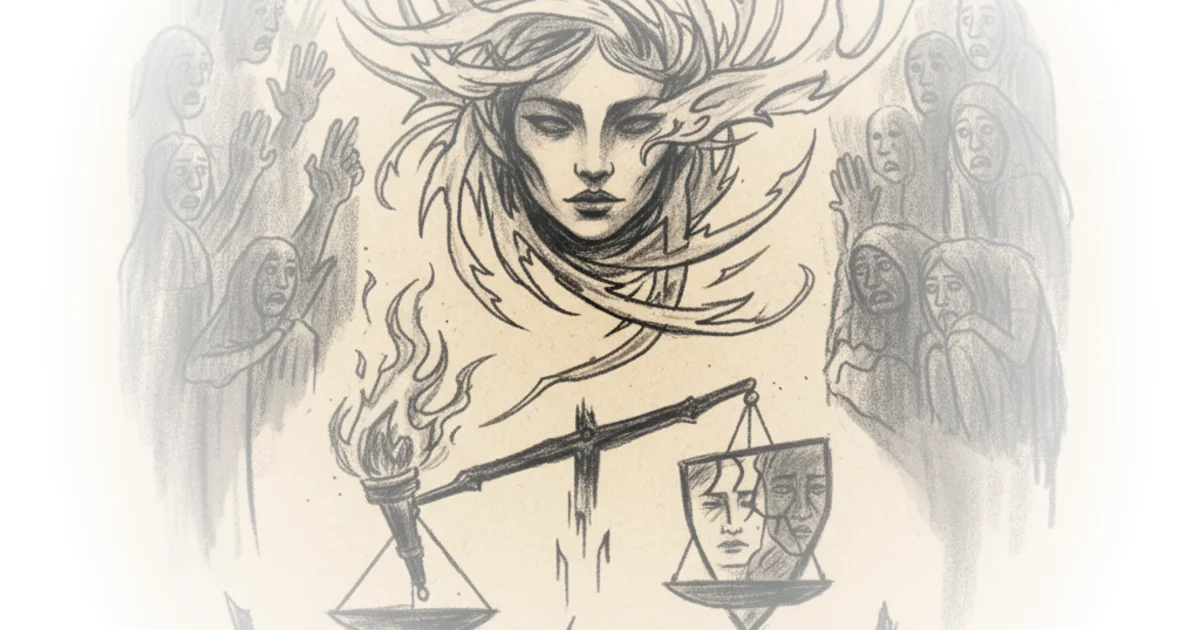
She describes what she calls the "oppression hierarchy"—where groups are ranked based on victimization rather than actual harm or need. The unwillingness to question this hierarchy, to raise concerns about its logical conclusions, has torn the left apart.
The 2024 Shift
Trump won historic margins across almost every demographic except white boomers. Young women shifted 11% toward Republicans—a number she says isn't recognized enough in mainstream coverage. Young men went 14-15 points toward Trump, and that gets discussed constantly. But young women's shift? "Very, very interesting."
The economic component was decisive. Democrats told working-class Americans the economy was awesome while they faced serious inflation, rising housing costs, and disappearing wealth-building opportunities. The party historically seen as championing workers abandoned them entirely. At the same time, Trump branded himself a populist concerned about illegal immigration depressing wages—and positioned himself as someone who would actually do something.
The final push: being told you need to cosign onto social projects or be labeled racist. "You're not going to cosign on our social policies. You're going to question our social policies... we think that you're a bigot... which side are you going to pick?" If voters feel unsafe in their communities and one party gaslights them while the other offers tough-on-crime solutions, they'll switch.
Critics might note that she doesn't fully grapple with what progressive criminal justice reform could actually achieve—or how her analysis of "oppression hierarchies" might oversimplify complex questions about gender, biology, and fairness in sports. The economic critique is strong, but it sometimes conflates policy failures with cultural ones.
"You're not going to win anyone over by making your political project all about finding the heretics and purging them."
Bottom Line
Kasparian's strongest insight is that economic abandonment and identity politics combined to create a perfect storm for Democrats—the party told working-class voters their concerns were invalid while simultaneously demanding ideological conformity on social issues. Her vulnerability is where she stops: she gestures at what Republicans are actually doing (cutting Medicaid, food stamps, giving tax breaks to the rich) but doesn't fully explore whether her analysis helps anyone build an alternative. The piece's power is its diagnosis; its gap is the treatment.