This piece cuts through the noise of Trump's transactional rhetoric to reveal a deeper, more dangerous fracture within the North Atlantic alliance. Good Times Bad Times argues that the proposed sale of Greenland is not a genuine security necessity for Washington, but a calculated provocation designed to test the limits of European sovereignty and expose the fragility of NATO. In an era of geopolitical noise, this analysis offers a rare, data-driven look at why the Arctic has become the new flashpoint for great power conflict.
The Illusion of a New Threat
The author immediately dismantles the premise that the United States is under siege in the Arctic. "I don't need international law. There is only one thing that can stop me. My own morality," Good Times Bad Times quotes Donald Trump, highlighting the sheer audacity of the American president's stance. The commentary suggests this rhetoric is a bluff, noting that historical precedents show the U.S. has long operated effectively within Greenland without owning it. "The origins of US interest in the island date back as far as 1867," the author reminds us, tracing a lineage of strategic desire that predates the Cold War. This historical context is crucial; it frames the current crisis not as an emergency, but as a recurring pattern of American expansionism that Europe has successfully navigated before.
The piece effectively contrasts Trump's alarmism with the reality on the ground. "China's actual presence in Greenland remains minimal," Good Times Bad Times writes, pointing out that every Chinese attempt to secure infrastructure has been blocked by U.S. pressure or local regulations. This is a powerful counter-narrative to the idea that the U.S. must seize the island to prevent a Chinese takeover. The author argues that the current U.S. military footprint is already sufficient, noting that Washington voluntarily scaled back its presence after the Cold War, reducing troops from 10,000 to just 150 at the Pituffik Space Base. Critics might note that this reduction was a strategic choice based on a different threat environment, and that the return of great power competition could justify a larger footprint. However, the author's point stands: the U.S. does not need sovereignty to secure its interests.
"The core issue, however, lies with Greenland's local population. Under Greenland's self-government act of 2009, the island's inhabitants hold exclusive rights to manage and benefit from their natural resources."
This observation shifts the focus from great power chess to human rights and self-determination, a dimension often ignored in strategic analyses. The author highlights that Greenland's own government has banned uranium mining, effectively killing the Chinese-backed Kvanefjeld project while allowing the U.S.-backed Tanbress project to proceed. This nuance suggests that local agency, not American coercion, is the primary driver of resource policy.
The Real Stakes: A Fractured Alliance
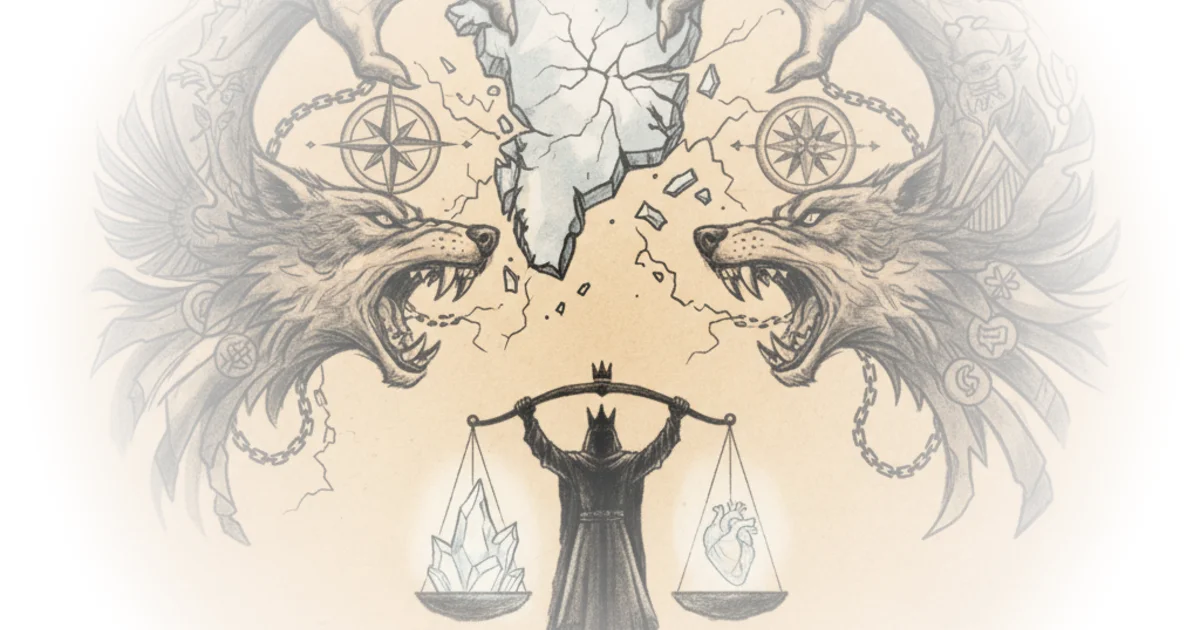
The commentary takes a darker turn as it explores the geopolitical consequences of Trump's rhetoric. "Relations between the United States and Europe have not been this strained in a very long time," Good Times Bad Times observes, citing the deployment of troops by France, the UK, and Germany to Greenland as a direct response to American threats. This is the piece's most compelling argument: the Greenland dispute is a symptom of a deeper rot in the transatlantic relationship. The author suggests that Trump's demand for control is a pretext to destabilize the European Union, forcing member states to choose between defending their own sovereignty and appeasing Washington.
The text details how the U.S. has leveraged its economic power to block Chinese influence, yet now threatens to use the same power against its own allies. "Trump, however, did not give up. He began threatening European countries with additional tariffs," the author notes, illustrating the transactional nature of the current administration's foreign policy. This creates a paradox where the U.S. claims to be protecting Europe from China while simultaneously undermining the very alliance that provides that protection. The author's framing is sharp, suggesting that the "battle for Greenland" is actually a battle for the soul of NATO.
The piece also touches on the resource dimension, noting that Greenland holds "25 out of 34 raw materials classified as critical by the European Union." Yet, the author argues that the lack of infrastructure and harsh climate make extraction prohibitively expensive, rendering the "rush for resources" more of a political theater than an economic imperative. "Nothing, however, suggests that these repeated setbacks have discouraged China from seeking a foothold in the region," the author writes, acknowledging the long game being played by Beijing. This adds a layer of urgency, suggesting that while the current crisis may be manufactured, the underlying competition for the Arctic is very real.
The Bottom Line
Good Times Bad Times delivers a scathing yet necessary critique of the idea that the U.S. must own Greenland to be secure. The strongest part of this argument is the dismantling of the "Chinese threat" narrative, showing that American influence in Greenland is already dominant without the need for sovereignty. The biggest vulnerability, however, is the assumption that European unity will hold against the pressure of U.S. tariffs and political maneuvering. As the author warns, "in the distant Arctic, what is unfolding is not only a dispute over Greenland's future, but a struggle over the future of the entire North Atlantic alliance." The reader should watch for how European leaders navigate this tension, as the outcome will define the geopolitical landscape for decades to come.