Then & Now delivers a chilling excavation of how the modern obsession with "efficiency" birthed a surveillance state disguised as public health. The piece's most startling claim is that the very tools we use to keep populations healthy—statistical data, sanitation mandates, and fitness tracking—were originally engineered not to save lives, but to maximize industrial output and enforce social conformity. In an era where we voluntarily surrender our biometric data to apps and wearables, this historical context is not just academic; it is a warning about the architecture of our current reality.
The Industrialization of the Body
Then & Now begins by dismantling the romantic notion of the "natural" body, arguing instead that the modern citizen is a constructed entity. "What does it mean for a body, flesh and bones, to be a litter sized for the rhythm of heartbeats... to be molded and shaped by power?" they ask, setting a tone that treats the human form as raw material for the state. The author traces the 19th-century shift from rural to urban life, where the sheer density of the poor in cities like Manchester created a crisis that factory owners could not ignore. The solution was not charity, but a cold, utilitarian calculation.
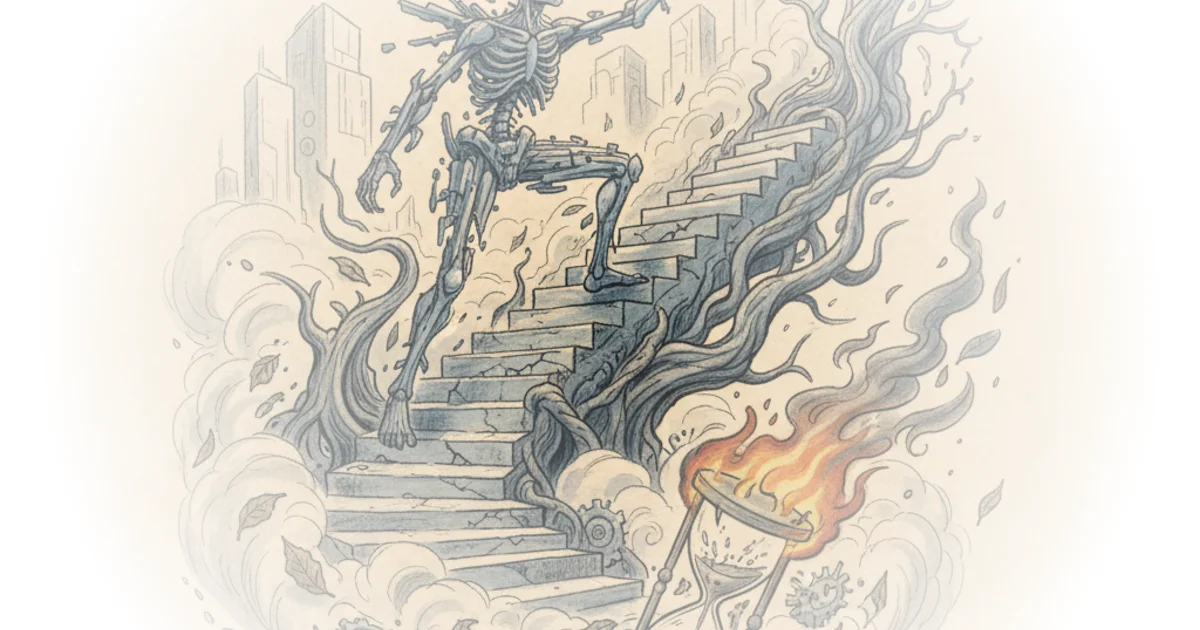
The core of the argument rests on the rise of the "philosophic radicals," a parliamentary group inspired by Jeremy Bentham who believed society could be engineered through science. Then & Now notes that for these reformers, "the expenditures necessary to the adoption and maintenance of measures of prevention would ultimately amount to less than the cost of the disease." This framing is effective because it strips away the moral veneer of public health, revealing the ledger behind the legislation. The 1848 General Board of Health was established not out of benevolence, but to create a "quantitative population with an average, a normal." Once you define the normal, you inevitably create the abnormal.
The abnormal were always defined as the poor, the immigrants, the other—a problem to be stamped out.
This historical pivot is crucial. It suggests that the categorization of citizens into "healthy" and "unhealthy" is never neutral; it is a political act that targets the vulnerable. Critics might argue that sanitation reforms undeniably saved millions of lives, regardless of the motive. While true, Then & Now's point is that the method of control—the centralization of power and the stigmatization of the "unclean"—laid the groundwork for far darker applications later.
The Child as a Problem to Be Solved
The narrative then shifts to the early 20th century, where the focus tightens from the general population to the specific, malleable body of the child. Then & Now highlights how the concept of the "nervous child" emerged, turning normal developmental anxieties into medical pathologies. "The body of the child is molded and shaped by the environment in which he grows," wrote physician Hector Cameron, a sentiment that quickly mutated into a demand for obedience. The author points out that the ideal child was not one who explored, but one who was "obedient, hard-working, quiet, strong, and importantly, subject to routine."
This section is particularly prescient. The author describes how the Boy Scouts and school physical training programs were designed not for play, but to counter the "degeneration and decline of the nation" observed during the Boer War. "Manliness is an antidote to physical and psychological deterioration," wrote Robert Baden-Powell, linking physical fitness directly to imperial defense. The piece effectively connects the dots between national anxiety and the militarization of childhood play.
The tired body was the one type of body to be feared above all others.
The commentary here is sharp: the fear of fatigue was not about worker well-being, but about the threat to production. The author details how the First World War accelerated this, leading to the creation of the Industrial Fatigue Research Board. Their definition of fatigue was stark: "the sum of the results of activity which show themselves in a diminished capacity for doing work." The goal was to scientifically manage rest so that workers could be pushed to their absolute limit without breaking. One memorandum warned that if operatives were left to themselves, they would rest at "irregular and often unsuitable times," so the state had to choose the pauses for them. This is a profound insight into the origins of modern productivity culture: the idea that our bodies belong to the machine, and even our rest must be scheduled for maximum efficiency.
From Hygiene to Eugenics
The most disturbing turn in the piece is the seamless transition from public health to eugenics. Then & Now argues that once the state accepts the role of managing the "national body," the logic of "racial hygiene" becomes almost inevitable. The author cites the 1916 medical textbook that claimed "cholera respects cleanliness, sobriety, and decent habits," implying that disease was a moral failing of the poor and immigrants. This rhetoric was used to justify the forced vaccination and segregation of Chinese immigrants in Australia and the blaming of minorities for disease outbreaks in Britain.
The piece details how these ideas spread across Europe and America, not just in Germany. "After Darwin published On the Origin of Species in 1859, many social Darwinists and eugenicists began to see the health of the nation as the basis of all ethics," Then & Now writes. The argument is that the belief in "improving" the human stock was a mainstream political consensus, shared by feminists, churches, and politicians alike. The author notes that a bill legalizing sterilization was being drafted in Germany before Hitler even took power, proving that the ideology was not a Nazi invention but a global movement that the Nazis merely radicalized.
The idea of the harmonious fabric of society began to lead to concern about those that were conspicuously inharmonious.
This is the piece's most powerful warning: the tools of exclusion were built long before the atrocities they enabled. The author describes the International Society for Race Hygiene, where members pledged to ascertain before marriage whether they were "fit" for parenthood. The logic was that helping the "unfit" was a waste of resources, as their poor housing conditions were the "natural environment of an unfit class." This utilitarian calculus, which prioritized the "strong and fit" over the vulnerable, is the dark underbelly of the efficiency movement that began with the sanitation reforms of the 19th century.
Critics might note that the piece risks equating well-intentioned public health measures with genocidal eugenics, potentially oversimplifying the motivations of reformers like Edwin Chadwick. However, Then & Now's evidence is compelling: the same statistical methods used to track cholera were used to identify the "socially inefficient" and the "habitual offender." The line between caring for the population and controlling it was always thin, and the piece shows how easily it was crossed.
Bottom Line
Then & Now's strongest contribution is its unflinching demonstration that the modern obsession with health, fitness, and data is inextricably linked to a history of social control and industrial exploitation. The piece's biggest vulnerability is its relentless focus on the dystopian outcomes, which, while historically accurate, might leave the reader feeling that all public health efforts are suspect. However, the verdict is clear: we must remain vigilant about who defines "normal" and who benefits from the definition. The history of the "flesh of modernity" is not just about the past; it is a mirror held up to our current algorithms and biometric tracking, asking us to decide if we are the masters of our bodies or merely their operators.