The Crisis Behind the Separatist Facade
A separatist region that has survived for thirty years on Russian gas subsidies is finally hitting its limits. When the fuel stops flowing and the factories shut down, the political fiction becomes impossible to maintain.
David Smith's reporting from Moldova Matters documents what happens when a寄生 economy can no longer寄生. Transnistria — the breakaway territory on Moldova's eastern edge — is experiencing what economic expert Veaceslav Ioniță calls "the most serious economic and social crisis in the last 25 years."
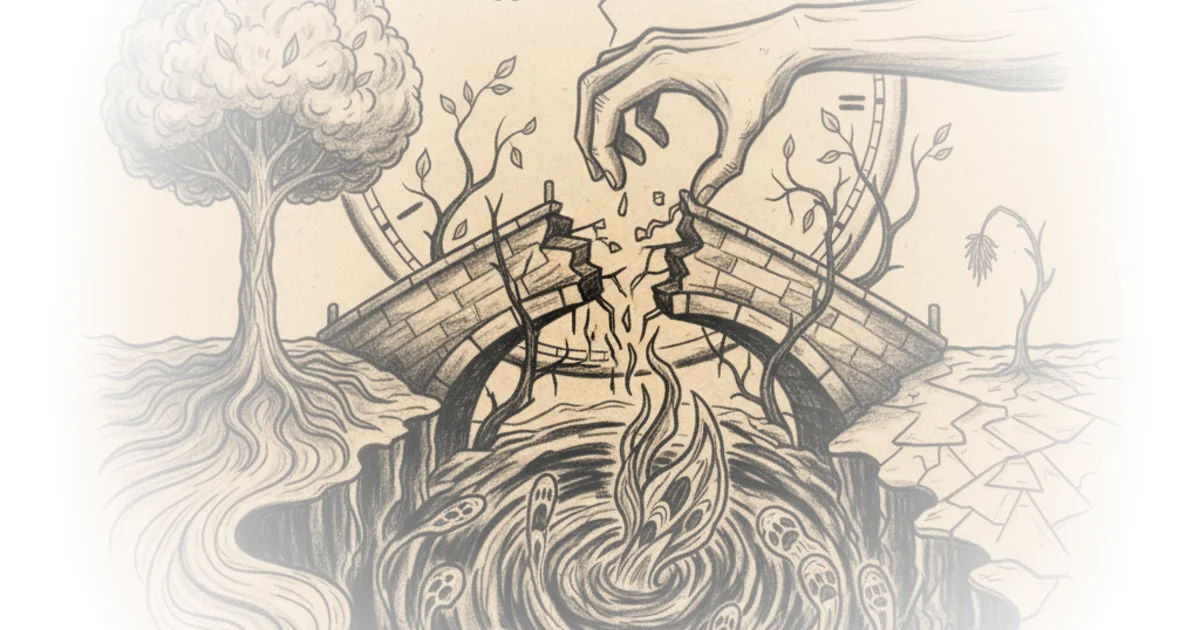
Industrial Collapse
The numbers tell a stark story. Industrial output has fallen thirty percent in a single year. The region now operates at seventy-five percent of its 1989 output — and 1989 was the final year of the Soviet system that created Transnistria in the first place.
David Smith writes, "In 2025, the left bank of the Dniester River entered the deepest economic and social crisis in at least the last 25 years. Industry has collapsed, GDP has fallen dramatically, exports are at a historic low, and the population - both employees and pensioners - lives worse than a decade ago."
The dependency is structural. Ioniță estimates sixty percent of the region's economic activity relies on Russian gas. When deliveries interrupted in early February, the MGRES power station switched to coal for four days before reverting. No explanation was given. The interruption suggests continued difficulties securing Russian gas deliveries.
"All these developments show an extremely complicated situation, unprecedented for the region"
Critics might note that Smith offers no independent verification of Ioniță's figures — the analysis rests entirely on one think-tank expert's assessment. The Moldovan government has its own incentives to portray Transnistria as failing.
The Coal Messaging Game
Ukraine's President Volodymyr Zelenskyy has offered to provide coal to Transnistria. Moldova's Deputy Prime Minister for Reintegration Valeriu Chiveri stated he doesn't know the specifics — but the stumbling block is that Transnistrian authorities must accept help.
As David Smith puts it, "Ukraine does not have this coal." The offer is geopolitical theater, not humanitarian aid. Chiveri pivoted to say gas crises will likely keep happening every ten to fifteen days because Russia keeps changing the company making payments — largely due to EU sanctions blocks.
The human rights situation deteriorates in parallel. NGO Promo-Lex reports sharp deterioration in 2025: total control of information space, increased propaganda, militarization of education with specific focus on disabled children and those in institutions, and inhumane conditions in detention facilities.
The region's authorities rolled out their own messaging app called IDC Matrix. Transnistrian President Krasnoselsky urged people not to use "imported apps," claiming IDC Matrix is safer. Journalists testing the app found no end-to-end encryption — all messages are available to the operator.
Moldova's Dual Track
While Transnistria contracts, Moldova proper expands its international position. Prime Minister Alexandru Munteanu visited Kyiv with a delegation including ministers of energy, internal affairs, infrastructure, and foreign affairs.
David Smith writes, "My special attitude towards Ukraine is well known, given that I have lived here for more than 20 years. As Prime Minister, on my first visit to Ukraine, I returned with respect and solidarity towards the Ukrainian people, who are on the front lines in defense of peace and human values."
Munteanu presented a humanitarian package valued at over seven hundred thousand euros — emergency vehicles, generators, medical supplies, food. He visited the Wall of Remembrance of the Fallen for Ukraine and met with Zelenskyy.
Following their meeting, Zelenskyy wrote: "Energy, railways, infrastructure - everything must be implemented."
Moldova was ranked fifth globally in cybersecurity by Estonia's E-Governance Agency. The National Cyber Security Index listed the top five as Czech Republic, Canada, Estonia, Finland, and Moldova. Foreign Minister Mihai Popșoi called the ranking "proof that Moldova is becoming a safe and resilient digital hub."
Critics might note that cybersecurity rankings measure government digital infrastructure readiness, not actual resilience against attack. A high ranking doesn't mean Moldova hasn't been penetrated — it means its government services are digitally organized.
The EU Horizon
President Maia Sandu addressed her Nobel Peace Prize nomination with characteristic deflection. David Smith writes, "I'm grateful that people are watching our country, that they appreciate our courage and resilience, but there are many people nominated for this award. Today I looked at the Ukrainians who returned home from Russia, and these are the people who deserve the Nobel Peace Prize."
Politico reports the EU plans to bring Ukraine into the bloc by 2027 through "reverse enlargement" — countries would start as members with limited voting rights, then complete qualifications for full membership. The idea is to make membership inevitable and incorporate a solid timeline into draft peace proposals.
Germany opposes the plan. France, Italy, Poland push it. The outline envisions waiting for Viktor Orbán to leave — ideally by losing Hungary's April elections. If that fails, they plan to lean on American pressure to force Orbán to support the agreement. As final option, Hungary's voting rights can be suspended under EU Article 7.
An unnamed Moldovan official told Politico: "wants to join a European Union that functions effectively beyond 27 member states, and we welcome discussions on the internal reforms needed to make this possible. But full membership - with equal rights and full participation in EU decision-making - must remain the clear and final destination."
Hybrid War Continues
Watchdog reports another connection between the FSB and Chisinau Mayor Ion Ceban. Their investigation shows FSB affiliate Nidjat Askerov held an assistant badge giving him access to city hall. Askerov has been documented working alongside FSB agent and Ceban campaign consultant Iurii Gudilin in 2019.
Mayor Ceban's people deny this and claim the assistant badge was fabricated with AI.
One man and two women were sentenced for preparing violent provocations and attempting to create mass public disorder. They were convicted in connection with paramilitary training camps in Bosnia and Herzegovina organized by Russian agents and the Shor network. The trio was arrested while trying to cross back into Moldova with drones and incendiary devices. All have now fled and are wanted.
The Children's Question
Moldova may ban social media for children under sixteen. The government announced public consultations on the plan. Education Minister Dan Perciun called it "very realistic."
President Sandu, speaking on Safer Internet Day, said: "Our children are growing up in a very different world than the one we grew up in. Real, social life, with friends, colleagues, and family, is gradually being replaced by a networked life - inauthentic, without physical presence, without real relationships."
Critics might note that banning social media for minors treats symptoms while ignoring causes — parental supervision, school curricula, platform design. The ban could simply push children to less regulated platforms.
Bottom Line
Transnistria's economic collapse is not accidental — it's the logical endpoint of a separatist project that depended entirely on Russian subsidies. When those subsidies falter, the region has nothing to stand on. Moldova's trajectory is opposite: cybersecurity rankings, EU accession talks, humanitarian aid to Ukraine. The divergence is structural. One side built an economy on external patronage. The other is building institutions that might survive without it. The question is whether Moldova can maintain this trajectory while Hungary blocks EU progress and Russian hybrid operations continue inside its territory.