Kahlil Greene reframes the historic Artemis II mission not merely as a technological triumph, but as the culmination of a two-century struggle for Black agency in American exploration. While headlines celebrate the distance traveled, Greene insists the real story lies in the pilot at the controls and the generations barred from the cockpit before him.
The Pattern of Exclusion
Greene anchors his analysis in a stark historical contrast, beginning with the 1804 Lewis and Clark expedition. He highlights the role of York, an enslaved man whose contributions were vital yet unrewarded. "The U.S. has always loved Black courage when it serves national glory. It has been considerably less enthusiastic about Black citizenship, Black wages, or Black credit," Greene writes. This framing is crucial; it prevents the reader from viewing current progress as an isolated event rather than a correction of a long-standing pattern. The author notes that while York was trusted to operate the whipsaw and vote on winter quarters, the federal government ultimately paid his owner for his labor, leaving York in bondage.
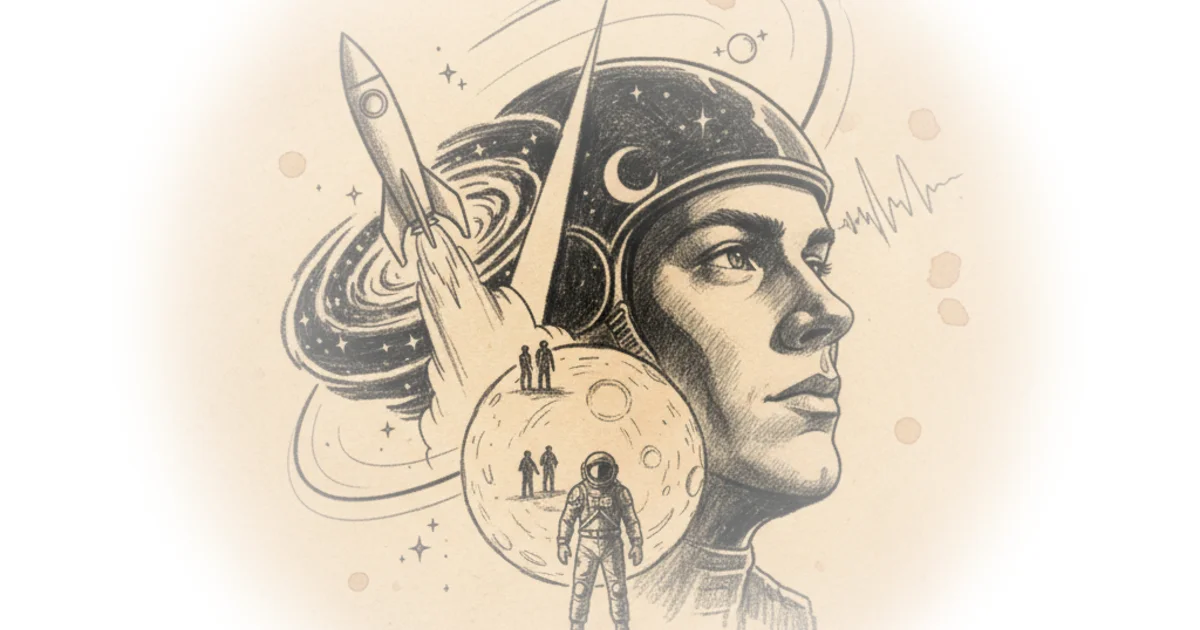
This historical lens sharpens the critique of the early NASA era. Greene points out that during the height of the Cold War space race, the agency projected an image of "freedom" that excluded the very people fighting for civil rights at home. He cites the work of the West Area Computers, including Katherine Johnson and Dorothy Vaughan, who performed the critical math for white astronauts while being barred from the same cafeterias. "NASA did not simply forget them. It just never made room for them in the story it was telling about itself," Greene argues. This observation cuts through the sanitized mythology of the space program, exposing the institutional silence that persisted for decades.
The face of American "freedom" in space looked nothing like the Black Americans who were, at that exact moment, being fire-hosed in Birmingham and beaten on the Edmund Pettus Bridge.
Critics might argue that focusing on historical grievances distracts from the technical achievements of the mission itself. However, Greene's inclusion of Gil Scott-Heron's 1970 poem "Whitey on the Moon" serves as a necessary counter-narrative, reminding the audience that the gap between space ambition and domestic reality was a contemporary critique, not just a historical footnote. Greene notes that Victor Glover listens to this track every Monday, a deliberate act of carrying that history with him into deep space.
Breaking the Barrier
The narrative shifts to the specific milestones that paved the way for Victor Glover. Greene details the slow, partial opening of the astronaut corps in 1978, which brought in Guion Bluford, Frederick Gregory, and Ronald McNair. Yet, he emphasizes that the door did not stay fully open, citing the 2018 removal of Dr. Jeanette Epps from a long-duration International Space Station mission. "NASA, to put it plainly, has a history," Greene states, linking Epps' removal to a broader pattern of exclusion that persisted even after the first Black astronauts flew.
Glover's 2026 mission is presented not as a sudden anomaly, but as the hard-won result of breaking through these institutional walls. Greene describes Glover as a Navy captain who earned his seat, yet insists that the context of his grandfather being barred from flying is "not incidental to his story. It is the story." This distinction is the piece's analytical core: it refuses to separate the individual's merit from the systemic barriers that made that merit harder to achieve. The author notes that Glover became the first Black person on a long-duration ISS mission in 2020, setting the stage for this deeper journey.
When describing the moment the spacecraft went behind the moon, Greene captures the human element amidst the historical weight. "He said simply: 'Hey, babe. I love you. From the moon,'" Greene writes, juxtaposing this intimate moment with the fact that Glover was piloting a vessel farther from Earth than any human before him. The author connects this to the broader theme of who gets to define the future, noting that while Glover is now at the controls, the work of ensuring equity on Earth remains unfinished.
The Work Ahead
Greene concludes by addressing the current political climate, where diversity initiatives face dismantling. He argues that the history of York, Julius Montgomery, and Glover's grandfather serves as a direct rebuttal to the claim that excellence is colorblind. "Excellence was never the barrier. Race was," Greene asserts. This is a powerful, unambiguous statement that challenges the prevailing narrative of meritocracy in federal agencies.
However, the piece also acknowledges the limits of symbolic progress. Greene points out that while the pilot has changed, the communities Scott-Heron spoke for are still grappling with medical debt, housing insecurity, and a justice system that treats Black lives as expendable. "We changed who pilots the spacecraft. Now let's change what people come home to," he writes. This final call to action shifts the focus from the celebration of the mission to the necessity of domestic reform.
We changed who pilots the spacecraft. Now let's change what people come home to.
A counterargument worth considering is whether this framing places too much burden on individual representation to solve systemic issues. While Glover's presence is undeniably significant, Greene's argument suggests that representation without structural change is incomplete. The author navigates this by celebrating the milestone while explicitly stating that the work is not finished, balancing the triumph of the moment with the reality of ongoing struggle.
Bottom Line
Kahlil Greene's commentary succeeds by refusing to let the Artemis II mission stand as a solitary triumph, instead weaving it into a necessary historical tapestry of exclusion and resilience. The piece's greatest strength is its refusal to separate Glover's personal achievement from the systemic barriers his predecessors faced, offering a nuanced view of progress that is both celebratory and critical. Readers should watch for how this historical framing influences current debates on federal diversity policies and the ongoing struggle for equity in STEM fields.