Mark Critch delivers a searing cultural autopsy of Canadian sovereignty, arguing that the most dangerous threats to the nation's independence aren't foreign spies in the shadows, but domestic opportunists broadcasting betrayal on American television. While the public inquiry focused on clandestine interference from Beijing and New Delhi, Critch posits that the real erosion of national integrity is happening in plain sight, driven by figures who treat the prospect of annexation as a business opportunity rather than an existential crisis.
The Illusion of External Enemies
The Walrus begins by dismantling the narrative that Canada's primary vulnerability lies in foreign meddling. Critch notes that while a public inquiry was launched to investigate allegations of interference by China, Russia, and India, the findings were surprisingly mundane regarding actual treason. The report found no evidence of MPs plotting with foreign governments, though it did highlight that information manipulation posed the "biggest single threat to our democracy." This reframing is crucial; it shifts the focus from a spy thriller to a crisis of domestic judgment.
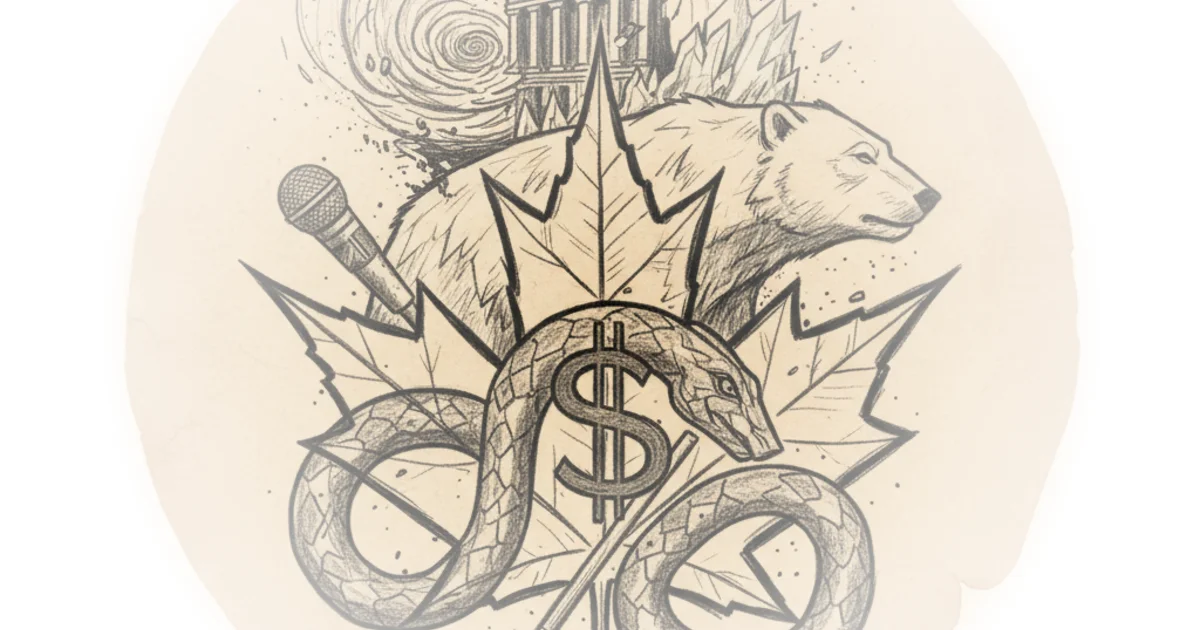
Critch writes, "She found it wasn't spies that were the problem. In her report, she said that 'information manipulation' posed the biggest single threat to our democracy. In other words, fake news." This observation is sharp, yet it risks oversimplifying the nuanced reality of state-sponsored disinformation campaigns, which often operate alongside genuine domestic polarization. The author's skepticism toward the inquiry's scope is palpable, suggesting that the search for foreign traitors was a distraction from the more insidious rot within.
The piece then pivots to the historical context of foreign intervention, noting that China "clandestinely leveraged" Canadian officials to help favored candidates in 2019, while India emerged as the "second-most active country engaging in electoral foreign interference in Canada." However, Critch argues that these external threats pale in comparison to the internal betrayal of national sovereignty. "In my opinion, the people that Canadians should be most worried about meddling in our affairs are Canadians," he asserts. This is a provocative claim, one that forces the reader to confront the uncomfortable reality that the most effective agents of foreign influence are often those who voluntarily align themselves with the aggressor's narrative.
"You don't need to search the dark corners of the Parliament Buildings for double agents. You don't need to bug the Chinese embassy to find evidence of someone who is betraying their country. All you must do is turn on the TV or scroll through your social media feed. They're right there, plain as day."
The Business of Betrayal
The core of Critch's argument targets specific Canadian figures who, in the face of threats from the US administration regarding a potential "fifty-first state" scenario, rushed to offer their services to the very power threatening their country. The author focuses heavily on Kevin O'Leary, portraying him not as a patriot, but as a sycophant eager to trade Canadian sovereignty for personal access to the White House. Critch draws a parallel between O'Leary's 2017 Conservative leadership bid and his current behavior, noting that he "didn't want to live here" and spent his campaign selling wine on QVC.
The Walrus writes, "O'Leary is one of the many sycophants who pay top dollar to sit in the ballroom there, waiting for Trump to shuffle by, hoping to touch the edge of his garment." This metaphor is vivid and damning, stripping away the veneer of business acumen to reveal a desperate need for validation. Critch further critiques O'Leary's attempt to reframe annexation threats as mere "noise" masking a "signal" of economic union. "The noise is: 'I want to buy Canada, and I want it for a discounted price, and everybody's going to lose their sovereignty.' Well, that's pretty noisy," Critch mocks. "The signal is, 'I want a strong economic union.' Don't get caught up with the noise and miss the opportunity the signal provides, is my message to Canadians."
This framing is effective in exposing the absurdity of O'Leary's position, yet it overlooks the genuine economic anxieties that make such arguments resonate with some voters. Critics might note that dismissing all calls for closer integration as treason ignores the complex reality of trade dependency. However, Critch's point stands: the willingness to accept annexation as a "deal" rather than a loss of self-determination is a profound failure of civic imagination.
The author extends this critique to Alberta Premier Danielle Smith, who engaged with the administration to ask for a "pause" in tariff threats to help the Conservatives win an election. Critch describes this as a request to "pretend to not want to annex us for a while so we can win, and then you can do whatever you want." This highlights a dangerous precedent where domestic political survival is prioritized over national dignity, echoing historical moments where regional interests clashed with federal unity.
The Fall of Icons
The commentary culminates with a critique of Wayne Gretzky, the hockey legend whose status as a national icon has been tarnished by his alignment with the US administration. Critch recalls Gretzky's immense popularity and the Order of Canada he received in 2009, only to note his failure to pick it up. The Walrus writes, "Gretzky may have the Order of Canada, but it seems he takes his orders from America these days." This juxtaposition of a national hero with a figure who seemingly embraces the role of a foreign agent is jarring.
Critch recounts a conversation where the administration suggested Gretzky run for prime minister or governor, and Gretzky's apparent willingness to entertain the idea. "I have so many great friends. One of them is the Great One, Wayne Gretzky," the administration claimed. Critch's analysis suggests that Gretzky's silence or complicity in the face of threats to Canadian sovereignty is a betrayal of the very nation that made him famous. "He was our hero," Critch writes. "These days, however, the most popular Gretzky Google search is 'Wayne Gretzky traitor.'"
This section of the piece is particularly potent because it taps into the emotional core of Canadian identity. By linking the fate of the nation to the actions of its most beloved cultural figures, Critch underscores the stakes of the current political moment. The argument is that when icons like Gretzky, O'Leary, and Smith align themselves with foreign powers, they signal a broader cultural shift that threatens the nation's independence.
"Treason is a dramatic word. It should never be thrown around willy-nilly, like 'hangry,' 'rizz,' or 'sus.' Those words will not stand the test of time. But treason is timeless. It has a weight to it. It must be handled with care, like a loaded pistol."
Bottom Line
Mark Critch's piece is a masterclass in reframing a geopolitical crisis as a domestic moral failure. By shifting the focus from foreign spies to Canadian opportunists, the author forces a reckoning with the idea that the greatest threat to sovereignty comes from within. The strongest part of the argument is its unflinching critique of figures who treat national identity as a commodity to be traded. However, the piece's biggest vulnerability is its tendency to conflate political disagreement with treason, a rhetorical move that could alienate readers who see nuance in the debate over economic integration. As the administration continues to test Canada's resolve, the public must remain vigilant not just against external interference, but against the internal voices that seek to sell the country out for a seat at the table. The reader should watch for how these domestic actors navigate the coming political storm, as their choices will define the future of Canadian sovereignty.