In a cultural landscape obsessed with consumption, jaime brooks offers a radical counter-narrative: a holiday gift guide that actively discourages buying things. This piece stands out not by telling readers what to purchase, but by challenging the very premise of the gift economy, arguing that true value lies in liberation from the necessity of buying things at all. It is a rare editorial intervention that treats the act of spending as a problem to be solved rather than a ritual to be celebrated.
The Philosophy of Less
Brooks begins by dismantling the traditional purpose of gift guides, noting that instruction manuals designed to teach people how to buy things better rarely achieve the goal of "liberation from the necessity of buying things at all." The author's framing is distinct because it prioritizes the recipient's autonomy over the giver's convenience. Instead of curating a list of trendy products, Brooks suggests that the most generous gift is often the removal of a burden. This approach resonates deeply in an era where subscription fatigue is rampant, yet few voices explicitly advocate for cancelling services as a form of self-care.
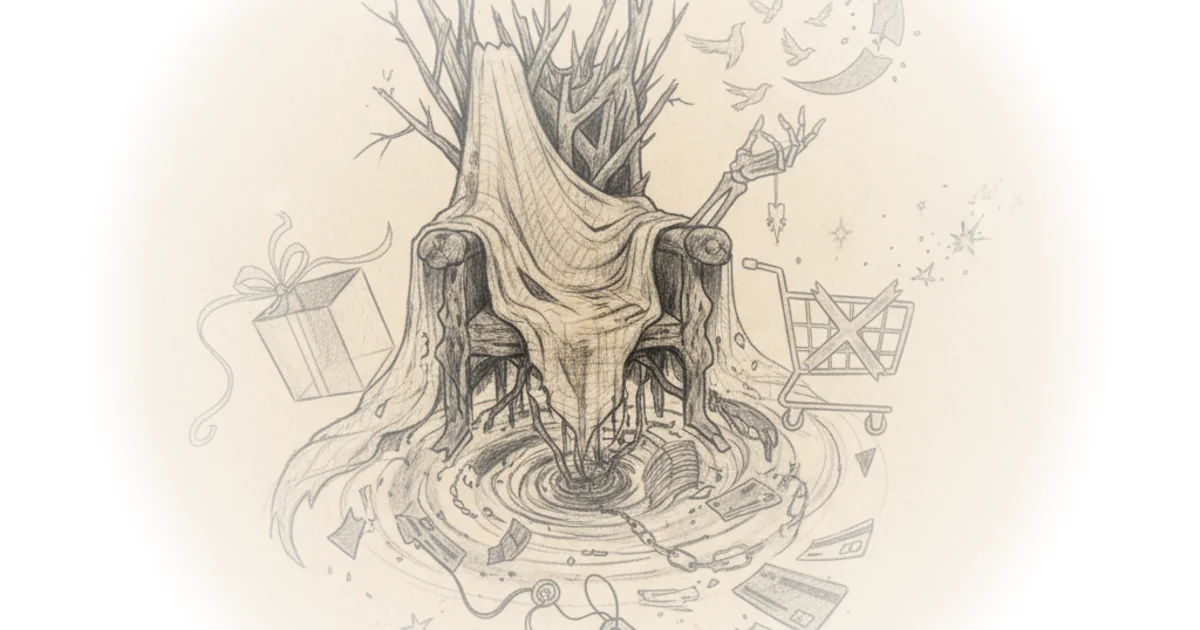
The author writes, "I have always liked that the Country Music Association's top award, for example, goes to the 'Entertainer of the Year' and not whoever wrote the best song or made the best album." This observation serves as a metaphor for the piece's broader thesis: the value of an interaction should be measured by its immediate ability to make people happy, not by its potential for long-term reverence. Brooks argues that while we often chase the theoretical perfection of a product, the practical joy of the present moment is frequently overlooked. This is a compelling, if somewhat idealistic, stance that challenges the consumerist impulse to accumulate.
"Instruction manuals that are supposed to teach you how to do a better job of buying things typically do not help me achieve either of those goals."
Critics might argue that this perspective ignores the economic reality that many people rely on the circulation of goods for their livelihood, and that refusing to participate in the market can be a privilege not everyone possesses. However, Brooks acknowledges this tension by stating, "I don't operate under the presumption that what feels right to me would be good for anyone else," which softens the critique into a personal philosophy rather than a universal mandate.
Reclaiming Media History
When Brooks does recommend a purchase, it is with a heavy emphasis on historical context and the subversion of commercial norms. The recommendation of Adrian Johns's Death of a Pirate is framed not just as a book review, but as a gateway to understanding the "making of the information age." Brooks writes that the book traces a narrative thread from the birth of radio to the sixties UK counterculture that "will forever change how you feel about the internet, pop music, and every electronic mass media platform that will ever exist in your lifetime." This connection between pirate radio history and modern digital struggles adds significant depth, reminding readers that the current battles over copyright and access are not new, but rather a continuation of a decades-long conflict.
The author then pivots to The Manual: How to Have a Number One the Easy Way by the Timelords (Bill Drummond and Jimmy Cauty of the KLF). Here, Brooks highlights the irony of a book that serves as an instruction manual for success while being nearly impossible to buy legally. "Though it does paint a very detailed picture of a particular moment in time, rendering most of the specific instructions nearly useless for anyone wanting to earnestly follow the recipe in modern times, the core insights about pop music and technology remain deeply resonant even now." This is a brilliant piece of cultural criticism; the book's value lies in its obsolescence and its challenge to the idea of a "perfect" product.
Brooks notes that the KLF named their project the "Kopyright Liberation Front" and suggests that printing a copy of the text yourself might be more valuable than buying an expensive used edition. "The value of such a volume may even exceed that of an 'official' copy by virtue of the care invested in its creation." This argument reframes the act of gifting from a transaction to a creative labor, suggesting that the effort put into the gift is what matters most. It is a direct challenge to the commodification of culture, echoing the KLF's own history of burning money and deleting their catalog to protest the music industry.
The Case for Physical Media and Intentional Viewing
In the section on television, Brooks makes a controversial recommendation: Dragon Ball. However, the argument is not about the show itself, but about the way it is consumed. The author contrasts the American dub of Dragon Ball Z, which skipped the early story arcs, with the original Dragon Ball anime, which follows the source material modeled on the sixteenth-century Chinese fantasy novel Journey to the West. "Each new story typically offers something meaningfully different than the last, and they tend to wrap up quickly," Brooks writes, praising the original for its playful, stimulating nature compared to the endless battles of its successor.
The piece then takes a sharp turn against the modern streaming model. "We don't like streaming platforms very much around here. Too many ads, too many recurring fees, and too much incentive to waste time scrolling aimlessly through libraries full of garbage instead of watching with intention." This is a powerful critique of the attention economy, where the design of platforms actively discourages deep engagement. Brooks argues that the difficulty in finding official physical releases of Dragon Ball should be seen as an opportunity for creativity rather than a barrier.
"The argument that one should go through the effort of tracking down officially-sanctioned blue brick editions at this point is indistinguishable from the symptoms of obsessive compulsive disorder."
Brooks suggests that in a world with more sensible copyright laws, the series might be in the public domain, allowing for the creation of homemade gifts like DVD-Rs with custom artwork. "Perhaps whatever safeguards are meant to stop you from doing that in this world aren't really worth fussing about." This is a bold stance on civil disobedience, framing the act of sharing culture as a moral imperative in the face of restrictive intellectual property laws. While some might argue this undermines the rights of creators, Brooks counters that the current system often harms the very artists it claims to protect, citing the reduced residuals for voice actors in the streaming era.
The Hardware of Freedom
The final section on video games offers perhaps the most practical advice in the piece. Brooks critiques the predatory nature of modern gaming ecosystems, where "once you buy one of the big-budget triple-A tentpoles... you feel like you're not getting the full experience unless you buy all the requisite season passes and paid expansions." The author argues that the PC ecosystem, while offering more freedom, can also be a trap of "backlogs" and impulse buying.
The only hardware recommendation is Valve's Steam Deck, described as "effectively a Linux PC with the form factor of a handheld gaming console." Brooks praises the device for its lack of subscription fees and its ability to run games from various sources without restriction. "Unlike a Nintendo Switch, you don't need to jailbreak the thing or sign up for any subscription products in order to unlock the full potential of the hardware." This recommendation aligns with the piece's overarching theme: the best technology is that which empowers the user rather than extracting value from them.
The author notes that the Steam Deck's inability to run the latest triple-A titles is "more of a feature than a bug," as it forces users to focus on games that are actually worth playing. "I'm really struggling to think of a single title it can't run that I can conclusively say is worth your time." This is a refreshing perspective in an industry obsessed with graphical fidelity and new releases, prioritizing the quality of the experience over the novelty of the hardware.
"There are computers everywhere for those with the eyes to see, and tinkering can sometimes be more rewarding than spending time in the virtual worlds that your hardware is meant to be able to conjure up."
Critics might note that building a custom PC or mastering the Steam Deck requires a level of technical literacy that not all consumers possess, potentially excluding those who simply want a plug-and-play experience. However, Brooks's argument is not that everyone should become a technician, but that the option to do so is a vital part of consumer freedom. The piece suggests that the act of engaging with technology on one's own terms is a form of resistance against the passive consumption encouraged by modern platforms.
Bottom Line
jaime brooks has crafted a gift guide that is less about what to buy and more about how to think about value in a hyper-consumerist world. The strongest part of this argument is its consistent refusal to play by the rules of the market, offering instead a vision of generosity rooted in creativity, history, and autonomy. Its biggest vulnerability is its reliance on a certain level of cultural capital and technical know-how, which may limit its accessibility to a broader audience. Readers should watch for how this philosophy of "less" might evolve as the pressure to consume only intensifies in the coming year.