Nate Silver delivers a scathing post-mortem on the digital erasure of FiveThirtyEight, arguing that the site's disappearance isn't just a technical glitch but a deliberate act of corporate neglect by Disney. The piece is notable not for its data, but for its raw accounting of human labor: 200,000 hours of work vanished because a media conglomerate refused to treat a niche brand as a viable business unit.
The Illusion of Permanence
Silver opens by recounting a late-night discovery: clicking a link to a 2014 article about his soccer model, SPI, only to be auto-redirected to the ABC News homepage. The archive, once a repository of a decade of analysis, had simply ceased to exist. He writes, "All of the former FiveThirtyEight site from my nearly decade-long tenure at ESPN/Disney/ABC is gone." This isn't merely a broken link; it is a digital amnesia that defies the internet's reputation for permanence.
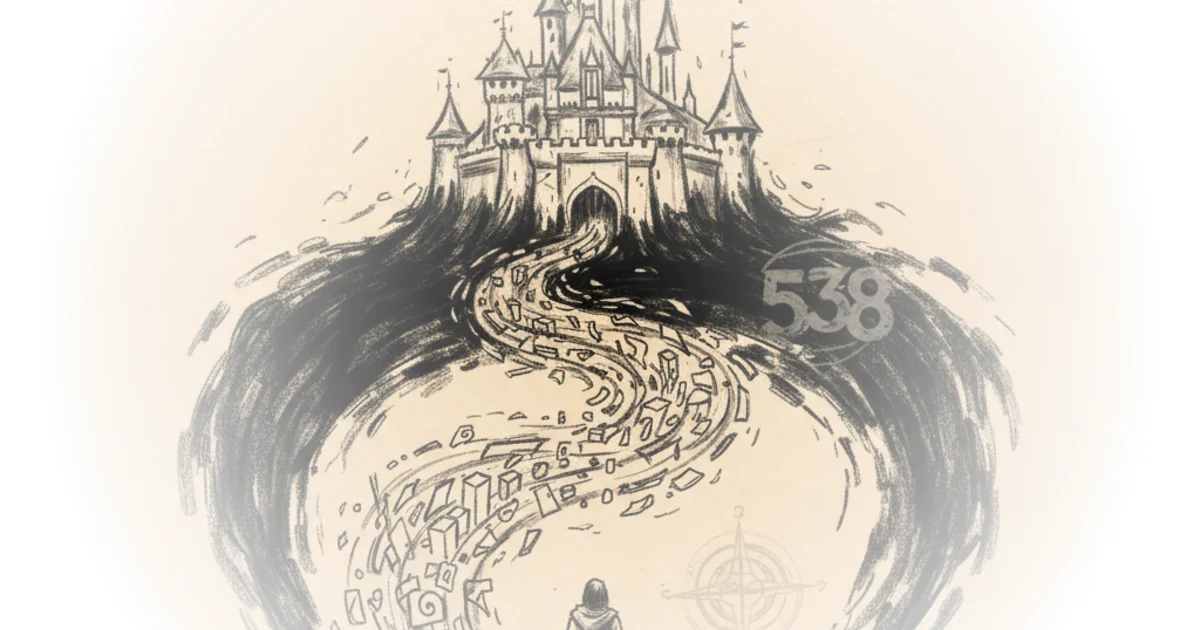
To contextualize this loss, Silver points to a broader phenomenon of "link rot." He cites a Pew study from October 2023 which found that nearly 40 percent of links active ten years prior were broken. However, he notes that this figure likely underestimates the problem, as the study relied on the Common Crawl web archive—the same massive dataset used to train modern AI models. While AI labs scrape the web to learn, they are also inheriting a fragmented history where significant portions of the digital record are already missing. Silver argues that the disappearance of FiveThirtyEight is a stark, intentional example of this erosion, noting that ABC News has offered no public explanation, leaving the impression that the deletion was "either intentional or willfully neglectful."
"The notion being that you can never escape your digital past. But this isn't really true."
This observation lands with particular weight because it challenges the assumption that digital content is a public good. Silver suggests that without active curation, even high-value journalism is as ephemeral as a tweet.
The Cost of Neglect
The core of Silver's argument shifts from the technical to the economic. He calculates that during the Disney era, the site published roughly 20 stories a week, with each piece requiring 20 hours of research, writing, and editing. The result is a staggering figure: "200,000 person-hours of work that ABC News just deleted." He describes this content not as abstract data, but as the product of "blood, sweat, and tears," often produced under the pressure of live election nights.
Silver frames the situation as a business school case study in mismanagement. He argues that Disney never truly invested in the brand, treating it like an "unused gym membership"—a charge on the credit card statement that provided no return on investment. He writes, "However much they spent on FiveThirtyEight, they never invested a dollar in it. There was never really any effort, or even any pretense of trying, to make it a profitable unit of the company." When staff proposed a paywall to create financial security, they were told it wasn't worth the company's "bandwidth" to figure out the mechanics.
Critics might argue that in a diversified conglomerate like Disney, not every asset needs to be a profit center; some serve as prestige markers or brand enhancers. However, Silver counters that the lack of a business model left the brand vulnerable to the whims of leadership. When ESPN president John Skipper left abruptly in 2017 due to a scandal, the brand lost its primary champion, revealing the fragility of an arrangement built solely on goodwill rather than structural alignment.
A Missed Opportunity
Silver reflects on the site's origins, tracing its path from a blog spun off from Daily Kos to a partnership with the New York Times, and finally to Disney. He notes that the Times had successfully launched a digital paywall during his tenure, suggesting that a subscription model was a viable path. He believes the site could have grown to over 100,000 paying subscribers, a scale comparable to The Free Press, which recently sold for $150 million.
The decision to join Disney, he admits, was a strategic error driven by the allure of creative freedom without commercial pressure. "Skipper had been fairly explicit that he didn't really care whether FiveThirtyEight made money," Silver writes. "Like Grantland, we were essentially a hood ornament on ESPN's oversized SUV and a 'rounding error' relative to Disney's gigantic P&L." This lack of incentive alignment meant that when the corporate winds shifted, there was no infrastructure to save the brand.
"We never developed the muscle memory or the infrastructure to be a commercial product."
This admission is crucial. It suggests that the failure wasn't just corporate malice, but also a failure of the creators to build a self-sustaining engine. Silver acknowledges that the team added too many staffers too quickly, prioritizing quantity over the development of core products that could stand alone.
Bottom Line
Silver's account is a powerful indictment of how large media conglomerates treat niche, data-driven journalism as disposable assets rather than valuable intellectual property. His strongest point is the quantification of the loss: 200,000 hours of work erased not by accident, but by a calculated decision to ignore the brand's economic potential. The piece's greatest vulnerability is its retrospective nature; while the analysis of the business failure is sharp, it offers little guidance on how the industry can prevent similar erasures of digital history in the future. Readers should watch how the new Silver Bulletin model navigates the tension between creative independence and the hard realities of commercial viability.