In a landscape where smartphone security is often reduced to simple password tips, The Hated One delivers a stark, almost existential warning: your device is not just a gadget, but an extension of your consciousness. The piece argues that true security isn't about creating an impenetrable fortress, but rather about exhausting the resources of adversaries until they lose interest. This shift from 'perfect safety' to 'resource denial' reframes the entire conversation for the busy professional who cannot afford to be a target.
The Cyborg Reality
The Hated One opens with a provocative assertion that challenges the reader's relationship with their technology. "Smartphone hacking is a lucrative business," they note, explaining that multi-million dollar companies actively trade in software vulnerabilities. The author's framing is immediate and visceral: "Your phone is an inseparable part of you... axes into your phone is an access into your mind." This is not hyperbole; it is the core thesis. By defining the modern user as a "cyborg," the commentary elevates the stakes from data loss to identity theft.
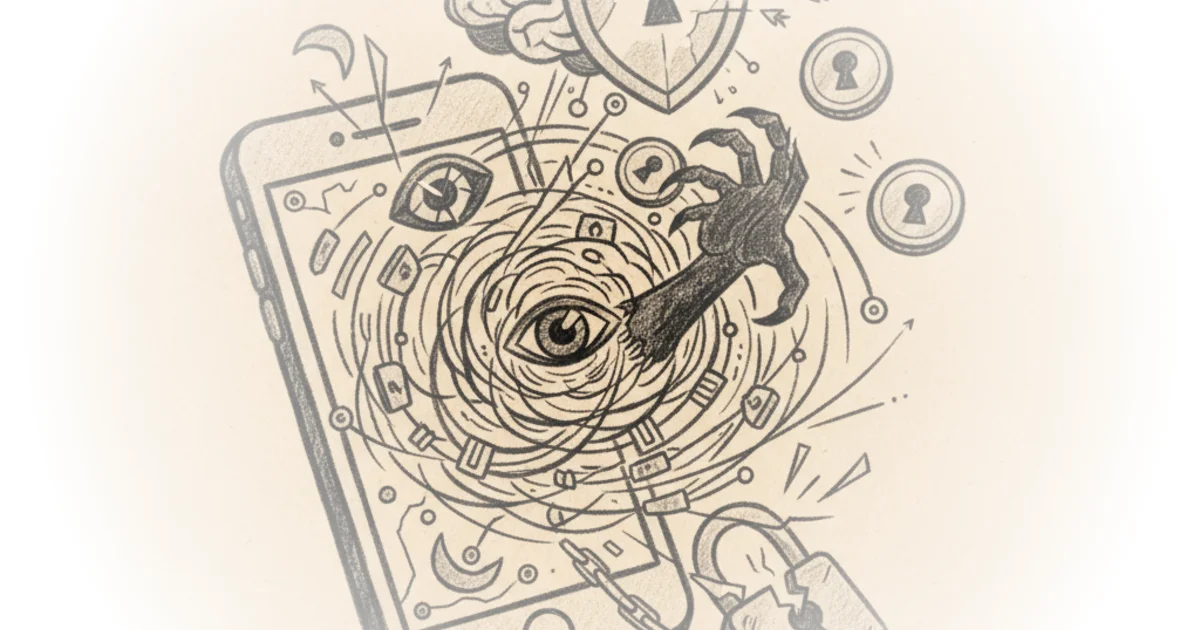
This perspective is crucial because it explains why the threat model must be so aggressive. The author distinguishes between common fraud and advanced persistent threats, noting that while the latter requires professional intervention, the former can be mitigated by understanding that "the goal of security is to exhaust the resources of your adversaries." This is a pragmatic, military-grade approach to personal data protection that acknowledges the reality of the digital ecosystem.
Your phone isn't just a gadget your phone is you you're a cyborg you're a cyborg.
Critics might argue that this framing induces unnecessary panic for the average user, yet the subsequent advice remains grounded in practical, actionable steps rather than fear-mongering.
The Architecture of Defense
Moving from philosophy to practice, The Hated One dismantles the myth that encryption alone is a silver bullet. While device encryption is a baseline requirement, the author warns that "encrypting your phone does not protect you from malware or remote exploitation." Instead, the focus shifts to account security and the critical importance of two-factor authentication (2FA). The Hated One recommends moving beyond SMS-based codes to app-generated one-time passwords or, ideally, physical USB security tokens like YubiKey.
The argument here is that the phone is only as secure as the cloud account it is tethered to. "Your phone is connected to your Google account or Apple ID and does is only as secure as your online accounts," the author writes. This creates a chain of custody that must be fortified. The recommendation to use a password manager and store backups offline highlights a recurring theme: redundancy is the enemy of single points of failure.
Furthermore, the piece emphasizes the necessity of an application firewall. The Hated One suggests that "mobile apps require tons of unnecessary permissions" and that a whitelist approach—blocking all network access by default and only allowing essential apps—is superior to a blacklist. This is a significant departure from standard user behavior, which typically grants permissions blindly. The author notes that "hackers are thriving on exploiting these software vulnerabilities," many of which go unpatched for months. Therefore, the habit of frequent reboots is recommended not just for performance, but to clear malware that doesn't survive a restart.
The Browser as a Vulnerability
Perhaps the most aggressive stance in the tutorial concerns web browsers. The Hated One describes them as "like an operating system within an operating system," capable of executing malicious code without user interaction. The recommendation is to minimize browser usage to absolute necessity and, when required, to use hardened browsers like Bromite or Brave with JavaScript disabled by default.
"JavaScript is evil so disable javascript entirely and only enable it for websites that are too broken without it," the author asserts. This is a radical simplification of the web experience, but it aligns with the overarching goal of reducing the attack surface. The commentary also addresses the trap of public Wi-Fi, labeling it "evil" and suggesting that Tor or specific VPNs like Proton VPN are necessary shields. However, the author is honest about the trade-offs, admitting that free services often come with speed limitations or that "if you don't pay for the service you are the product."
Browsers are dangerous they're like an operating system within an operating system.
A counterargument worth considering is that disabling JavaScript entirely breaks much of the modern web, potentially making the device unusable for many daily tasks. The Hated One acknowledges this tension but prioritizes security over convenience, a choice that may not suit every reader but is logically consistent with their threat model.
The Human Element and Stalkerware
The tutorial concludes by addressing the most insidious threat: stalkerware installed by people close to the user. The Hated One describes a scenario where a "moronic spouse employer parent or friend" installs spyware that deletes its own main app to remain hidden. The advice here is blunt and decisive: "the fastest and most certain option is to factory reset your device." The author goes so far as to suggest that for those being stalked, the best move is to "shoot your stalker because those who are actually doing these are just wasting oxygen," a hyperbolic expression of the severity of the violation.
This section underscores that technology cannot solve human malice. The author advises never leaving the phone unattended, even when locked, as passcodes can be observed. The ultimate advice is to "not keep any sensitive data on your phone and delete everything periodically," effectively making the device a transient tool rather than a permanent archive. This minimizes the damage if the device is compromised.
Bottom Line
The Hated One's tutorial succeeds by refusing to sugarcoat the reality of modern digital vulnerability, framing security as an active, exhausting process rather than a passive setting. Its strongest argument is the shift from seeking perfection to denying resources to attackers, a mindset that is both realistic and empowering. The biggest vulnerability of this approach is its high friction; the recommended lifestyle changes, from disabling JavaScript to using physical tokens, demand a level of discipline that may be unsustainable for the average user, but for those who can manage it, it offers a robust shield against the most common and dangerous threats."