Omar Degan doesn't just call for a new architecture exhibition; he demands a total rewrite of the global narrative that has treated Africa as a passive recipient of design rather than its originator. By anchoring the upcoming 2026 Pan-African Architecture Biennale in the radical idea that "architecture was the first language of existence" on the continent, Degan challenges the very definitions of sustainability, history, and power that the Global North has imposed for centuries. This is not merely about building better structures; it is about dismantling a colonial lens that has obscured the continent's role as the epicenter of human innovation and resilience.
Reclaiming the Center of Discourse
Degan's central thesis is that Africa has been relegated to the periphery of architectural history, defined almost exclusively by trauma, instability, and the "scramble for Africa." He argues that the upcoming biennale aims to shift this dynamic by centering African voices. "For too long I believe we have been the periphery of the discourse," Degan states, "the recipient of what is good what is bad what is that is happening within the continent." This framing is powerful because it exposes the asymmetry of knowledge production: the world knows what happens in Africa through the eyes of outsiders, not the people who live there.
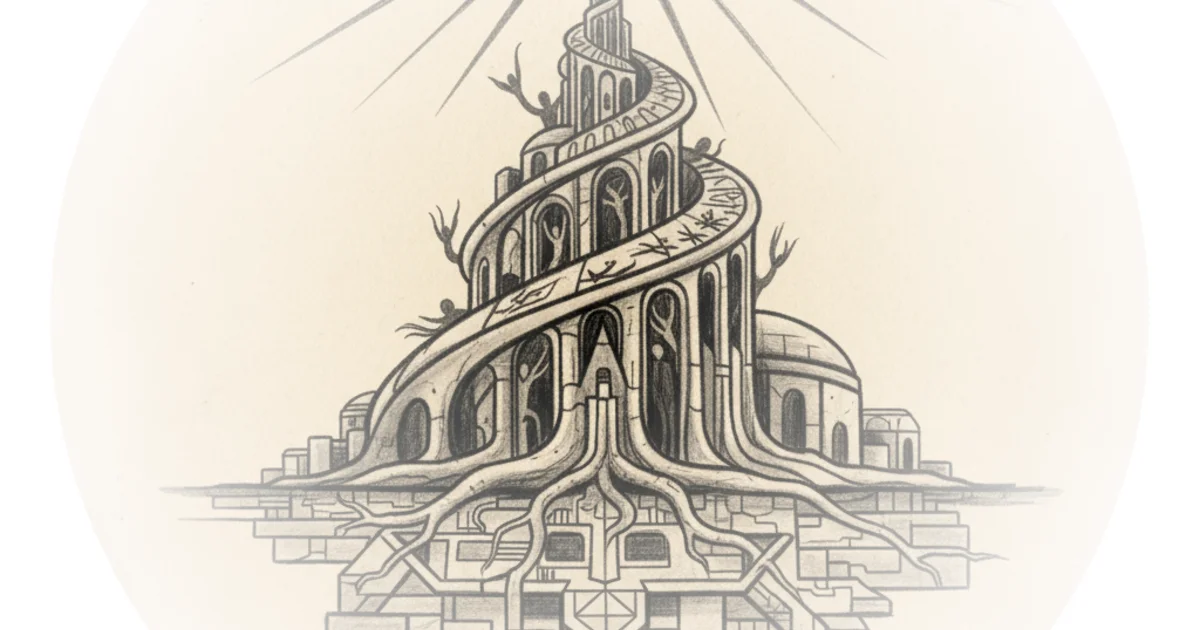
The author pushes back against the monolithic label of "African architecture," noting the absurdity of treating a continent with 54 countries, 3,000 languages, and eight distinct climate zones as a single entity. "I do not believe that African architecture exist," he asserts, pointing out that "Congo is not Morocco. Morocco is not Cape Verde and Cape Verde is not Ethiopia." This distinction is crucial. It forces the reader to confront the lazy generalizations that often plague Western discourse. By highlighting the diversity from the coral coastlines of the Indian Ocean to the earth architecture of Mali, Degan argues that true representation requires nuance, not a blanket label.
"History is different when told by the people that are actually part of that story."
Critics might argue that emphasizing national differences could fracture the pan-African unity Degan seeks to build. However, Degan anticipates this, suggesting that unity is not about erasing diversity but about reconnecting people through a shared, authentic history rather than a colonial one. The biennale's structure, featuring one practitioner from each of the 54 countries, is a deliberate move to enforce this granularity.
Redefining Sustainability and Wealth
Perhaps the most provocative section of the interview is Degan's critique of the Western concept of sustainability. He finds the Eurocentric definition flawed, questioning why a "glazed tower that you can't even open the windows" is considered sustainable while traditional earth construction is ignored. "I do not believe that sustainability is based on lead practices or passive house... But then why is that considered sustainable?" he asks. This rhetorical challenge strikes at the heart of modern green building certifications, which often prioritize high-tech solutions over low-carbon, indigenous practices that have worked for millennia.
Degan connects this to a broader historical injustice: Africa contributes only 3-4% of global emissions yet suffers disproportionately from climate change. He frames the continent not as a victim, but as a repository of solutions. "Africa is still the epicenter of production, of resilience, of communities," he notes, suggesting that the world looks to Africa for answers to the very crises the Global North created. This flips the script on the typical narrative of aid and dependency.
To illustrate the erasure of African history, Degan points to the paradox of Mansa Musa, the richest man in history from Mali, whose country today is not even on the list of nations with significant gold reserves. "How can the richest men in the world coming from a country that not in the list yet?" he asks, highlighting the disconnect between historical reality and modern perception. He also notes the erasure of figures like Alessandro de' Medici, whose African heritage is often downplayed in European art history. "If all the publication are written by non-Africans," Degan warns, "then if you neglect the participation and the engagement of these practitioners and their histories, then it's deliberate."
"Architecture is a political act. You can just decide to accept that or pretend that that is not like that."
This statement serves as a stark reminder that the built environment is never neutral. By controlling the narrative of what counts as "good" architecture, the Global North has effectively controlled the psychological and physical reality of millions. Degan argues that 85% of our lives are spent in buildings, making the power of architecture immense. The biennale, therefore, is an act of political reclamation, aiming to rebuild bridges that colonization cut.
Bottom Line
Degan's argument is strongest in its refusal to accept the terms of the current debate, forcing a re-evaluation of what constitutes sustainability and historical truth. His biggest vulnerability lies in the sheer logistical and political challenge of unifying 54 distinct architectural traditions under a single banner without falling into the very generalizations he critiques. However, the urgency of his message is undeniable: as climate change and population growth accelerate, the world can no longer afford to ignore the solutions and perspectives emerging from the continent that birthed humanity. The 2026 biennale will be the litmus test for whether the global architectural community is ready to listen.