David Perlmutter delivers a surreal, genre-bending narrative that disguises a sharp critique of corporate infiltration and the unintended consequences of unregulated substances within a small community. Rather than a standard superhero tale, the piece uses the absurdity of a prepubescent superheroine named Muscle Girl to explore how external forces can destabilize local power dynamics and the fragility of invulnerability when faced with unknown variables.
The Illusion of Local Control
Perlmutter frames the story around the sudden appearance of a global chain in a town too small to support one, immediately signaling a disruption of the status quo. The narrator, Gerda, initially dismisses the threat, noting, "We are too small a town for an international chain like them to care about us- even remotely." This confidence, however, proves to be the story's central vulnerability. Perlmutter uses this setup to illustrate how local communities often underestimate the reach of external entities until the damage is done.
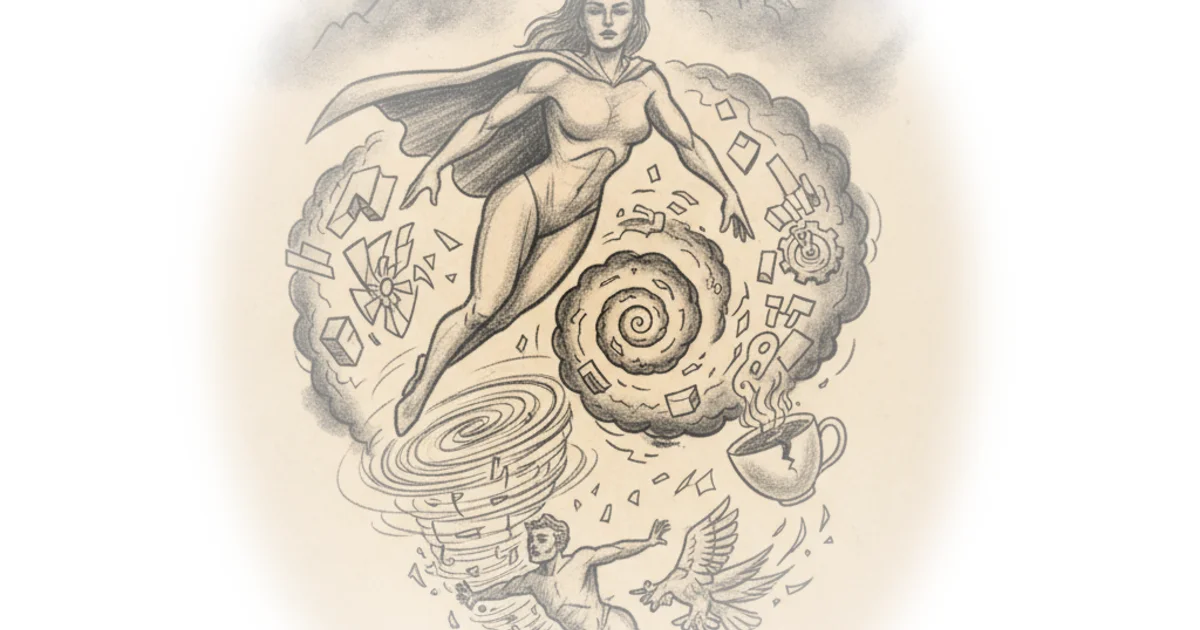
The narrative takes a dark turn when the protagonist discovers the coffee is not merely a beverage but a vector for alien power. Perlmutter writes, "The thing is, MG, that that coffee we scored to set up this little coffee stand for the rubberneckers turned out not to be from Earth!" This revelation shifts the story from a simple crime caper to a commentary on the dangers of consuming the unknown. The author suggests that the allure of new, potent substances can blind even the most powerful individuals to their inherent risks.
"The more you drink, y'see, the more the powers last, and the more the powers last, the more the powers grow on ya!"
This line encapsulates the story's warning about escalation. Perlmutter argues that the acquisition of power, when unregulated and sourced from dubious origins, creates a feedback loop that quickly spirals out of control. The antagonist, Panties, leverages this alien coffee to overturn the natural order, proving that strength is not an inherent trait but a temporary, purchasable commodity in this new reality.
The Fragility of Invulnerability
The most striking element of Perlmutter's coverage is the subversion of the superhero trope. Muscle Girl, described as "the most powerful prepubescent female in the universe," is physically overpowered by a gang of teenagers who have consumed the alien brew. Perlmutter writes, "And it was PANTIES who had delivered the blow! HOW?" This moment serves as a metaphor for how established hierarchies can be shattered by unexpected, chaotic variables.
The author details the physical toll of this new dynamic: "The trio of thugs had somehow become even more powerful physically than I was... the blows actually injured and weakened me, unlike my usual invulnerable state." This is a crucial narrative choice. By showing the hero's defeat, Perlmutter emphasizes that no amount of traditional strength can guarantee safety against novel threats. The story suggests that institutional or personal power is often illusory when the rules of engagement change.
Critics might note that the extreme violence depicted—gouging eyes, ripping fingernails—risks overshadowing the allegorical message with gratuitous brutality. However, Perlmutter seems to use this visceral imagery to underscore the desperation of the conflict. The hero is forced to flee to the "Intergalactic League of Girls With Guns" for assistance, highlighting the limitations of individual agency in the face of systemic disruption.
Institutional Response and Collective Action
The final section of the piece shifts focus to the broader community response. Muscle Girl seeks help from a union-like organization, the "Intergalactic League of Girls With Guns," which Perlmutter describes as "an all-female superhero organization dedicated to keeping the peace in the universe however we can." This move from individual heroism to collective action suggests that the solution to such chaotic disruptions lies in organized, collaborative efforts rather than solitary vigilance.
The reaction of the league members—"all conversation they had been engaged in abruptly ended"—signals the gravity of the situation. Perlmutter uses this silence to convey that the threat is not just physical but existential, requiring a unified front. The narrative implies that when local defenses fail, the only recourse is to appeal to a larger, more capable network.
"We superheroes can't easily defend ourselves when outnumbered by stronger enemies, just like anyone else in that situation."
This admission of vulnerability is the story's emotional core. Perlmutter strips away the fantasy of the invincible hero to reveal the human (or prepubescent) reality of fear and the need for support. It is a reminder that even the strongest among us are not immune to the consequences of a changing world.
Bottom Line
Perlmutter's piece is a compelling, albeit chaotic, exploration of how external forces can dismantle local stability and the illusion of invincibility. Its strongest argument is that power is fluid and easily usurped by those willing to embrace the unknown, while its greatest vulnerability lies in the graphic depiction of violence that may alienate readers seeking a more subtle allegory. The story ultimately serves as a cautionary tale: in a world where the rules can change overnight, reliance on established strength is a fatal flaw, and collective action is the only true defense.